Whose idea was Memorial Bridge?
In the search to justify the construction of a large triumphal arch at the south end of Arlington Memorial Bridge, the Trump administration has turned to history. In court filings as well as (more importantly) social media posts, the administration has invoked a variety of proposals for crossing the Potomac that preceded the Arlington Memorial Bridge we know today.
Originally, their argument was that the 1925 law that authorized the project refers to an official 1924 design that featured 166-foot-tall columns at the south end of the bridge, thereby also authorizing any vertical structure. Facing skepticism in both court and the media, they have since turned to even earlier proposals for the bridge, some of which do features arches. Whether they have legal weight, I will leave up to the courts.
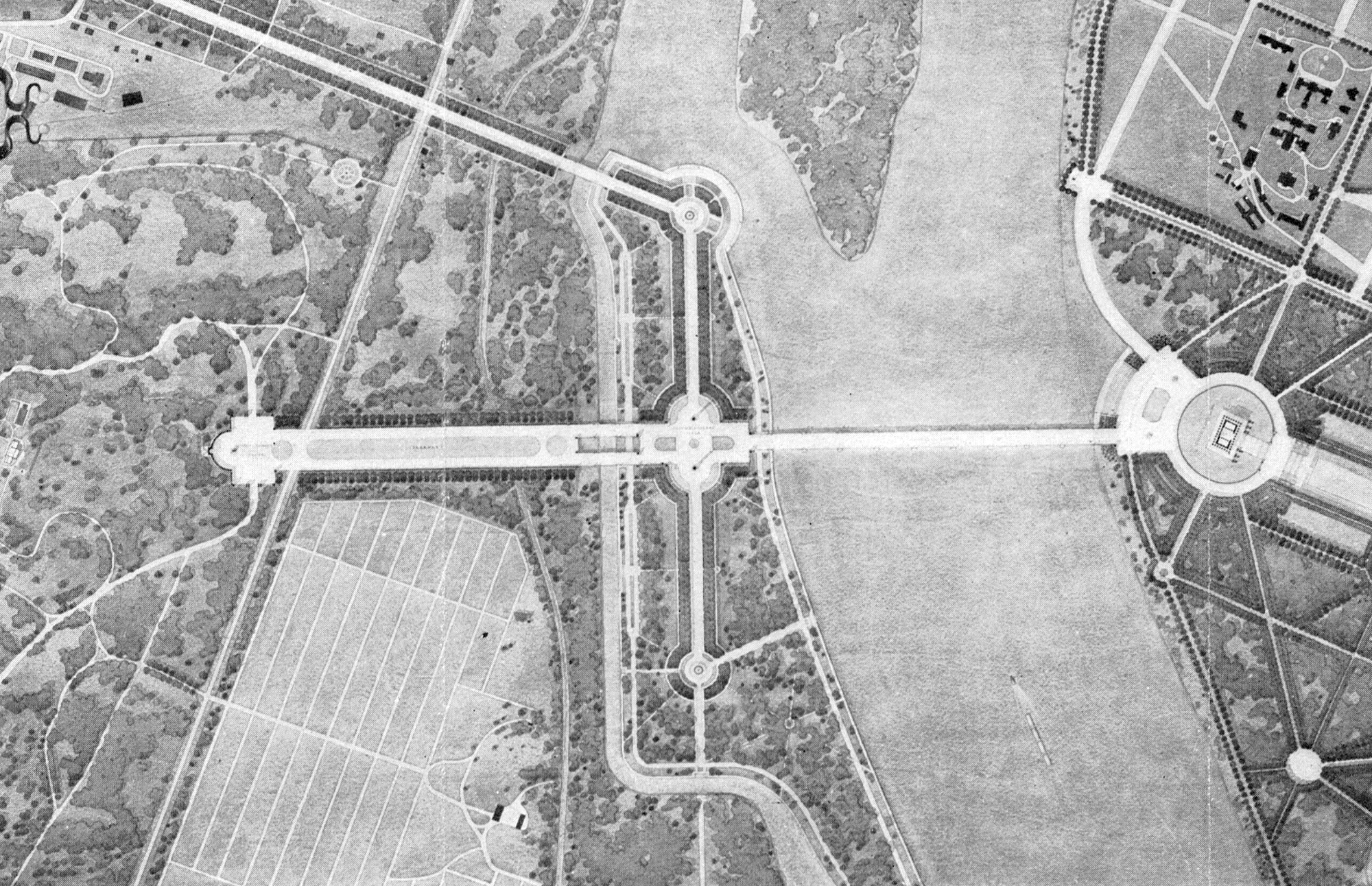
As far as history goes, however, it's a characteristically disingenuous misreading of the very convoluted processes of building infrastructure and commemorating the past. The qualities of Memorial Bridge that are at issue in the arch project all stem from the 1901-1902 Senate Park, or McMillan, Commission. This includes the link between Lee and Lincoln, the way it frames that view, and its function as a grand backdrop for military burials. Mythology around their plan has obscured the sources that dream team of designers drew on. Trump's arguments muddy the water even more.
So in this post, I want to outline the precursors to the McMillan Plan's conception of the Memorial Bridge. The history illustrates not only the genius of the McMillan Commission, but also its mythmaking—and a troublesome aspect of the design that contemporary defenders of the axis should mind.
A fabled origin
Trump and his administration claim from time to time that the idea of an arch has been an unfulfilled promise for anywhere from 150 to 200 years.
While it's hard to say exactly where he gets his information, the longer date seems to be referring to a story related by Daniel Webster in 1851 and cautiously referenced in the 1924 report. Speaking of the need to preserve the United States as conflict over slavery expanded, the great orator found a metaphor in a fixed link across the brackish water that split the country:
Before us is the broad and beautiful river, separating two of the original thirteen States, which a late President, a man of determined purpose and inflexible will, but patriotic heart, desired to span with arches of ever-enduring granite, symbolical of the firmly established union of the North and the South. That President was General Jackson.
That is, Andrew Jackson had envisioned a bridge across the Potomac as a symbol of the unbreakable bond between free and slave states some time in the 1830s. Whether Jackson actually said this, and whether this had much influence on the plans that followed, is pretty unclear.
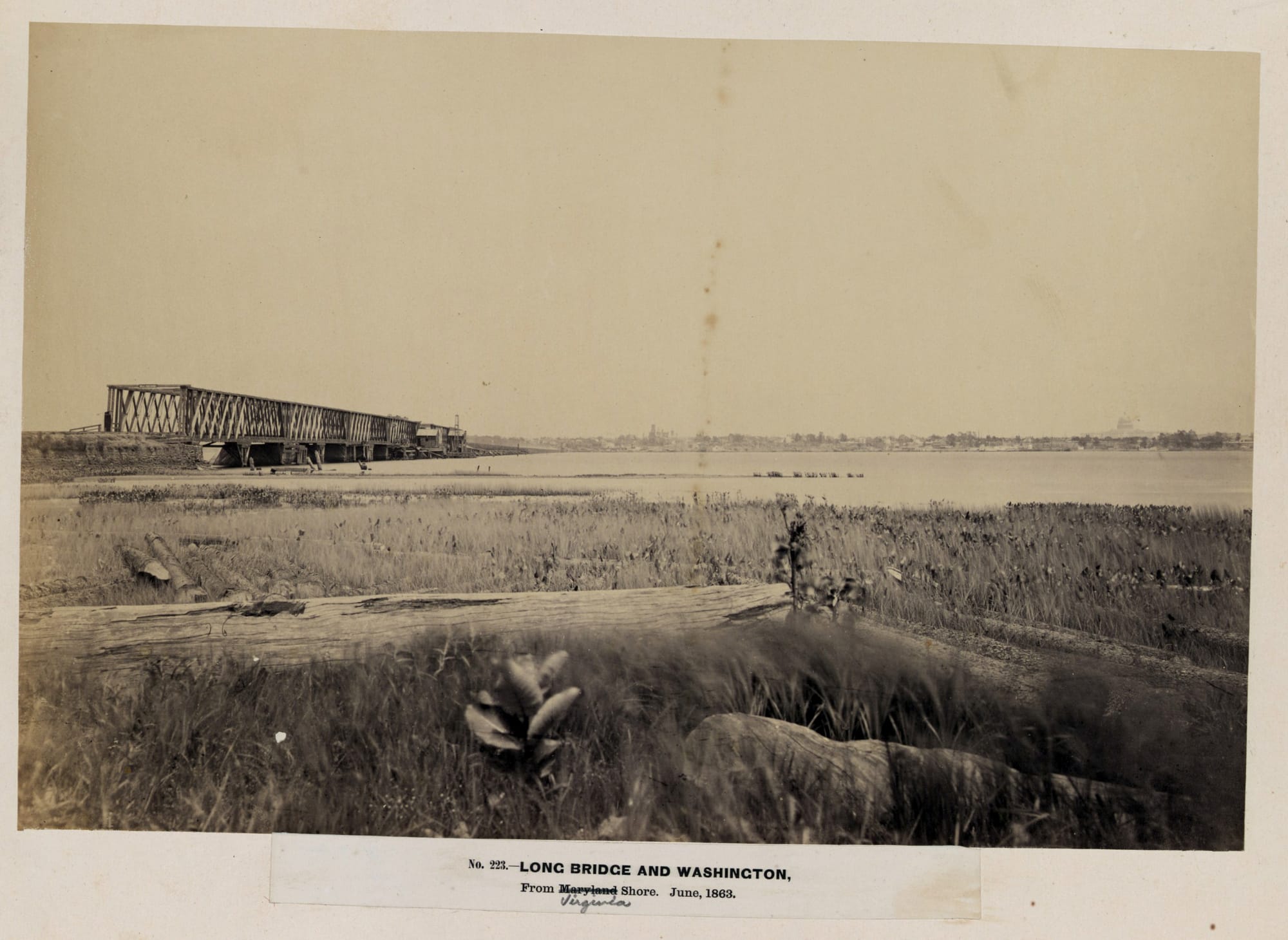
What is clear is that nobody was considering a bridge between Arlington House and the Lincoln Memorial. In 1851, Abraham Lincoln was a lawyer in Illinois and Robert E. Lee hadn't even inherited the estate. (Technically, he never did.) Not only was there no latent symbolism in connecting the ends, the north side was in the middle of the river. No, if Jackson did actually propose a symbolic bridge, he was thinking of perhaps replacing the Long Bridge, a dinky precursor to the 14th Street Bridge. The only other bridge on the Potomac close to the city of Washington was a retrofitted canal aqueduct in Georgetown.
The idea of a memorial bridge
DC boomed during and after the Civil War. For both aesthetic and functional reasons, the need for a more elevated viaduct became fixed in the minds of Congress and DC's elites. A succession of bridge proposals followed, all with similar characteristics: they would memorialize something, but the subject of commemoration varied. Likewise, they would cross the Potomac, but not at the location that we are familiar with. Some of these schemes were floated in the context of broader visions for central Washington, but the proposals that Congress actually authorized were always just for bridges.
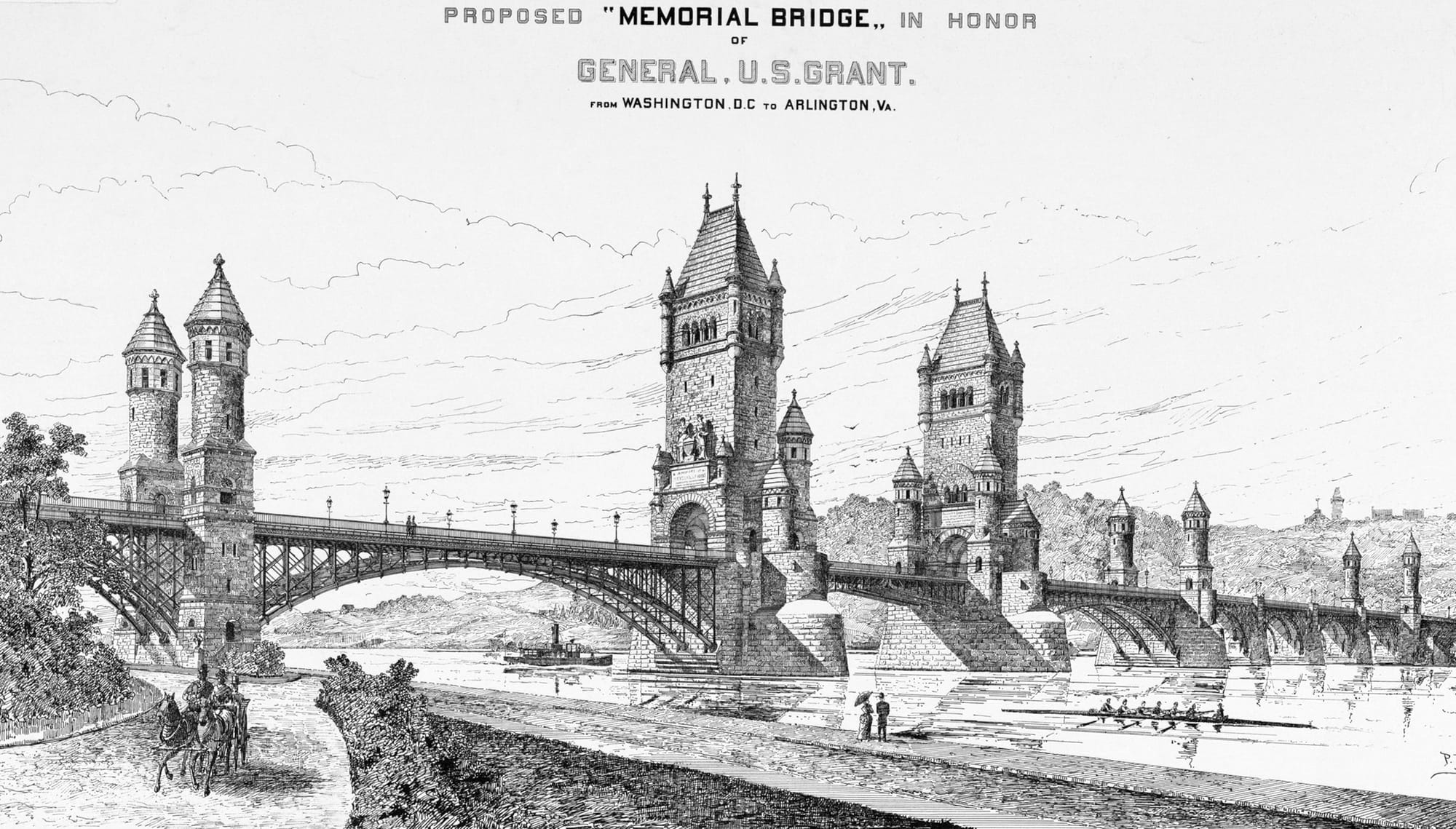
The first was an 1887 plan to commemorate Ulysses S. Grant—as commander of the Army of the Potomac—with a bridge that extended New York Avenue across the river. Much taller than the present bridge due to its starting point at the original Naval Observatory, its architects produced versions with both romanesque towers and beefy classical arches.
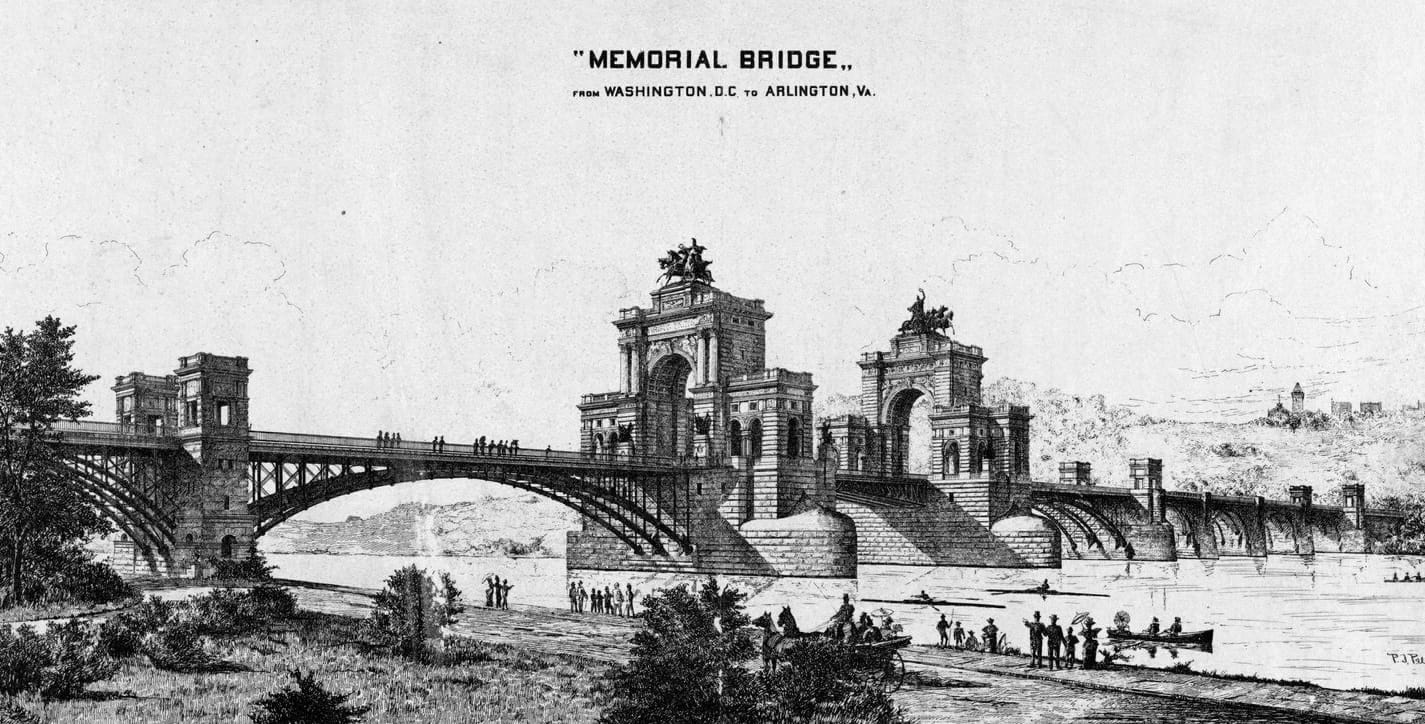
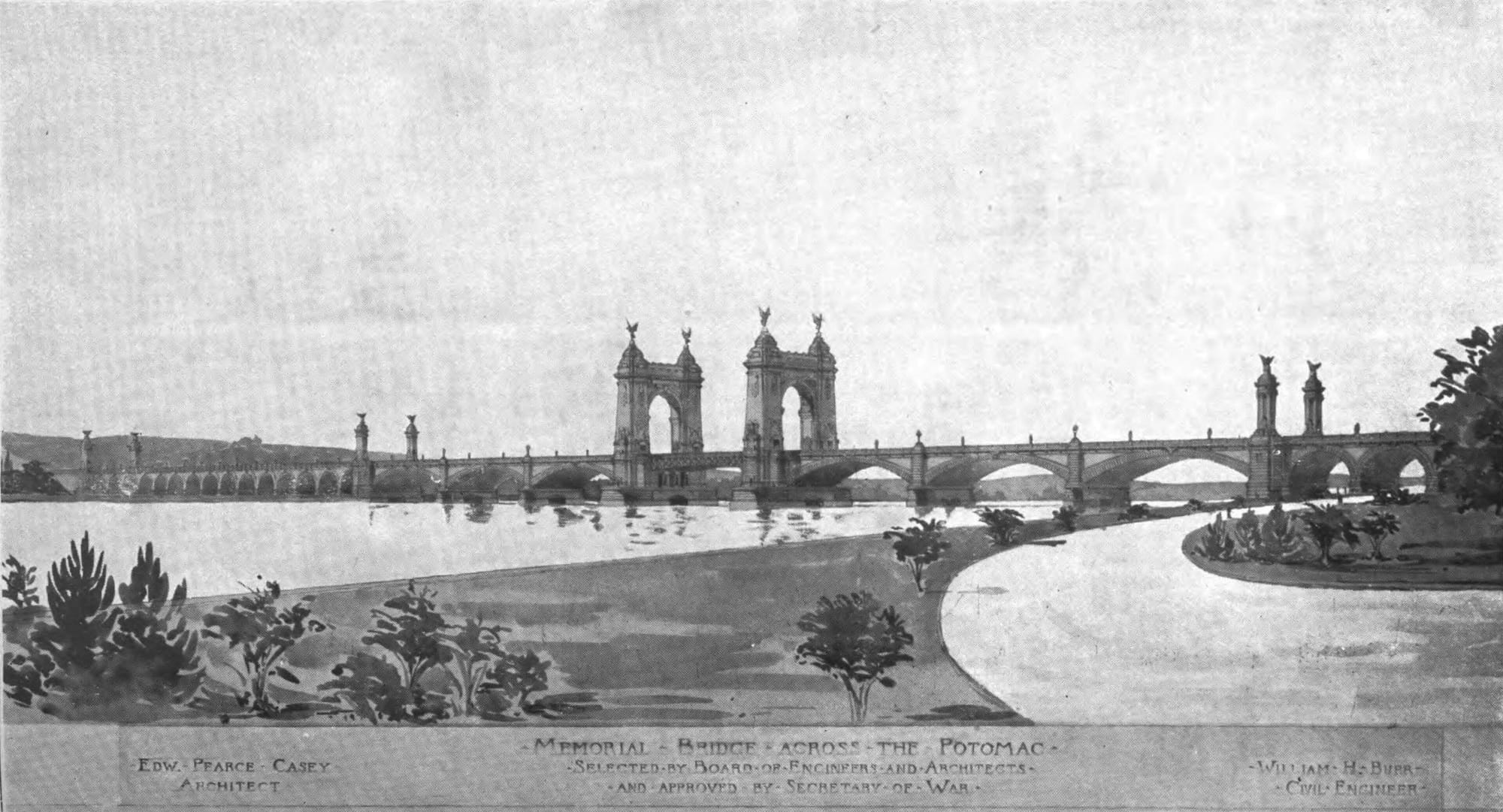
The second came in 1900, following the concept of the first version but adapting the superstructure to the lighter, more experimental style coming out of France at the time. This scheme also removed the specific focus on Grant. Perhaps lacking a clear purpose, this design too went nowhere.
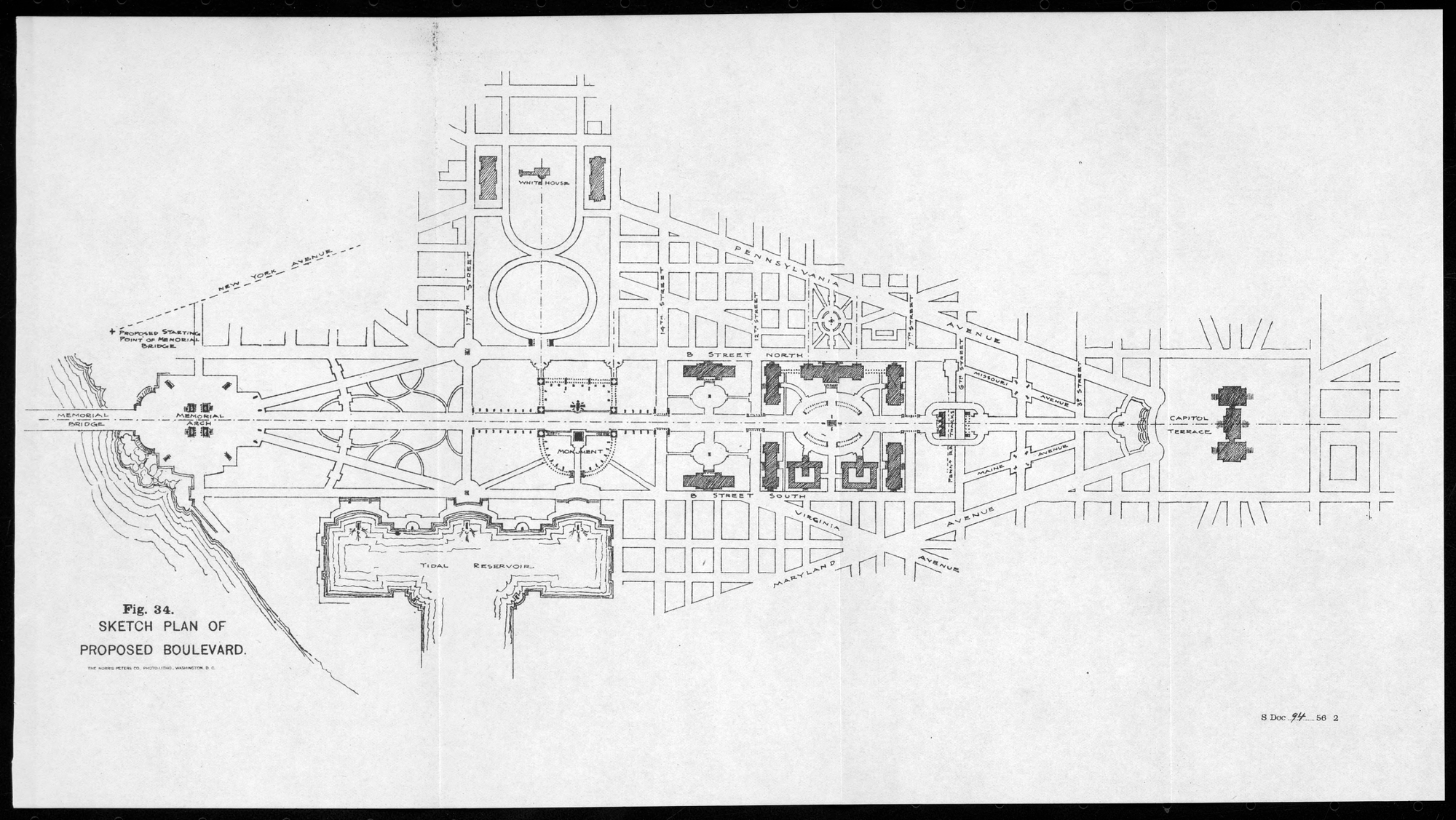
Private proposals abounded at the turn of the century as well. City elites, almost all of whom were members of the Washington Board of Trade, were eager to reinvent the Mall, the newly reclaimed land along the Potomac, and the downscale close-in neighborhoods.
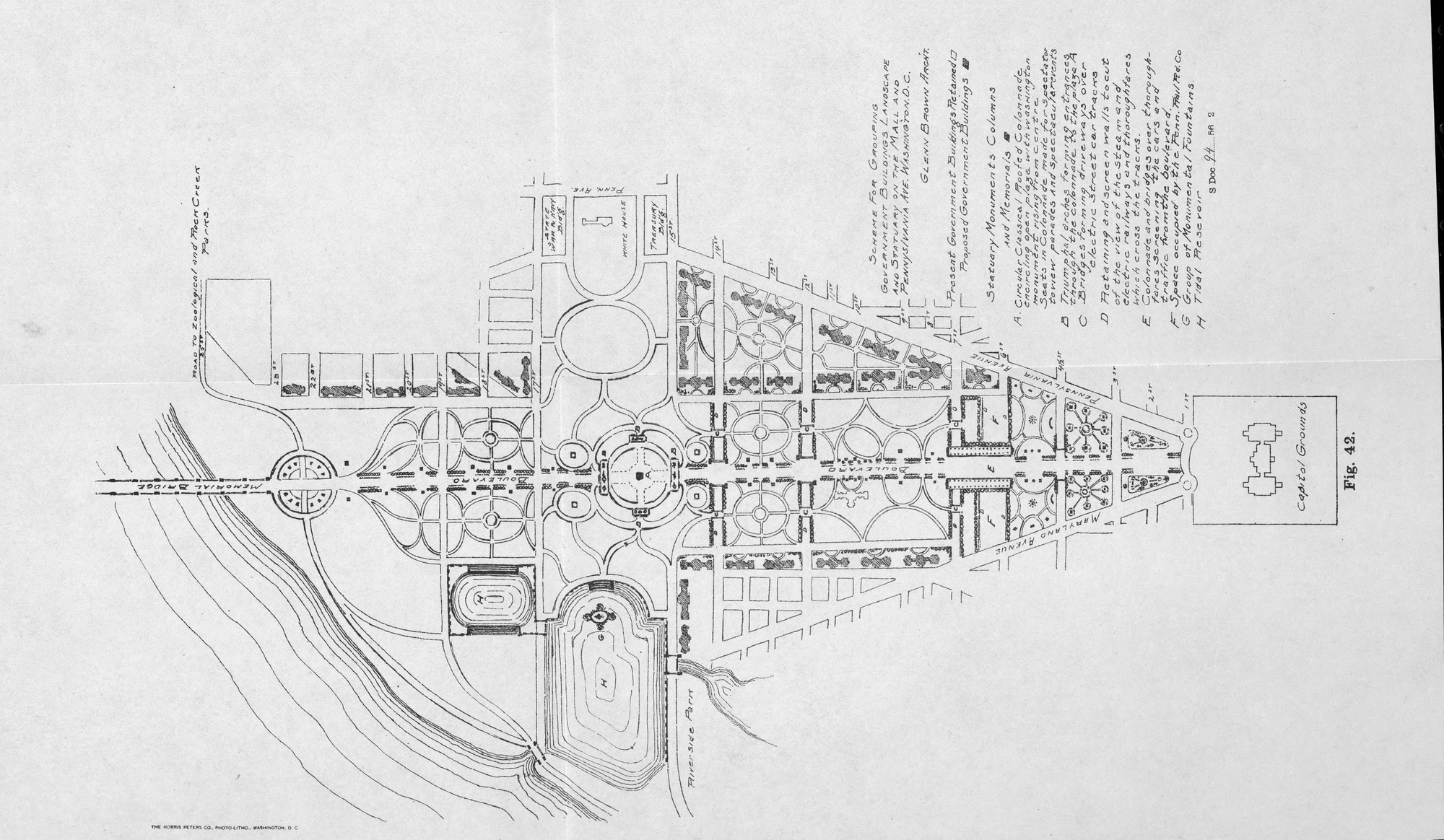
Plans developed to meet this demand do have features in common with what was ultimately built. For example, George Oakley Totten proposed to extend the Mall's axis from Washington Monument to a massive memorial arch where the Lincoln Memorial now sits, and then straight beyond that to Arlington.
For whatever reason, the administration has instead fixated on another private proposal with an arch. This one, designed by George Keller, included an arch on the DC side and a column in Virginia. The bridge itself also resembles the ultimate Memorial Bridge, linking and deferring to the monuments on land.
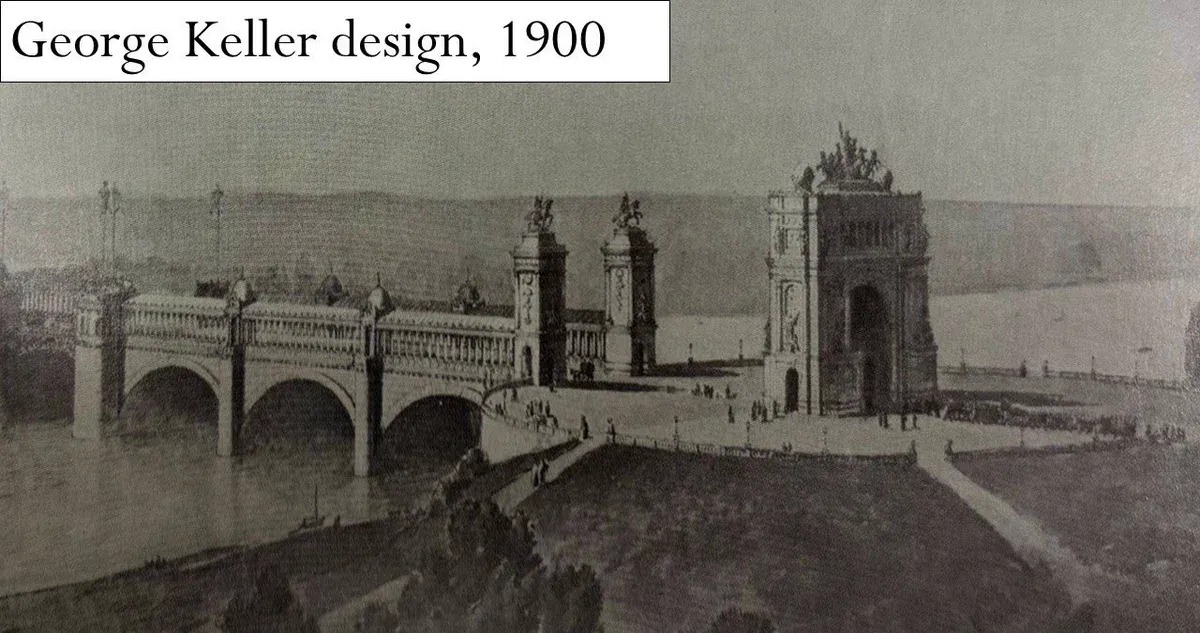
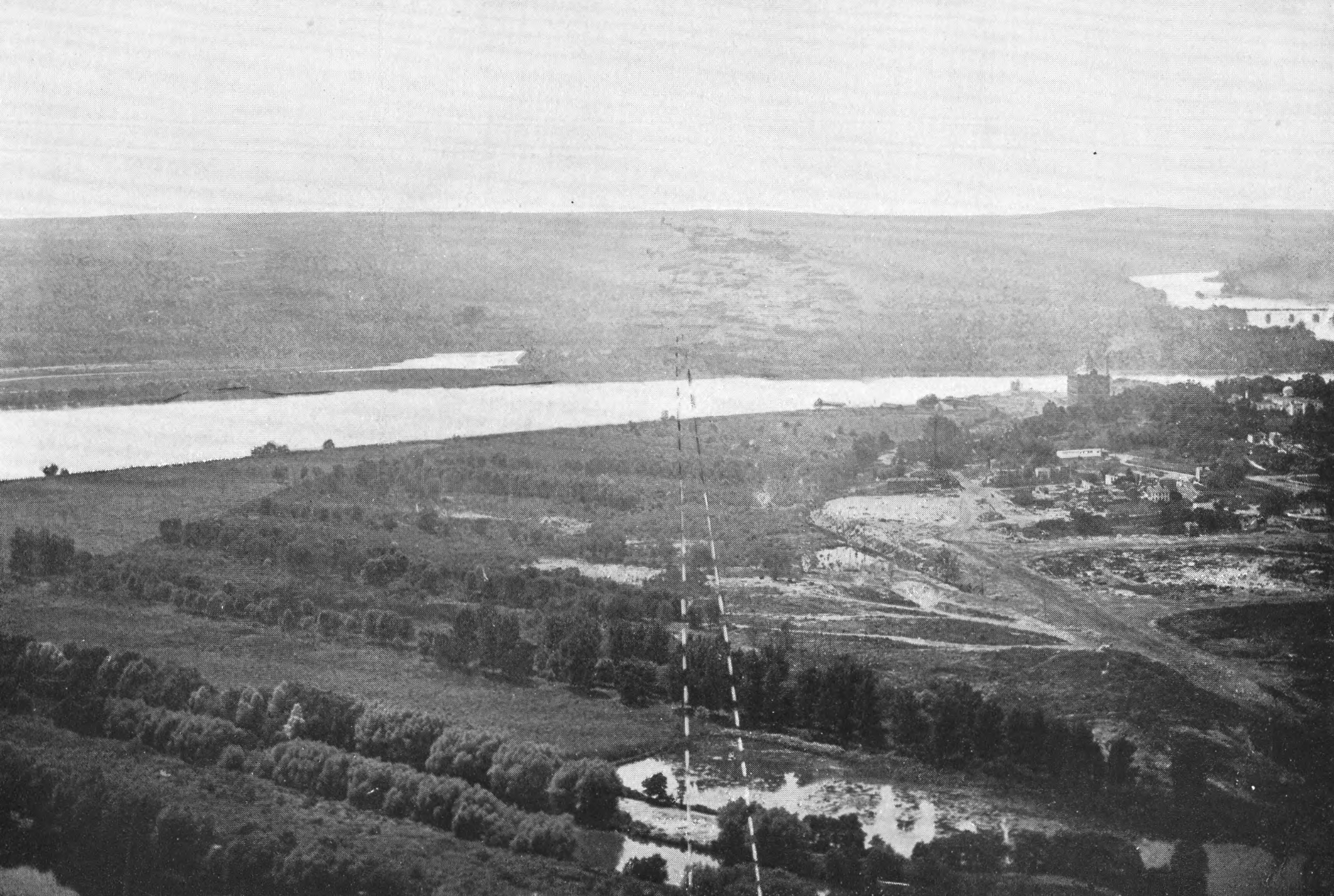
However, once again, this bridge was simply proposed for a different place. Like the Congressionally-backed bridges, it followed New York Avenue across the river from the Navy Hill. And why would it not? That axis led to the White House in a mirror of Pennsylvania Avenue. Out in the scrubby reclaimed land of West Potomac Park there was nothing to connect to.
One thing leads to another
The real genius of the McMillan Commission, in my opinion, was their ability synthesize a wide range of ideas, ground conditions, and political moves into cohesive whole. They referred to their work as a "system of parks," and they meant it. In addition to each monument having its discrete symbolic purpose, the relationship between monuments multiplied and added to the symbolism. The spaces between the monuments, they emphasized, were just as important. The composition of these landscapes affected basic function, shaped visual effect, and reinforced symbolic relationships. Their goal was a classical unity to which nothing could be added or subtracted without diminishing either whole or part.
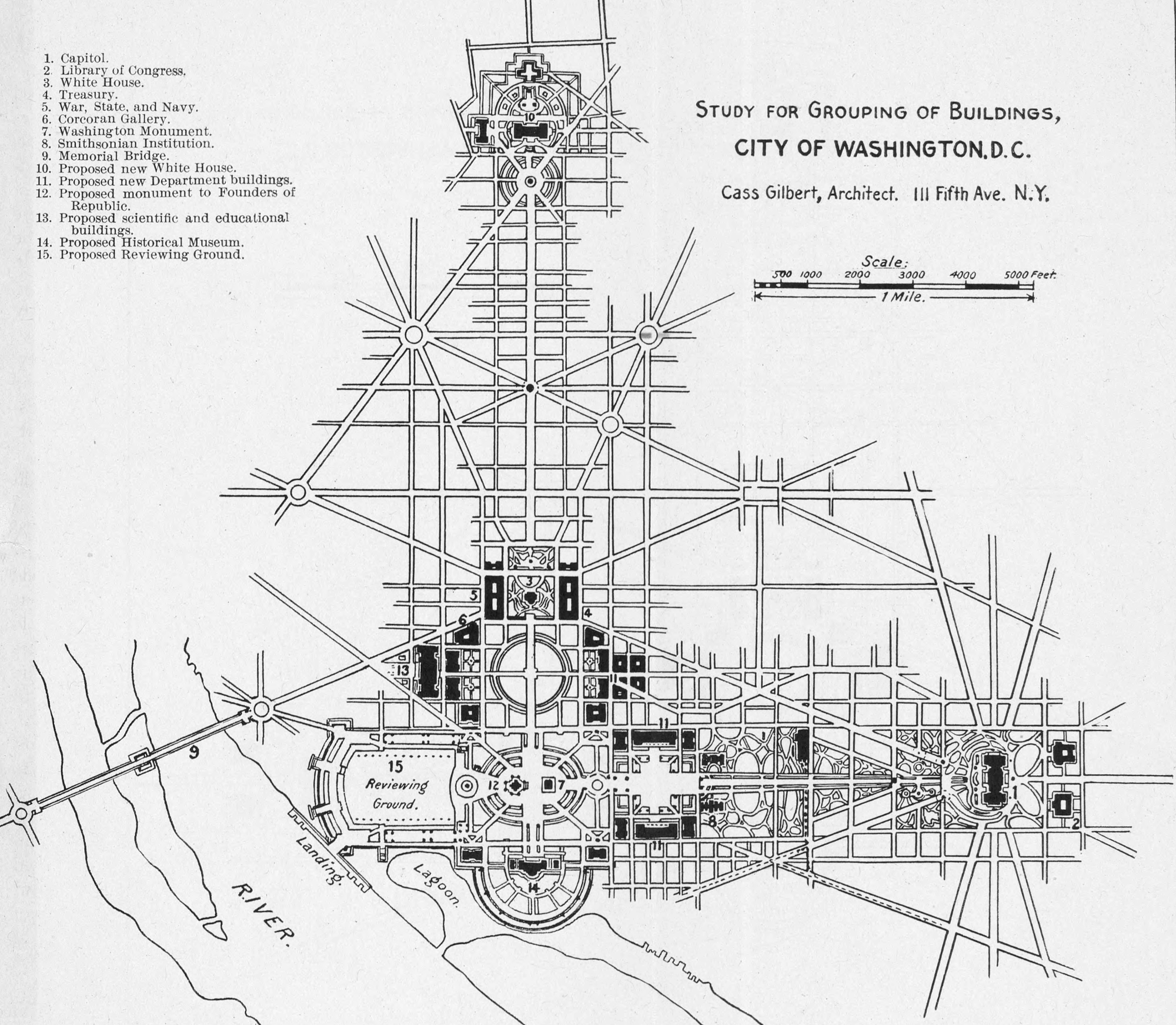
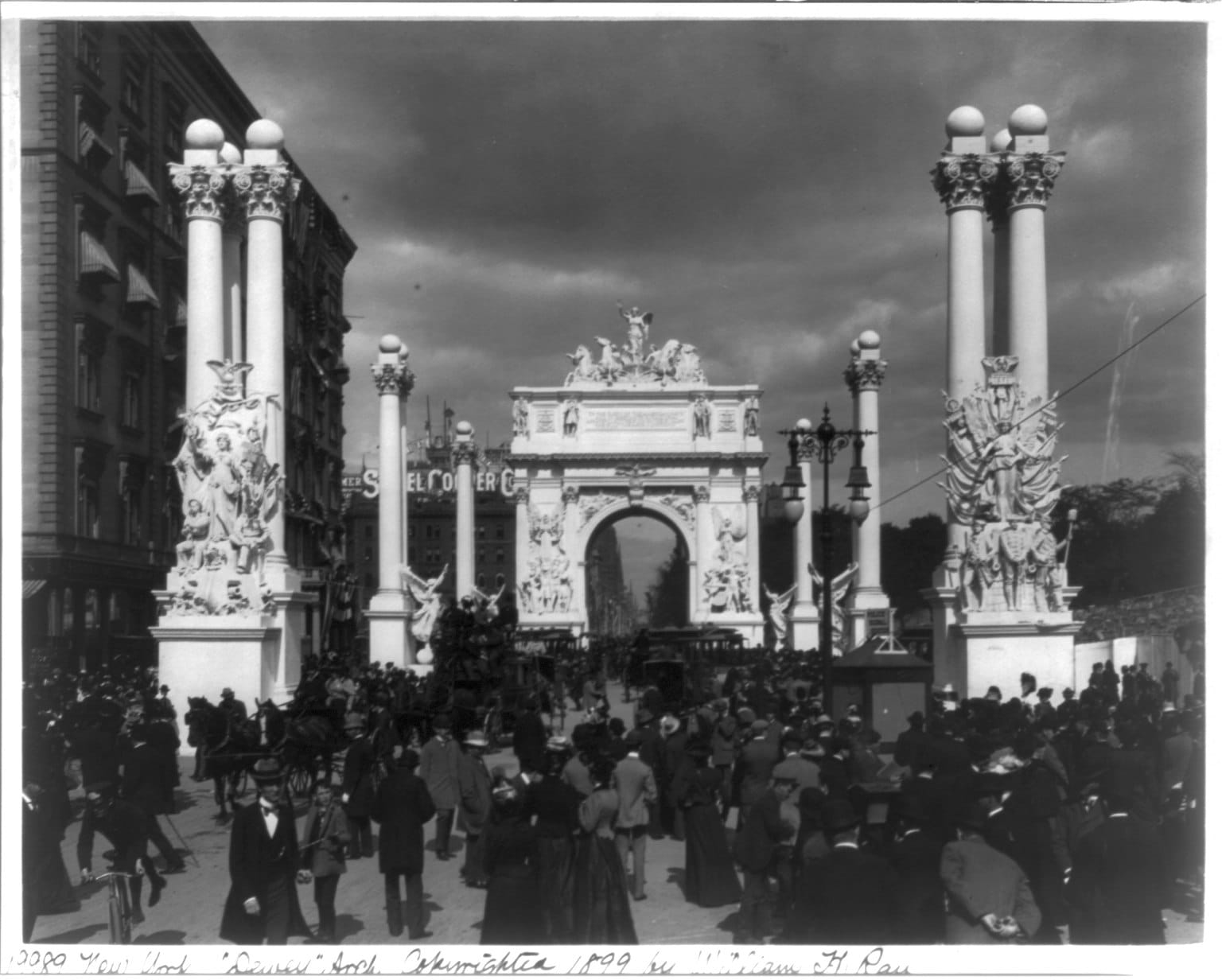
They also understood that synthesis often begins with the edit. The vast majority of ideas proffered to enhance the center of DC did not make it into the McMillan Plan, particularly all those arches. It's actually pretty striking that the McMillan Commission proposed absolutely zero arches, given that they drew heavily from arch-heavy Rome and Paris. The Commission's actual drawings were executed in the office of McKim, Mead, and White, who had solidified their public reputation with the arch in Manhattan's Washington Square Park. In fact, a massive arch had stood in Madison Square Park months earlier in order to celebrate the conquest of the Philippines, just out the firm's door at 160 5th Avenue. At the height of American colonial swagger, if the McMillan Commission had wanted to put in some triumphal arches, they would have. But they explicitly did not.
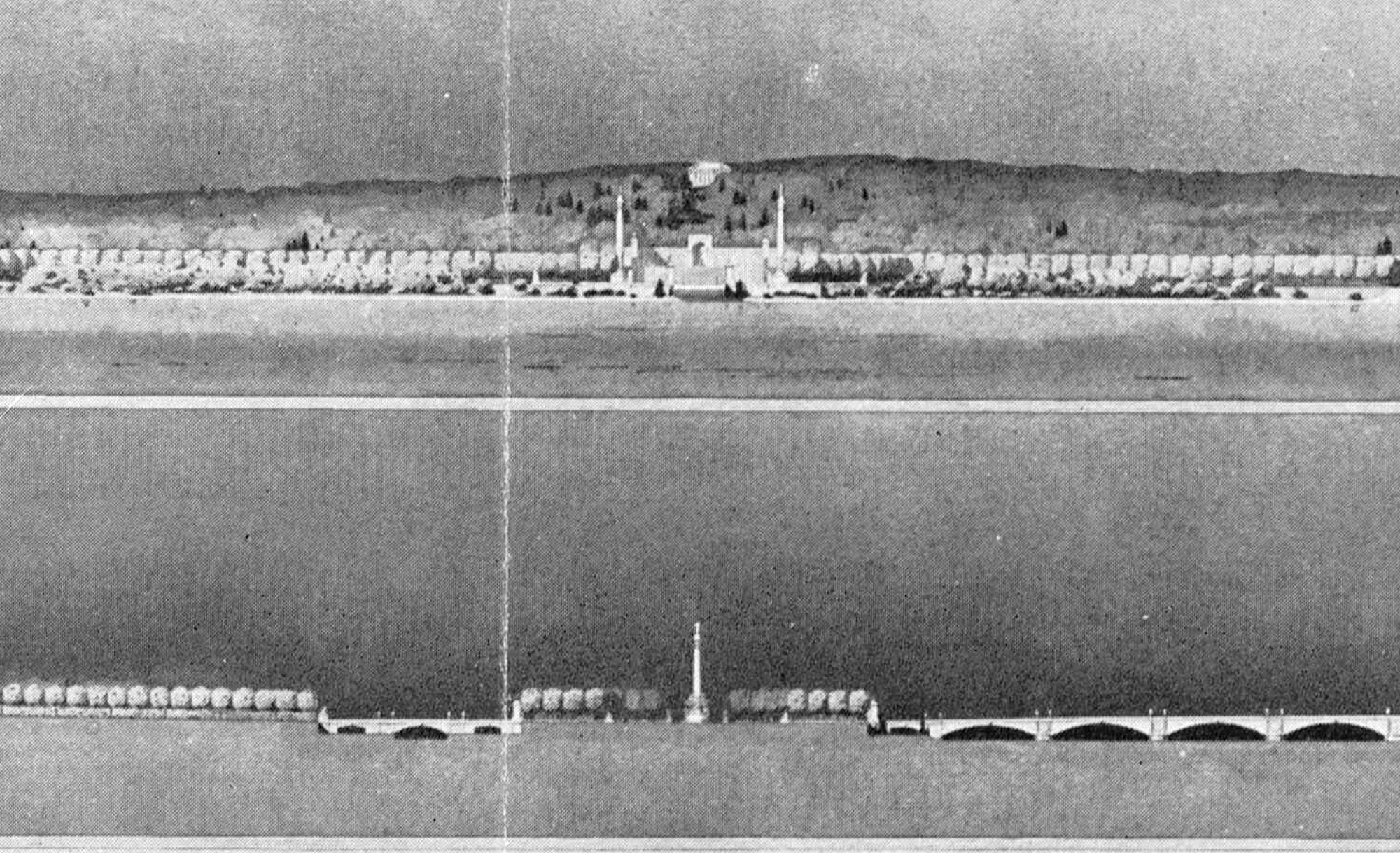
I was unable to find a specific reason for this anti-arch bias (Very Unfair!), however I think it has to do with their strong preference for open spaces and low structures wherever possible. The glue of their scheme, then, was the same one Peter L'Enfant used in 1791: axial relationships. Physically, this meant roads, allées, or lawns, as in the central axis, known as the Mall Parkway. Visually, trees, paths, and water features structured the view in a relentlessly deferential way. Demurring is exactly how the 1902 narrative describes the axis beyond Memorial Bridge:
The extension of the passageway from the island to the Virginia shore be distinctly subordinate to the bridge proper.
Indeed, in the drawings, they show almost nothing on the wild strip that is now Columbia island.
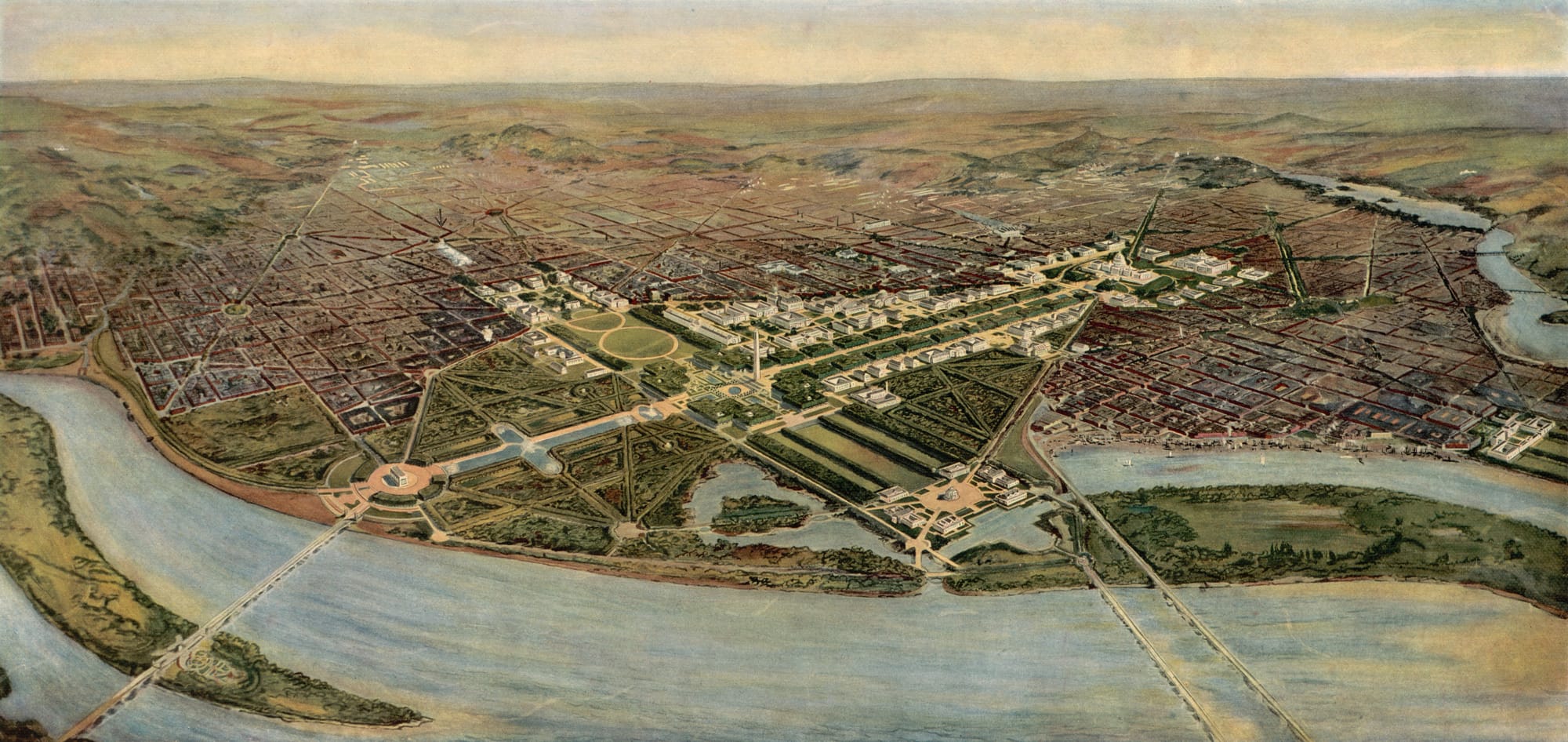
Visual emphasis was to highlight the Lincoln Memorial and Arlington House, the last link in a grand axial chain that extended from the Capitol. The 1924 report sought to enrich the design with the columns, but reiterated the focus of the view when it described the plaza on Columbia Island:
Two stately columns are proposed to be erected here, framing in but not interfering with the view of the Lincoln Memorial from the direction of the Lee Mansion.
If you know the hagiography of the McMillan Plan, then you may be surprised to learn that this final link is one of their most original ideas. Various pitches to restore parts of L'Enfant's vision were floated. Multiple options to restore what he called a grand boulevard and we call the Mall had been floated in the preceding years. Even the idea of harmonizing the misplaced Washington Monument by angling the Mall and adding a western terminus was already circulating in architectural circles. What no one had previously proposed was the idea of commemorating Abraham Lincoln at that western end and then concretely drawing the connection to a symbol of the Old South.
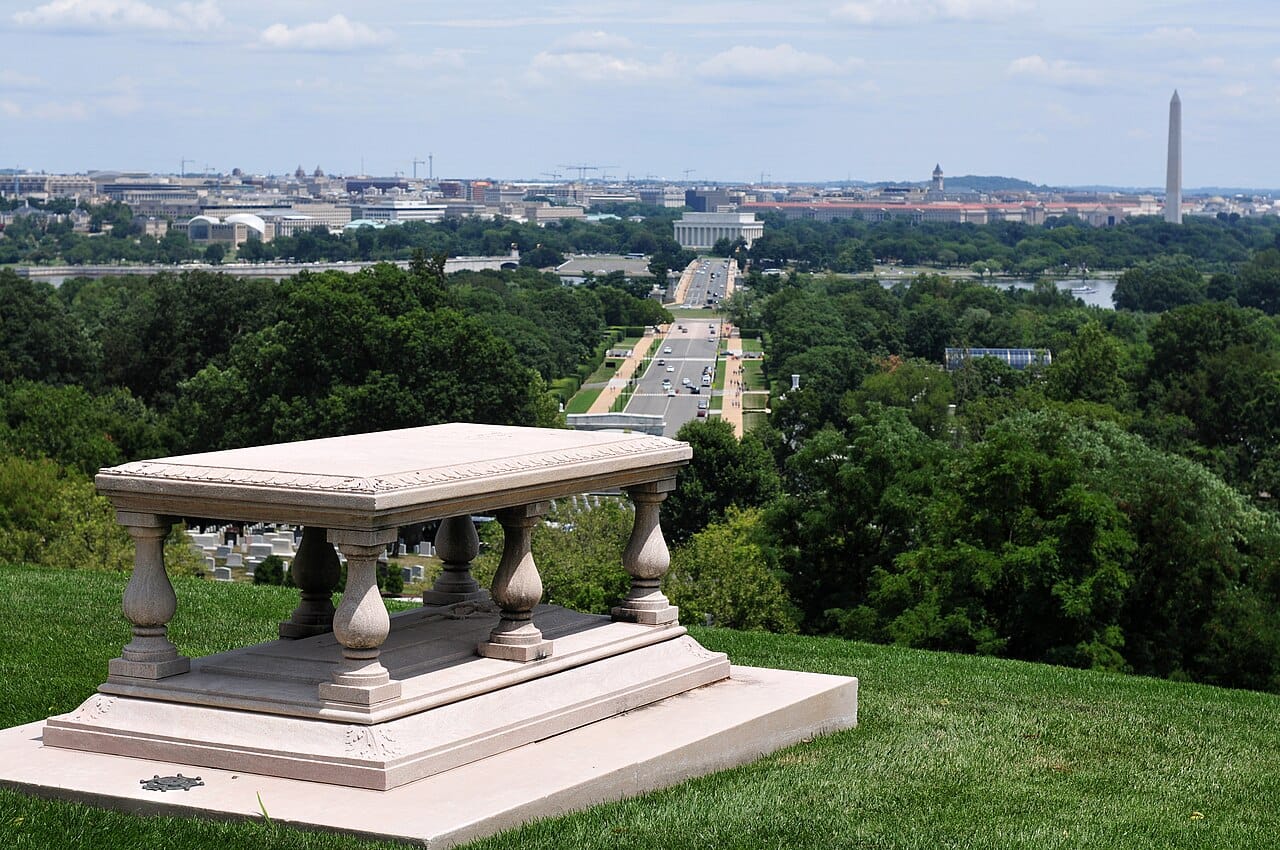
What is missing from the link
Tellingly, the 1902 park report goes out of its way to not mention the personage who made the Custis-Lee mansion symbolically relevant. The principal author of the Park Commission's report, Charles Moore, was committed Michigan Republican like his boss, Senator James McMillan. With white supremacist governments rising in the south and Black voting blocs still influential, the Confederacy remained a disreputable subject on Capitol Hill.
Just weeks before the 57th Congress began and McMillan commissioned his designers, Indiana Republican Edgar Crumpacker attempted to enforce the penalties for disenfranchisement prescribed by the 14th Amendment. He failed, but tried again that summer, when the McMillan commissioners were making a grand tour of Europe. With the fires of Reconstruction still burning with the party of Lincoln, an association with Lee would be intolerable.
Instead, the Park Commission turned to that fabled episode from before the war, when Andrew Jackson supposedly called for a granite-arched bond between North and South. In invoking Daniel Webster's tall tale, they recast their iteration of the bridge as a way to fulfill a dream deferred and honor those who died to negotiate its return:
The struggle which the orator and the statesman were powerless to avert brought about the perpetuation of the Union; and to-day the survivors of that war, both those of the North and those of the South... urge the building of the Memorial Bridge as a monument to American valor.
As I said in my last newsletter, applying history always entails some creative reimagining. Local historian Michael Chornesky has shown that Moore resisted efforts to commemorate Robert E. Lee at Arlington House in the 1920s, but the decision to highlight that site and its relationship to Lincoln laid the grounds for what followed. Trump's abuse of the law and the evidence is farcical version of that. What the McMillan Commission did is the tragedy that came first.
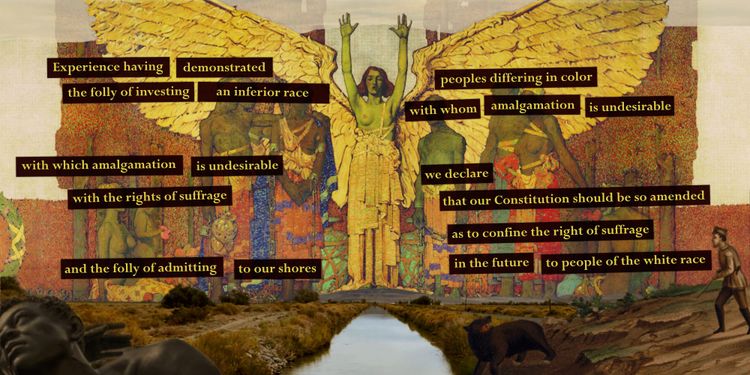
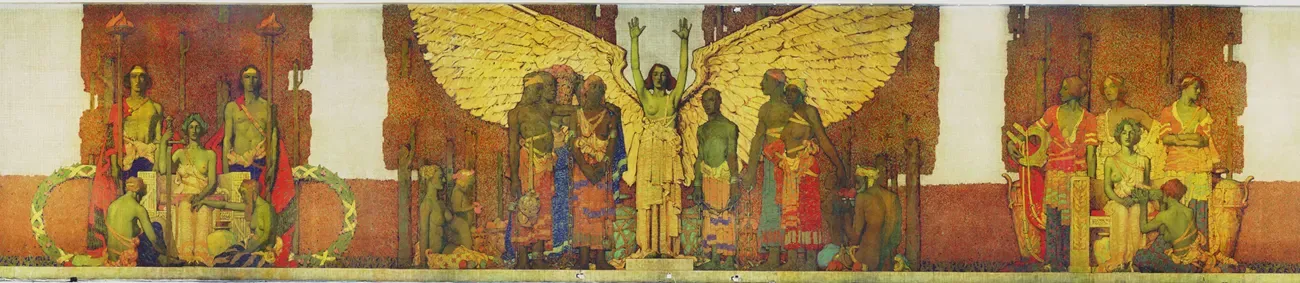
All that followed from the McMillan Commission excluded what the Civil War meant for African Americans. As Crumpacker and his supporters had feared, tolerance of disenfranchisement in the name of reunion had meant accession to Lost Cause myths or at least Dunning School interpretations of the war. Emancipation and the refoundation of the United States in the Reconstruction Amendments—when Black people became people—was cut from the McMillan Plan like some 19th-Century doodad. Even at the Lincoln Memorial, the stone recounts first and foremost that Abe "saved the Union." The subject of emancipation is pressed awkwardly to the side, in a mural 40' above the ground. Did you even know it existed?
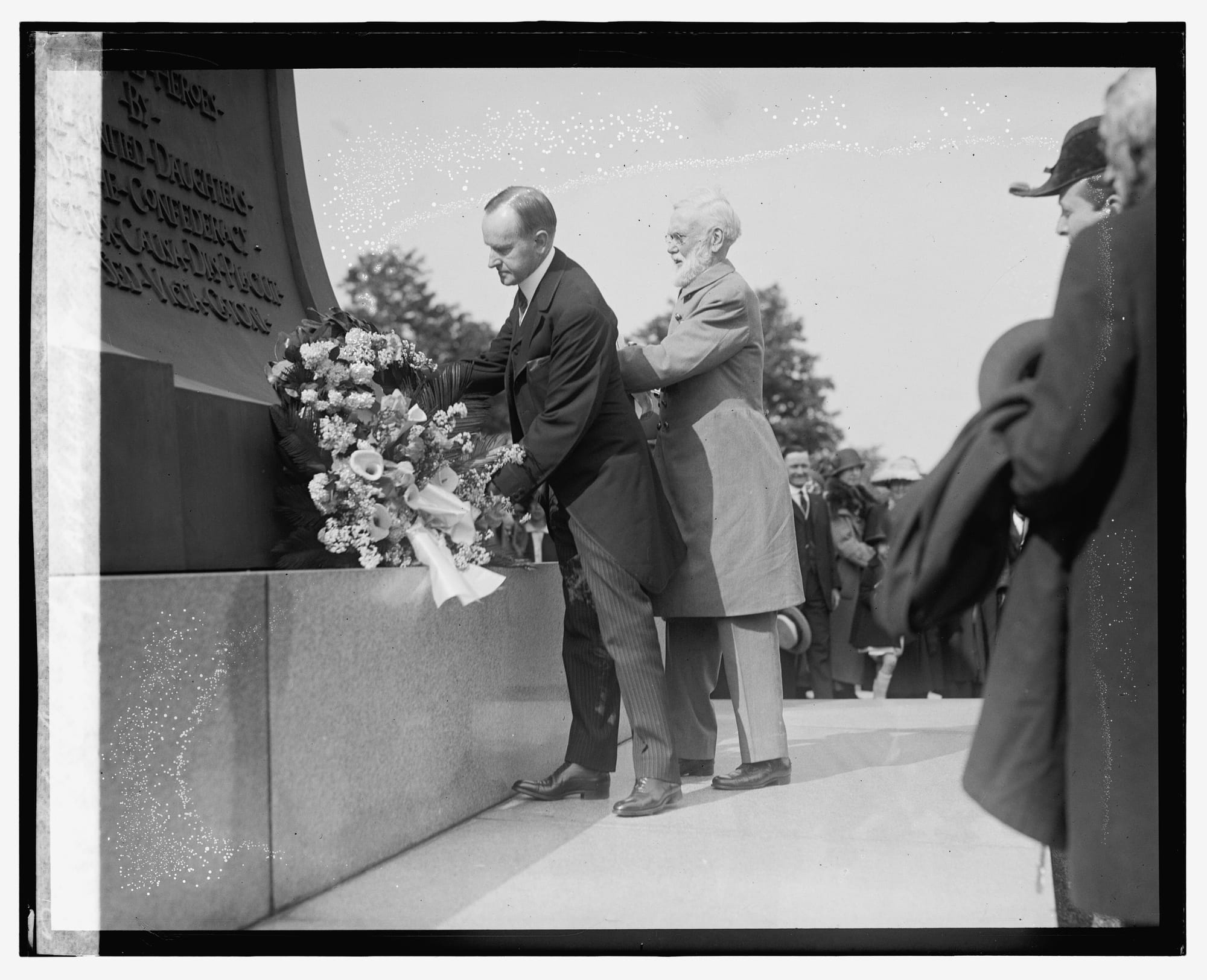
By 1924, the Memorial Bridge report could comfortably invoke Lee's name and serve as a terminus for a memorial Lee Highway. As the Ku Klux Klan was planning a march on Washington, this second commission could say all that strife was in the past. By then, not only had a grand monument to the Confederate war dead been erected in Arlington, presidents were expected to honor it. The nation was united, it seemed, in genteel white supremacy.
The fourth and perhaps the greatest of all is the symbol of the binding together of the North and South in one indivisible Union, knowing no sectional lines.
In 1955, after Moore had died and the Civil Rights movement was well underway, both houses of Congress voted to make Arlington House an official memorial to Robert E. Lee. That law remains in effect.
It is fitting then, that the man who proposed Trump's arch is himself a committed apologist for the Lost Cause. Since 2020, Catesby Leigh has vigorously defended both the Confederacy and Confederate monuments from the wrath of those he deems "woke." In his various pitches, he does not mention the symbolism of Memorial Bridge's termini—or even the McMillan Commission. Instead, he alludes to an unsolicited proposal to by sculptor Frederick Hart to make a World War II memorial of an arch at that location. Given the context of his writing and his founding role in the McMillan-obsessed classical architecture lobby the National Civic Art Society, his silence on the meaning of the space leaves me wondering. At any rate, he has denounced the arch for growing too Bigly.
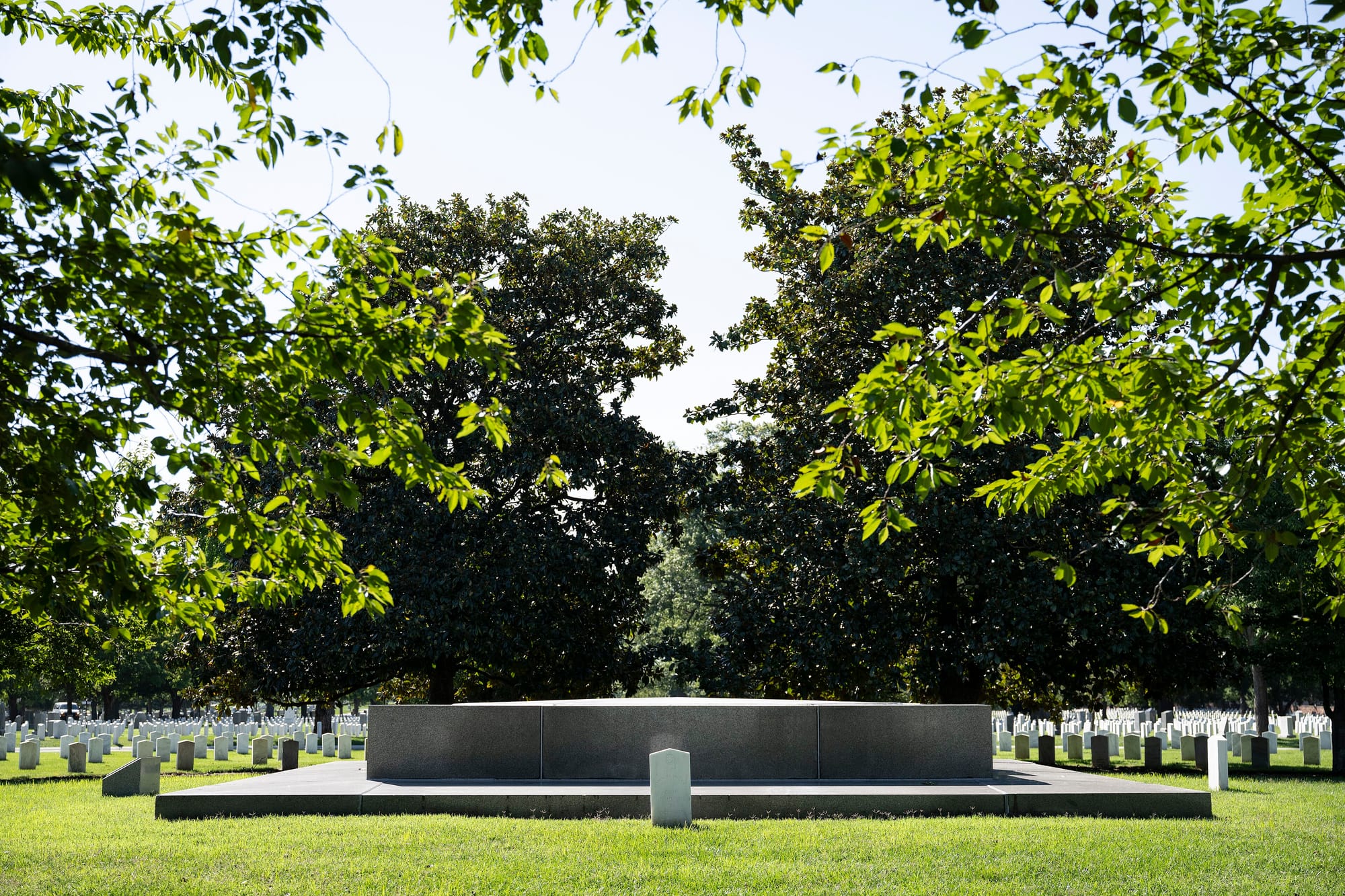
But perhaps we can find common ground on Columbia Island. If my interpretation is right, and what is missing from the bond between Lincoln and Lee is Black freedom, then it is this liberation that I think we should commemorate on the island. The legality of slavery was undeniably a paramount cause of the Civil War, and emancipation was one of its most consequential outcomes. It fits in the gap, and perhaps should even occlude it.
More than that, the river itself has a unique meaning in the history of slavery. As the border between North and South, the low water line of the Potomac was a threshold of self-emancipation for thousands of African Americans. Long before Lincoln or Congress acted, the enslaved crossed it and found themselves something closer to human. Rather than commemorate the First Founding again, isn't it time to celebrate the Second?
How, precisely, I can't and shouldn't say in this newsletter. What I do think is that Trump's arch should not be stopped to preserve a symbol of false unity, but instead it should be stopped to hold space for some future monument to a cause whose memory has long been denied.
Asch, Chris M. and G. Derek Musgrove. Chocolate City: A History of Race and Democracy in the Nation's Capital. Chapel Hill: University of North Carolina Press, 2017.
Abbott, Carl. Political Terrain: Washington, D.C., from Tidewater Town to Global Metropolis. Chapel Hill: University of North Carolina Press, 2005.
Berlin, Ira. The Long Emancipation: The Demise of Slavery in the United States. Cambridge: Harvard University Press, 2015.
Brown, Glenn. “The Choice of Location of the Lincoln Memorial.” The American Magazine of Art 17, no. 6 (1926): 275–81.
Caemmerer, H. Paul. “Charles Moore and the Plan of Washington.” Records of the Columbia Historical Society 46/47 (1944): 237–58.
Chornesky, Michael B. “Confederate Island upon the Union’s ‘Most Hallowed Ground’: The Battle to Interpret Arlington House, 1921-1937.” Washington History 27, no. 1 (2015): 20–33.
Davis, Timothy M. "Mount Vernon Memorial Highway and the Evolution of the American Parkway. Diss. (University of Texas at Austin, 1997). Proquest UMI.
Fanning, Kay and Thomas E. Luebke. American Shrines: The Architecture of Presidential Commemoration. Amherst: University of Massachusetts Press, 2025.
Greenidge, Kerri K. Black Radical: The Life and Times of William Monroe Trotter. New York: Norton, 2020.
Gutheim, Frederick and Antoinette Lee. Worthy of the Nation: Washington, DC, from L'Enfant to the National Capital Planning Commission, 2nd ed. Baltimore: Johns Hopkins University Press, 2006.
Foner, Eric. Reconstruction: America's Unfinished Revolution, 1863-1877, updated edition. New York: HarperCollins, 2014.
Foner, Eric. The Second Founding: How the Civil War and Reconstruction Remade the Constitution. New York: Norton, 2019.
Fox, Stephen R. The Guardian of Boston: William Monroe Trotter. Boston: Atheneum, 1970.
Hatcher, Ed. “Washington’s Nineteenth-Century Citizens’ Associations and the Senate Park Commission Plan.” Washington History 14, no. 2 (2002): 70–95.
Kohler, Sue A., Scott, Pamela, eds. Designing the Nation's Capital: The 1901 Plan for Washington, DC. Washington: United States Commission of Fine Arts, 2006.
Leech, Margaret. Reveille in Washington, 1860-1865. New York: Carroll & Graf Publishers, 1991.
Lessoff, Alan. The Nation and Its City: Politics, Corruption, and Progress in Washington, D.C., 1861-1902. Baltimore: Johns Hopkins University Press, 1994.
Luebke, Thomas E. Civic Art: A Centennial History of the U.S. Commission of Fine Arts. Amherst: University of Massachusetts Press, 2013.
Masur, Kate. An Example for All the Land: Emancipation and the Struggle Over Equality in Washington, D.C. Chapel Hill: University of North Carolina Press, 2010.
Moore, Charles, ed. The Improvement of the Park System of the District of Columbia, Senate Report #166, 57th Congress, 1st Session. Washington: Government Printing Office, 1902.
Nagle, John L. “The Arlington Memorial Bridge.” The Military Engineer 20, no. 110 (1928): 154–60.
Nagle, John L. “Draw Span of Arlington Memorial Bridge.” The Military Engineer 22, no. 126 (1930): 518–22.
Orlin, Glenn S. “Roads and Parks in Harmony.” Washington History 1, no. 1 (1989): 58–69.
Reps, John W. Monumental Washington: The Planning and Development of the Capital Center. Princeton: Princeton University Press, 1967.
Riser, R. Volney. Defying Disfranchisement: Black Voting Rights Activism in the Jim Crow South, 1890-1908. Baton Rouge: LSU Press, 2010.
Savage, Kirk. Monument Wars: Washington, D.C., the National Mall, and the Transformation of the Memorial Landscape. Berkeley: University of California Press, 2009.
Scott, Pamela. Capital Engineers, The U.S. Army Corps of Engineers in the Development of Washington, D.C. 1790—2004. Alexandria: United States Army Corps of Engineers Office of History, 2011.
Siddali, Silvana R. From Property to Person: Slavery and the Confiscation Acts, 1861-1862. Baton Rouge: LSU Press, 2005.
Thomas, Christopher A. The Lincoln Memorial & American Life. Princeton: Princeton University Press, 2002.
Report of the Arlington Memorial Bridge Commission, Senate document #95, 68th Congress, 1st session. Washington: Government Printing Office, 1924.
Honestly...