How racist was Francis Newlands?
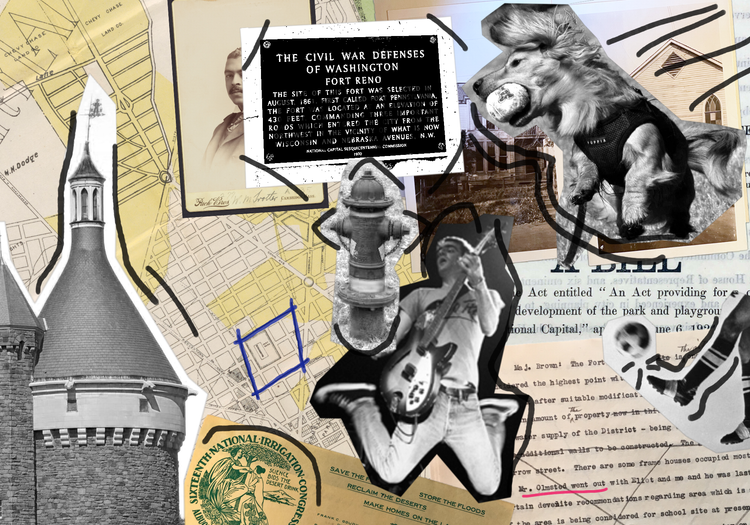
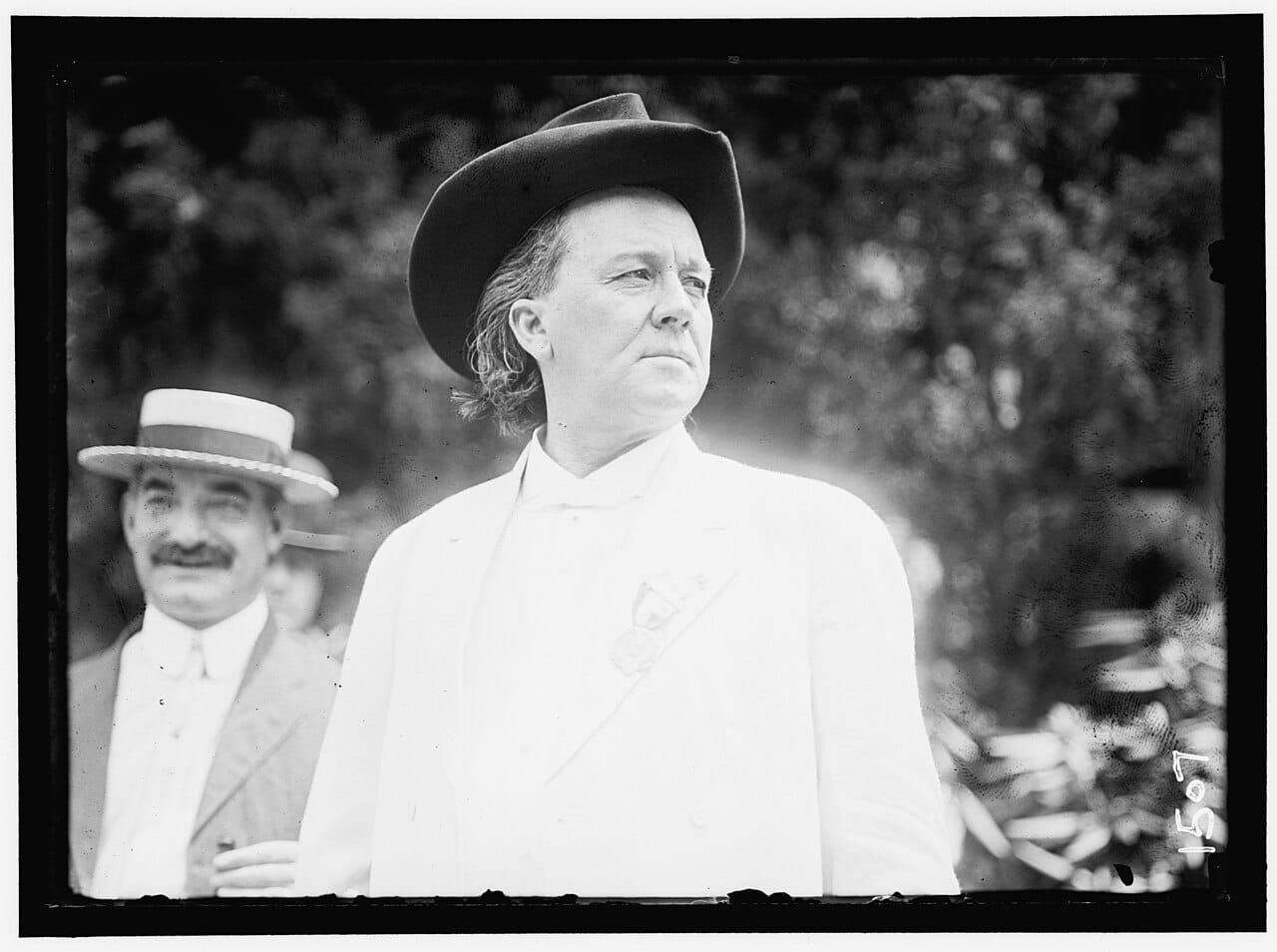
In November 2025, the National Park Service removed one of their distinctive "wayside" signs from a sidewalk in Chevy Chase, DC. They did so because it mentioned the white supremacist views of the founder of Chevy Chase, Senator Francis Griffith Newlands. According to Mother Jones, the sign was removed at the directive of Frank Lands, the serendipitously named Deputy Director of the agency, who lives in the area. Lands was, of course, following the Trump's Executive Order 14253, which mandated the aggressive whitewashing of even the most anodyne federal efforts to tell the difficult truths of American History. It is another incident in a long history of downplaying not only that Newlands was racist, but also that he is racist in a fairly unusual way for a politician: he wanted to make it explicitly foundational to the United States.
In the recent case Louisiana v. Callais, the Supreme Court ruled that race can never be explicitly considered in the design of voting districts. This prohibition includes racial consideration as a remedy against de facto racial exclusion, as prescribed by the Voting Rights Act of 1965. According to this principle, disenfranchisement is only legally provable if it is stated outright—the same standard that prevailed at the height of Jim Crow. The foundational doctrine of American segregation, "separate but equal," rested on the premise that both sides remained nominally equal. Segregation was just one of many tools to advance the subordination of African Americans through custom, hoary legal pretexts, private discrimination, and, more than anything else, violence. Francis Newlands abhorred this mishmash of lawlessness.
Everyone and everything in their proper place
In fact, Newlands seems to have hated conflict in general. It is an opinion that is as consistent in the documentary record as his white supremacist views, from an anti-Chinese convention in 1886 to a reminiscence of Booker T. Washington in 1916, with examples in a dozen other fields along the way. While never a major project of his, he was an enthusiastic supporter of alternatives to war, such as the Permanent Court of Arbitration. He strongly supported giving voting rights to white women, but recoiled at what he called the "melo-drama" of suffragist protest. And his labor policy was entirely imagined around uniting labor and capital into a rationally entrepreneurial "public" (with a lot more ownership).
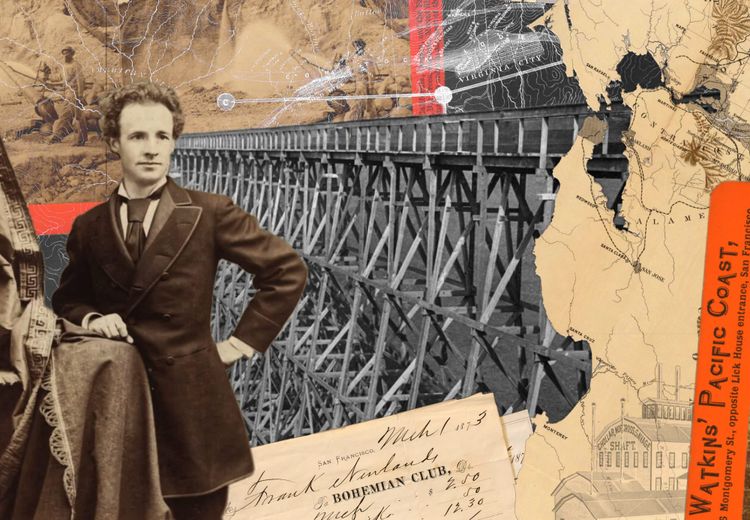
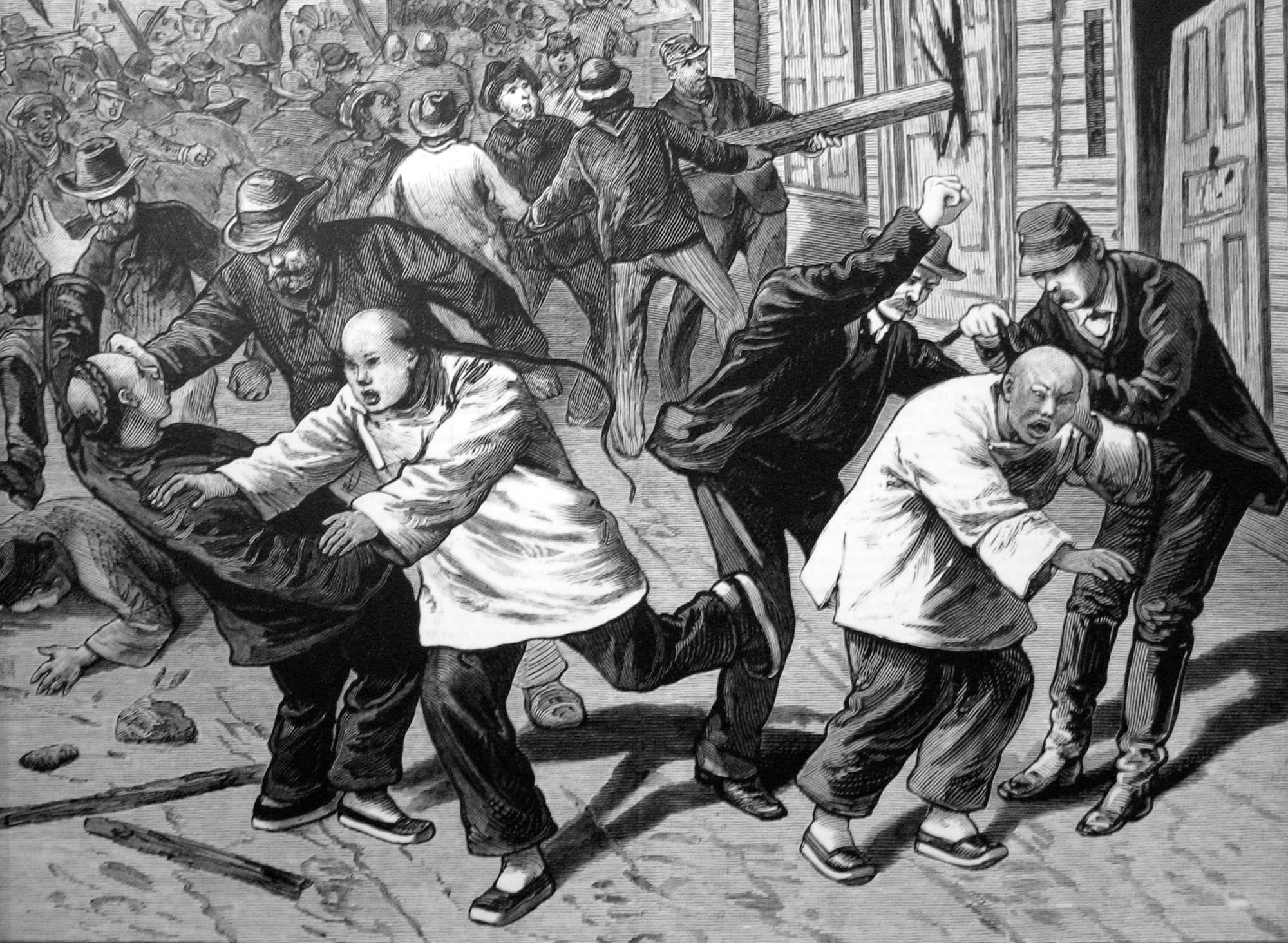
This sense of uniting white labor and capital within a stable system forms one of the first political statements we have from Francis Newlands. At the 1886 convention of the Anti-Chinese Nonpartisan Political League in Stockton, the 38-year old businessman objected not only to the rampant-anti Chinese violence that roiled the American West, but even the new, trendy nonviolent practice of boycotting. Working outside of traditional political discourse, boycotts disrupted commerce and even affected white-owned businesses that employed Asian laborers, who were alleged to undercut the wages of white workers, among the other usual slurs. That businesses managed by Newlands seem to have employed Chinese workers, well... he claimed to admit it was a mistake and wanted to use strictly legal processes to realize industrial harmony. At any rate, boycotts often accompanied violence, such as the combination of techniques known as the Truckee Method, named after a town in Newlands's backyard.
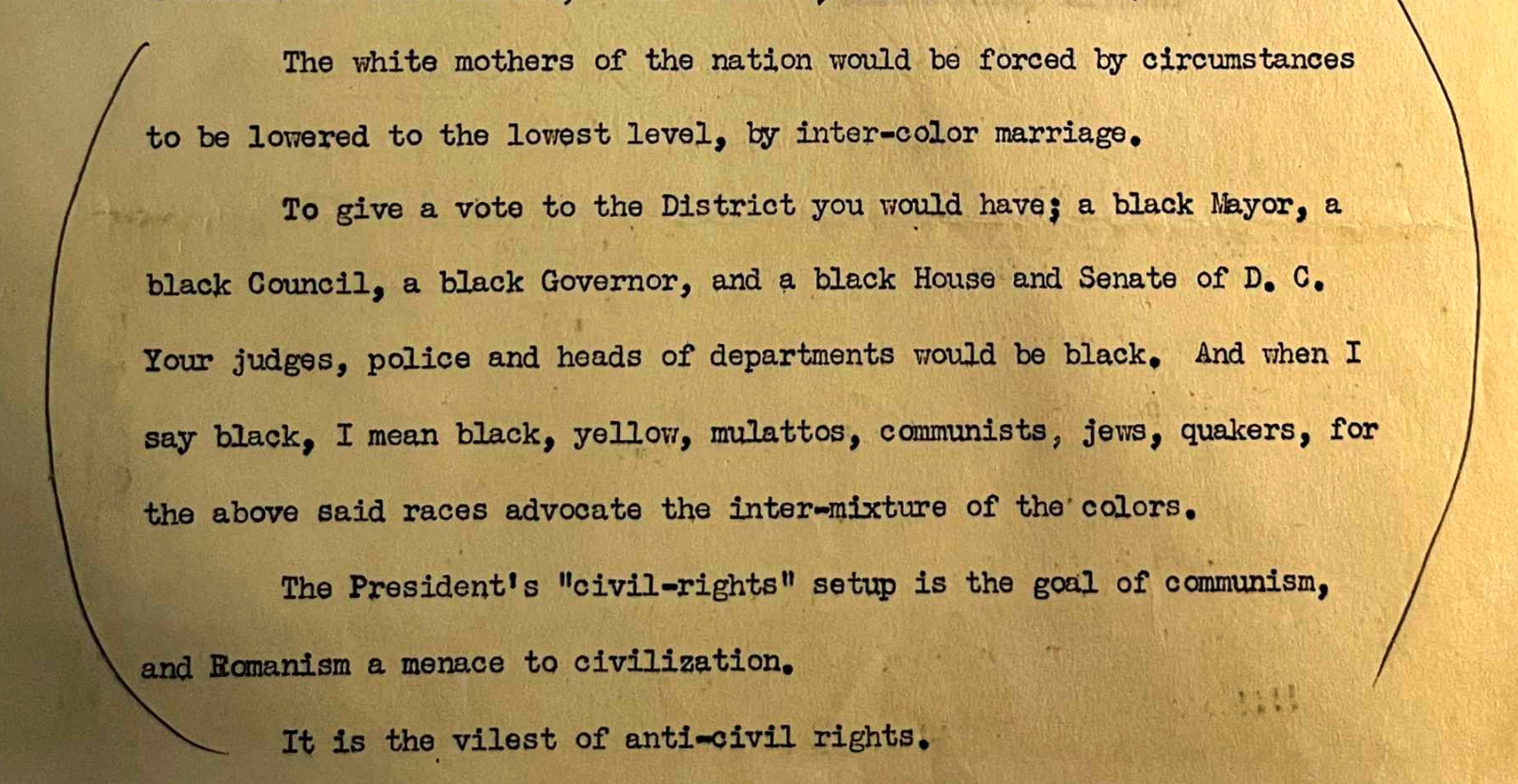
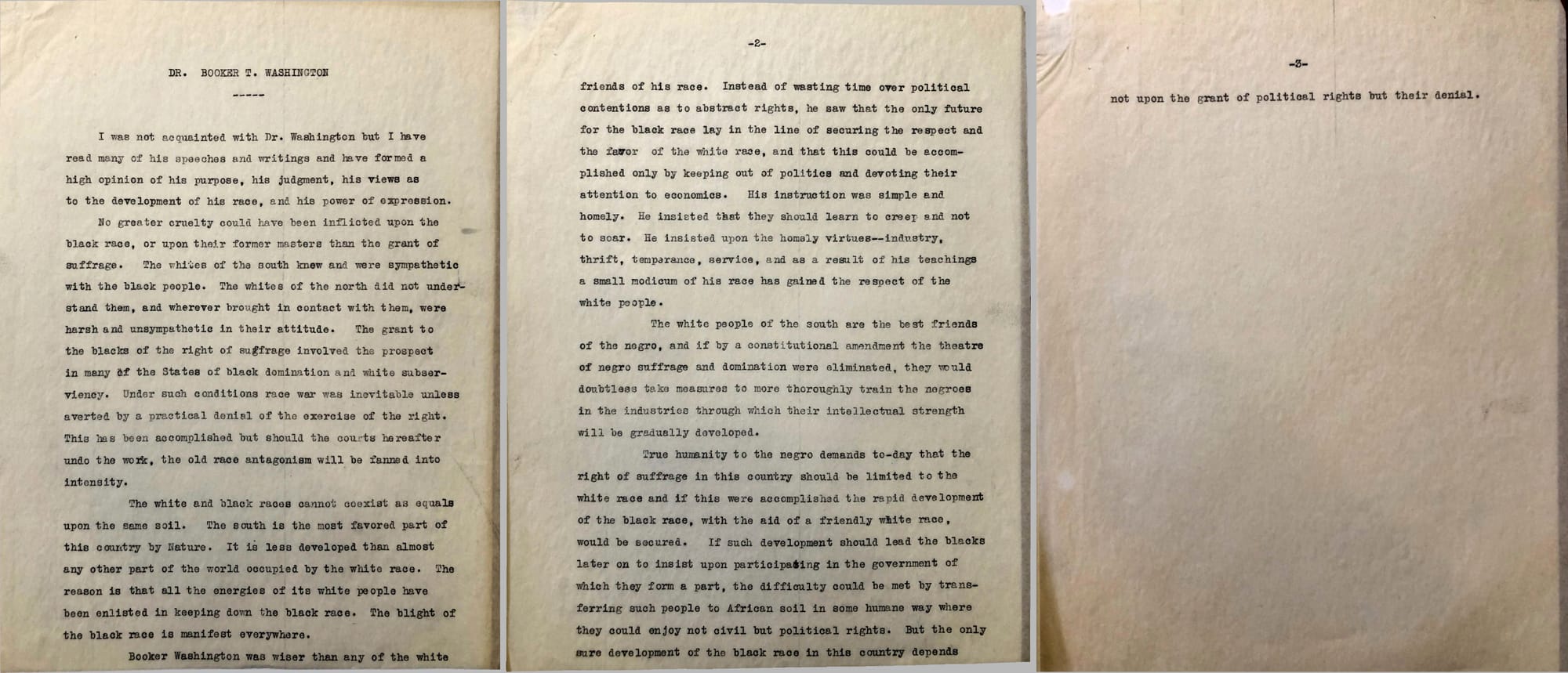
At the other end of his life came his attempt to eulogize Booker T. Washington in 1916, which is preserved in his papers at Yale. In actuality, it is a manifesto on the biological inferiority of people of African descent, the inevitability of "negro domination" when given political rights, and the hope that the race could "develop" if "humanely" deported to Africa. Newlands therefore applauded Washington for encouraging a life of work, family, and self-discipline under white authority. The crux of his argument was a trilemma he articulated more clearly in two lengthy articles, 1905's "The San Domingo Question," and 1909's "A Western View of the Race Question." When two races—even equally civilized ones—coexist within the same polity, he argues, tensions will inevitably rise. Either one will dominate the other, possibly even leading to slavery, or both sides will engage in a race war. The third alternative, the "amalgamation" of the races by marriage, Newlands treats as flatly unacceptable.
A thoroughly modern racism
Apologists for—and even scholars of—Newlands have described these beliefs as "of their time" or even "archaic" hangovers of his Southern upbringing. However, these claims are directly contradicted by both his own narrative of intellectual development as well as the host of assumptions behind the three outcomes of multiculturalism that kept him up at night.
In various letters from his Senate career (1903-1917), he claimed to have originally supported the emancipation of African Americans and seen anti-Asian sentiment as bigotry. Only after witnessing the abuses of Reconstruction, he claimed, did he conclude that Black Americans needed white guidance. Similarly, he insisted his opposition to Asians arose from a desire to protect white labor and avoid conflict, just as he asserted in 1886. Even in the 1910s, Newlands expressed admiration for Abraham Lincoln, whose legacy, he felt, was ruined by Radical Republicans. Indeed, while technically born to Scottish immigrants in Mississippi, he mostly grew up in the midwest and DC, where was mentored by racial conservatives in Andrew Johnson's administration. He likely had a good perspective on the legislative process around the Reconstruction civil rights laws and amendments. Twenty years later, he would co-found Chevy Chase with Senator William Stewart, who wrote the final draft of the 15th Amendment, guaranteeing all American citizens the right to vote. More on that in a second.
The assumptions behind his arguments likewise show Newlands to have been well read in pseudoscientific racial theories that would eventually result in eugenics. In these theories, race was understood as a biological product of climate and environment. Humans could shape this, both through breeding and through civilization. Under these theories of "race development," having kids with someone from a different part of the world weakened not only the biological and cultural fitness of individuals but entire societies. Similarly, contemporary theorists made a key distinction between races that had evolved in temperate climates as opposed to tropical ones. Whenever members of a race lived in the wrong climate, they failed to flourish—or even degenerated. These ideas were hotly debated in intellectual circles. Black luminaries like W.E.B. Du Bois even edited publications like the Journal of Race Development, which eventually left eugenics to others and became Foreign Affairs.
As best as I can tell, the idea that race mixing caused infirmity was a widespread belief throughout the entire life of Newlands. Typically, defenders appealed to analogies about animal breeding or just common sense. This idea often existed in contradiction with adjacent claims that accomplished African Americans like Du Bois were only capable of excellence because they had so much European ancestry. The ideas about climate and development, in contrast, really seem to enter American discourse after its colonial adventures, when intellectuals tried to make sense of tropical diseases and their feelings about dominating populations that did not look like them.
Indeed, the archival documents that survive cannot really prove why Newlands came to believe any of these things. His embrace of the ideas could as much be a result political opportunism or childhood inculcation of racist ideas. Similarly, it is impossible to rule out some psychosexual motive, since it was just so ubiquitous and anything but subliminal in the media of the time. What can be said is that he justified subordination of non-white people through fashionable ideas, enthusiastically promoting them through private correspondence, in influential journals, and from the bully pulpit of the United States Senate.
Most importantly, he used his power to propose an idea even the most vicious Jim Crow legislators rejected: he sought to dispense with the premise of equality and make white supremacy the law of the land.
The White Plank
In my collection of 3,123 documents related to Francis Newlands, I have no public comments on race from the man after 1912. After a period of increasing activism, and through a period when overt racism becomes more acceptable in the North, Newlands kept his thoughts to himself. As best as I can tell, he kept silent because he went too far: he called for the United States to "write the word 'white' into the Constitution."
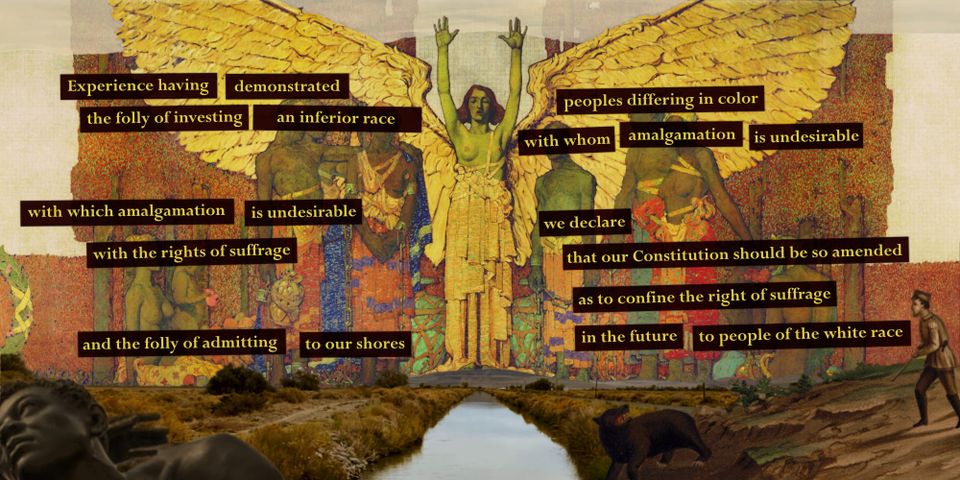
During the 1912 Democratic National Convention in Baltimore, he proposed a plank that forms the clearest distillation of his racial agenda. The way that the Platform Committee rejected it is extremely revealing, as well. It read:
Experience having demonstrated the folly of investing an inferior race with which amalgamation is undesirable with the rights of suffrage, and the folly of admitting to our shores peoples differing in color, with whom amalgamation is undesirable, we declare that our Constitution should be so amended as to confine the right of suffrage in the future to people of the white race, and we favor a law prohibiting the immigration to this country of all peoples other than those of the white race, except for temporary purposes of education, travel, and commerce.
As with all things Newlands did, this text is meticulously worded. Fundamentally, its aim is to consolidate power in the hands of white people by revising the 15th Amendment and barring immigration to non-whites. This would allow for the gradual transformation of the United States until non-whites could be "humanely" deported to their proper climates. Obviously, this project simply ignores the fact that white people are not native the United States. This issue was raised in other discussions the time. However, I have no evidence Newlands ever addressed it or the fate allotted to Native Americans in his lily-white vision.
The plank contains three justifications. The first is aimed at African Americans, who are explicitly referred to as "inferior." The second is aimed at Asians. Here, he does not explicitly call them inferior, nevertheless, he reiterates the danger of intermarriage. Some of this is simply scale: less than 1% of people living in the United States were of Asian origin, a smaller population than even Native Americans, and neither were integrated into the American polity like Black people. When read with other remarks and positions, it shows that Newlands saw different Asian cultures with varying levels of respect. For example, he opposed American imperialism on the grounds that none of the ethnic groups in, e.g. the Philippines were equals of white people. Meanwhile, in classic red flag territory, he had a respect for Japanese people and their strong sense of homogeneity (as long as they weren't in the US). Indeed, he led the annexation of Hawai'i to thwart both the immigration of Japanese laborers and also a possible Japanese counter-coup against the archipelago's white junta. His respect for Chinese people was somewhere in the middle.
Placing these two regional forms of bigotry on one plank was a political move. Newlands sought to unite the racial grievances in the West and the South against the more populous Northern states. With small non-white populations, Newlands felt Northerners simply lacked the experience of living with others that he refers to in the opening clause. There, he is fending off arguments that his agenda arises from prejudice rather than observation. This reinforces the evidence that Newlands was aware of arguments for racial equality on both moral and scientific grounds.
The plank is then modulated by two points.
The first is to respect "education, travel, and commerce." This was to allay concerns from businessmen and diplomats, particularly those from the Japanese Empire. Newlands's public statements had been a source of embarrassment for the Roosevelt and Taft presidencies at a time when they were trying to foster a relationship with a country that was rapidly proving itself in the geopolitical arena.
The second is the restriction of suffrage in the future. Here we see Newlands's characteristic aversion to conflict. Those non-white Americans who had the franchise could keep it for their lives. It would simply be denied to those born after the enactment of the amendment. In addition to an argument from fairness, he saw this as a way to avoid violent resistance to the policy. Newlands was trying to avoid his three equal evils: racial mixing, the domination of one race over the other, and open race war.
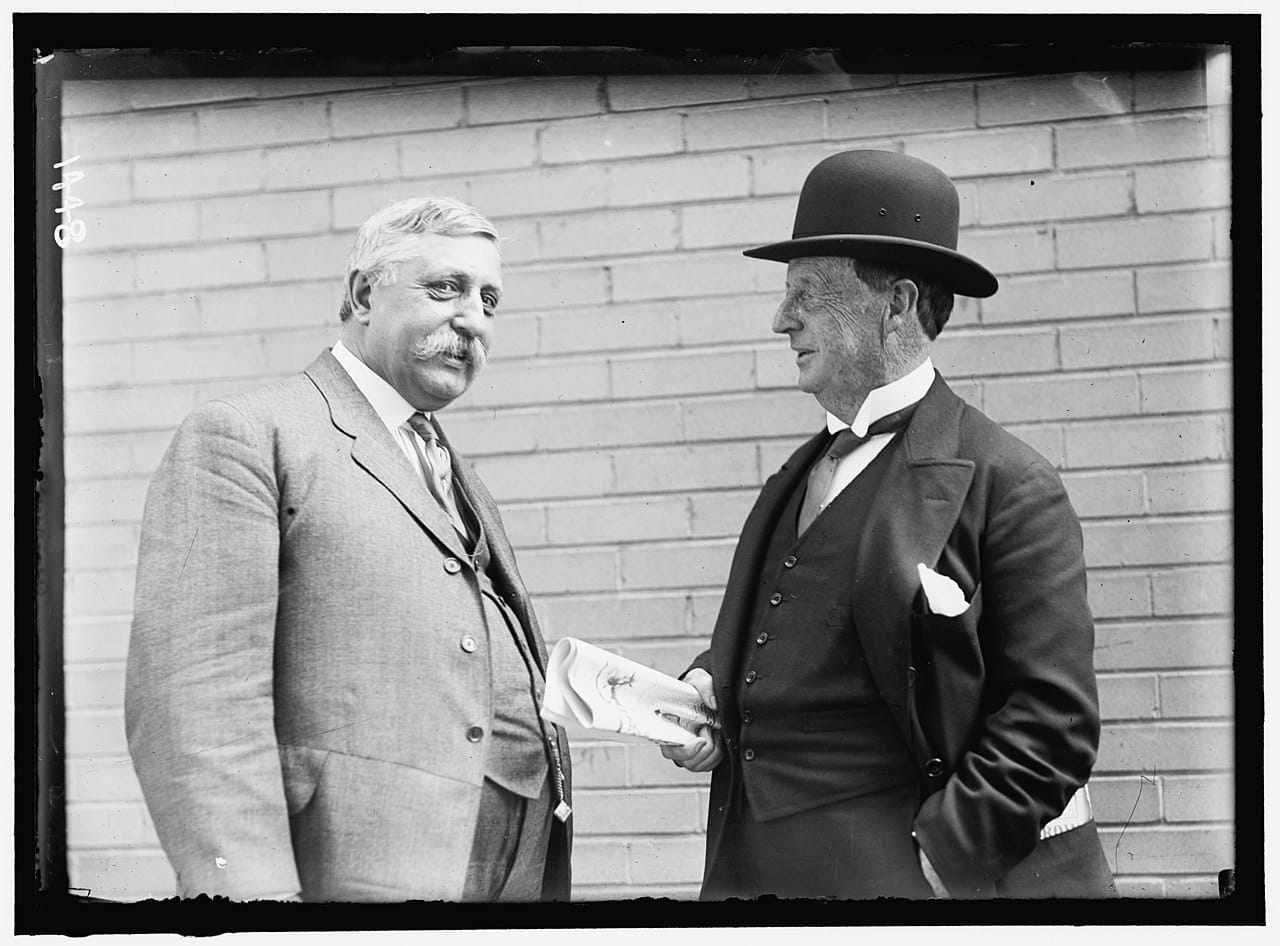
When Newlands presented the plank, he received no support. According to a paid article in the NAACP's Crisis, he appealed specifically to two of the most notorious racists in the Senate, populist democrats Ben Tillman of South Carolina and Mississippi's James Vardaman. They offered no support—and maybe we should not be surprised. What Newlands abhorred about the Jim Crow system—its legal farces and ubiquitous violence—Tillman used and Vardaman rather enjoyed.
Humiliated, Newlands decided his time was better spent remaking the American landscape, as a way of creating new opportunities for white people. In responses to the ample and nauseating fanmail he later received, he regretted that America was not ready for his ideas. Ironically, he would not have had to wait long. Woodrow Wilson permitted the segregation of the Federal government next year. The racist tendencies in eugenics movement developed and soon became public policy. And most dramatically, open white supremacism became respectable across the United States again. City and country would be united under the terror of mobs and the reborn Klan.
In all, it is not enough to say that Francis Newlands was "of his time," and it is dead wrong to say his views were "archaic." He was a fully modern racist who used his power to make the world more oppressive to those people he considered inferior. Most strikingly, in pursuit of a rational and more coherent system of oppression, he crossed a line in politics, and proposed the legal and explicit subordination of non-white people. Not even John Roberts would touch that.
Sources:
Anderson, Warwick. Colonial Pathologies: American Tropical Medicine, Race, and Hygiene in the Philippines. Durham: Duke University Press, 2006.
Benjamin, Karen. Good Parents, Better Homes & Great Schools: Selling Segregation before the New Deal. Chapel Hill: UNC Press, 2025.
Blatt, Jessica. “The Journal of Race Development: Evolution and Uplift.” In Race and the Making of American Political Science. University of Pennsylvania Press, 2018. http://www.jstor.org/stable/j.ctv16t6jx5.7.
Fields, Karen and Barbara J. Fields. Racecraft: The Soul of Inequality in American Life. London: Verso, 2012.
Francis Griffith Newlands papers, MS 371. Yale University Special Collections, New Haven, CT.
Fogelson, Robert M. Bourgeois Nightmares: Suburbia, 1870-1930. New Haven: Yale University Press, 2005.
Herbin-Triant, Elizabeth A. Threatening Property: Race, Class, and Campaigns to Legislate Jim Crow Neighborhoods. New York: Columbia University Press, 2019.
Leonard, Thomas C. Illiberal Reformers: Race, Eugenics, and American Economics in the Progressive Era. Princeton: Princeton University Press, 2017.
Lew-Williams, Beth. The Chinese Must Go: Violence, Exclusion, and the Making of the Alien in America. Cambridge: Harvard University Press, 2018.
Merleaux, April. Sugar and Civilization: American Empire and the Cultural Politics of Sweetness. University of North Carolina Press, 2015.
Morgan, William Michael. “The Anti-Japanese Origins of the Hawaiian Annexation Treaty of 1897.” Diplomatic History 6, no. 1 (1982): 23–44.
Newlands, Francis G. “The San Domingo Question.” The North American Review 180, no. 583 (1905): 885–98. http://www.jstor.org/stable/25105414.
Newlands, Francis G. “A Western View of the Race Question.” The Annals of the American Academy of Political and Social Science 34, no. 2 (1909): 49–51. http://www.jstor.org/stable/1011210.
Reuter, E. B. “The Superiority of the Mulatto.” American Journal of Sociology 23, no. 1 (1917): 83–106. http://www.jstor.org/stable/2763497.
Rowley, William D. Reclaiming the Arid West: The Career of Francis G. Newlands. Bloomington: Indiana University Press, 1996.
Sharon Family Papers, MSS C-B 777. Bancroft Library, Berkeley, CA.
Vitalis, Robert. “The Noble American Science of Imperial Relations and Its Laws of Race Development.” Comparative Studies in Society and History 52, no. 4 (2010): 909–38. http://www.jstor.org/stable/40864901.
Unknown Author. "Quo Vadis?" The Crisis 5, no.1 (1912).
Worster, Donald. Rivers of Empire: Water, Aridity, and the Growth of the American West. New York: Pantheon Books, 1985.
Stay woke to the real threat (Quakers)