Who coined the term "City Beautiful?"
Ask anyone with an opinion on the Standard Zoning Enabling Act of 1922 and they'll tell you that the American field of urban planning came out of something called the City Beautiful Movement.
The academic consensus about this decade-long phenomenon is that was an effort by Americans of middle class status and above to redeem cities from disorder. Their remedy was beauty, from dignified benches to monumental confections of foliage and marble. As the story goes, this interest in shaping cities led into holistic ideas about city and regional planning, which then formed the institutions of the land use regime. That all seems to be true enough. What I want to focus on is the dimension that its professional, and purportedly scientific, successors left behind: spirituality.
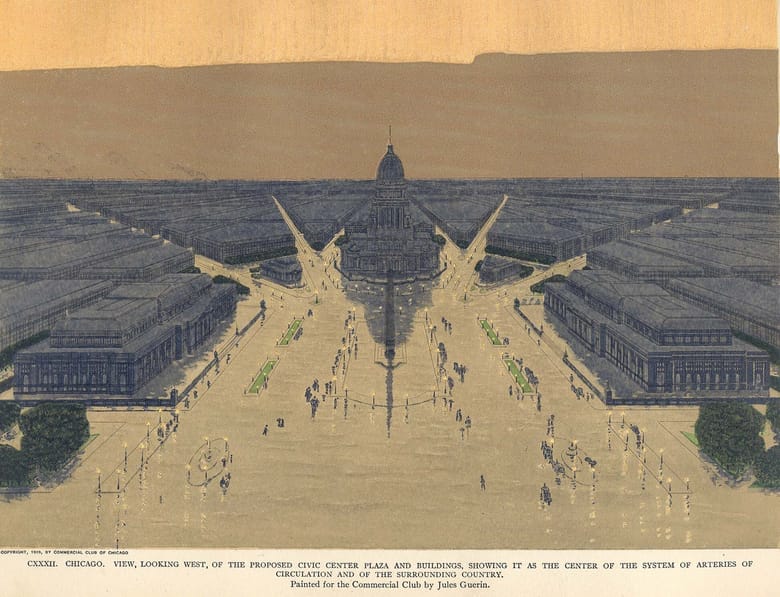
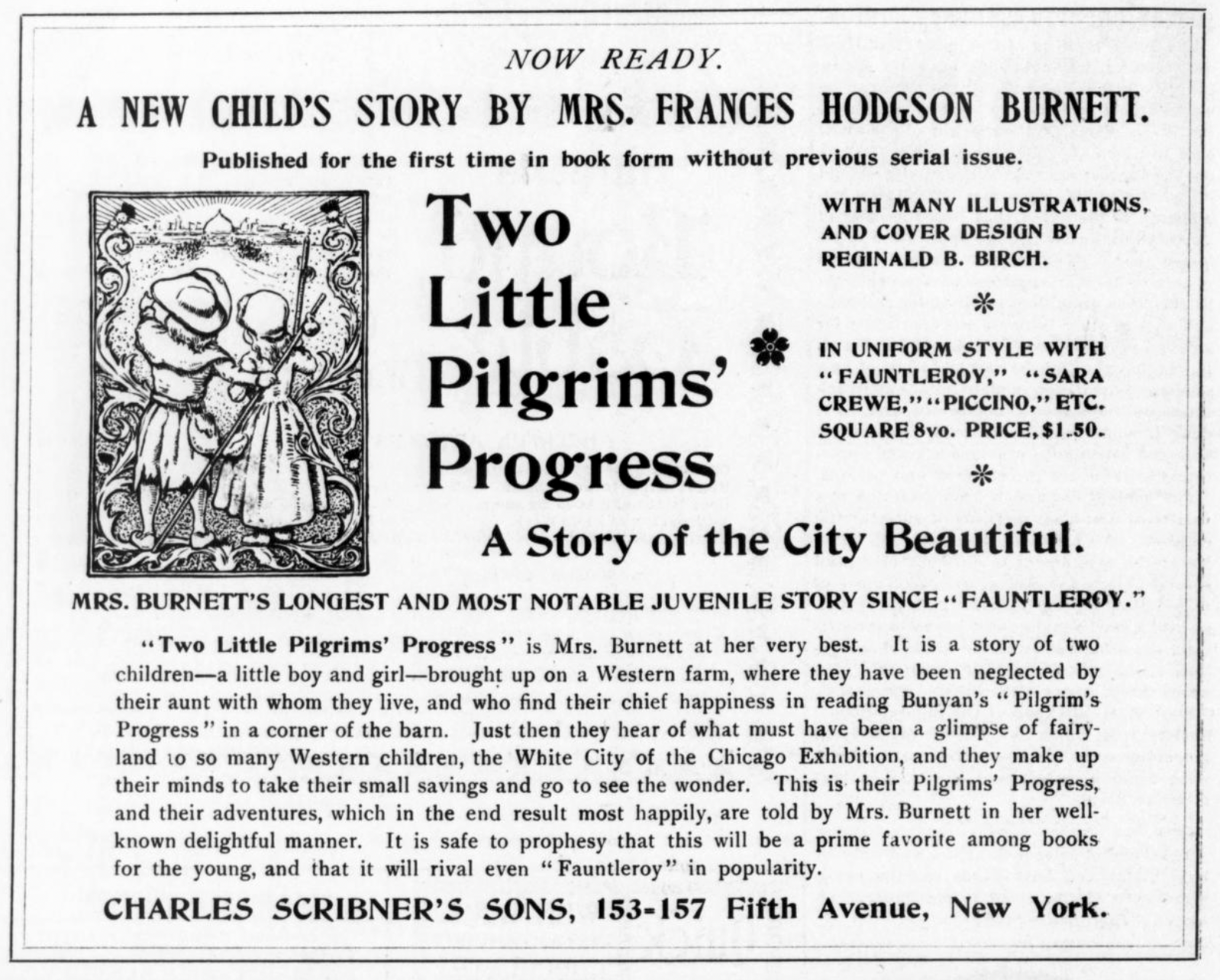
The name of the movement is itself the biggest clue that it originally aimed for more than leafy boulevards that juiced real estate values. In a previous post about the 1893 World's Fair, I mentioned a children's book by Frances Hodgson Burnett entitled Two Little Pilgrim's Progress, a Story of the City Beautiful. The name of the book has tantalized some historians, since its title suggests a direct connection between the movement and the Great Fair. On the other hand, we don't see figures associated with the movement use the term until 1899, four years after Burnett's book appeared in 1895. Before that date, and long after, when someone said "the city beautiful" it's more likely they were discussing the realm where St. Peter was entering his 489th consecutive mayoral term.
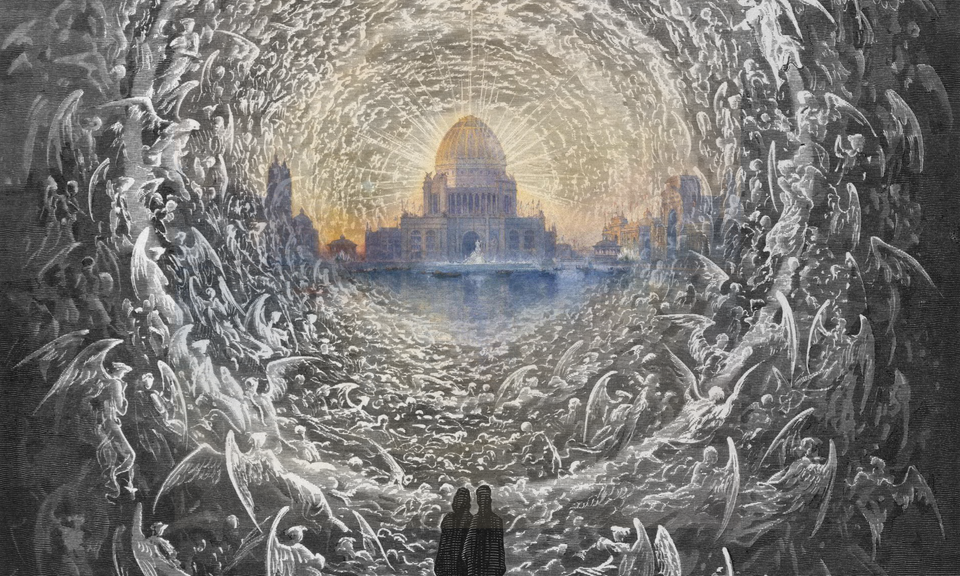
So in today's newsletter, I'd like to be the sainted Beatrice to your midlife crisis Dante and take you through the heavens, to the throne of God—which is still in Chicago, somehow. Along the way, I want to emphasize a counterintuitive point. I hope to show that who coined the phrase or even what inspired them only says so much about a historical period. Rather, what I think really reveals the spirit of a period are the preconditions that allowed a term to catch on: its reception.
Sphere I: The Beautifiers
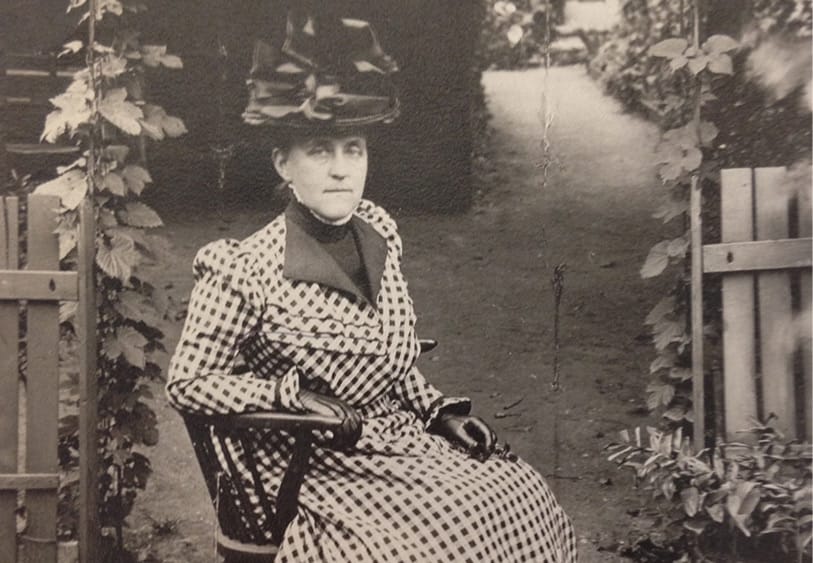
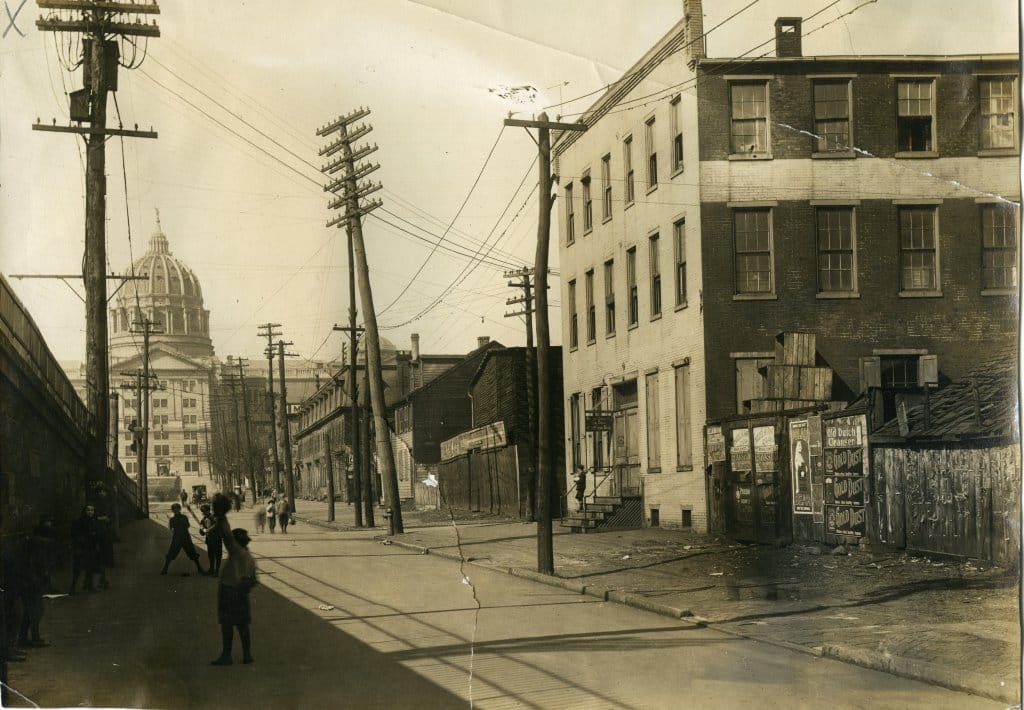
This post began as an effort to prove that a reform-minded Harrisburg socialite named Mira Lloyd Dock popularized the term "City Beautiful" on December 20th, 1900. That evening, she pitched the city's business leaders on the need for cleanliness and beauty in that fair capital of Pennsylvania. As the Harrisburg Telegraph would put it, businessmen immediately saw the "cash value" of her proposition. Within two years, the city had voted for a large bond issue to remake the city. The model she initiated became the paradigm for City Beautiful campaigns: a lantern slide talk, the endorsement of the Board of Trade, public enthusiasm, and big, big plans.
The name was also fairly novel. Dock's peers had mostly been describing this mix of hygienic and aesthetic improvements as "municipal art." So the question of where she got the term has stumped historians since John Reps and Roy Lubove got planning history going in the 1960s. However, I am possessed of two things: hubris of the sort that angers the gods and a pair of wings called the Internet. Digitization efforts like the Library of Congress's Chronicling America, HathiTrust, and the Internet Archive have made searching large corpuses of records the keywords "City Beautiful" anything but Sisyphean. So I did.
It was immediately clear that Miss Dock was spreading a gospel that had already been in circulation for a year. In December 1899, art critic George Kriehn spoke of "The City Beautiful" at a pivotal meeting in the prehistory of the movement, Baltimore Conference on Municipal Art. Discussing Paris, he said it "comes nearer than any other to reaching the ideal which is the object of this municipal art movement, 'The City Beautiful.'” This talk, in turn, was preceded in September by an essay in the Chicago trade magazine Inland Architect by Lucy Fitch Perkins. And before that, the guru of the City Beautiful, Charles Mulford Robinson invoked the phrase the last of his three touchstone essays in The Atlantic during April-June of that same year.
The "City Beautiful" ideal even appeared in a children's book by Unitarian minister Charles Dole that year. The pages of The Young Citizen, uses the term while laying out the exact mix of beauty, sanitation, and morals that typified the Municipal Art movement. (Dole's son would go on to found the pineapple company.)
Sphere II: The Moralists
Before 1899, searches return very different material. In 1896, the a Chicago-area cult leader named John Alexander Dowie was hyping his city of Zion as "The City Beautiful," alluding to Jerusalem. A couple of authors paraphrase the name of their second Mormon capital, "Nauvoo" as "city beautiful" when discussing the history of the Latter Day Saint community. The actual name is appears to be an idiosyncratic transliteration of a Biblical Hebrew phrase, which has put it at the center of a lot of anti-Mormon discourse.
Over in England, we see the phrase used in 1896 to describe a fairy city in H.D. Lowry's children's book Make Believe. Meanwhile, adult readers were enthralled by the visions of a virtuous City Beautiful in Mary Mackay's novel The Sorrows of Satan. Written under her pen name Marie Corelli, Mackay occupied a reputation somewhere between Anne Rice and Francine Rivers, dominating English bookshelves to the chagrin of critics. Much of her appeal was the way she blended Christian, spiritualist, and scientific themes as a response to growing materialism, both scientific and consumerist. The plot of the book follows a man who enters into a Faustian arrangement with a mysterious foreigner who owns an electric yacht, practices hypnosis, and is a genius at marketing. Honestly, it's a résumé that would qualify Satan to run the Columbian Exposition.
Corelli's twist on the Devil's bargain story is that the infernal wealth and fame makes the protagonist bored, boring, and utterly bourgeois. Only after receiving a vision of a City Beautiful that "has not outgrown faith" does he realize his spiritual emptiness and renounce modernity. Said city is a standard-issue domed orientalist fantasia whose religious leader is a woman of immaculate virtue and wisdom. While obviously a self-insert by the author to respond to her highbrow critics, Corelli was genuine in her belief that women had a unique capacity to transform societies through spiritual leadership.
Notably, this sense of women's role in upholding morals gave them entry into Victorian efforts to redeem the inhabitants of cities. By the time Sorrows was printed, this respectable form of female engagement with social problems was already widespread. It dovetailed perfectly with the concerns of a phenomenon that was taking over segments of Protestant Christianity: the Social Gospel.
Sphere III: The Redeemers
Frances Burnett took her title from a 17th-century Christian allegory called Pilgrim's Progress. More properly, the book's name is The Pilgrim's Progress from This World, to That Which Is to Come. The title encapsulates the profoundly negative view of the world held by its author, a Puritan preacher named John Bunyan. As the very long book lays it out, life is a harrowing journey through a world that does everything it can to put you off your destination, the celestial city of God.
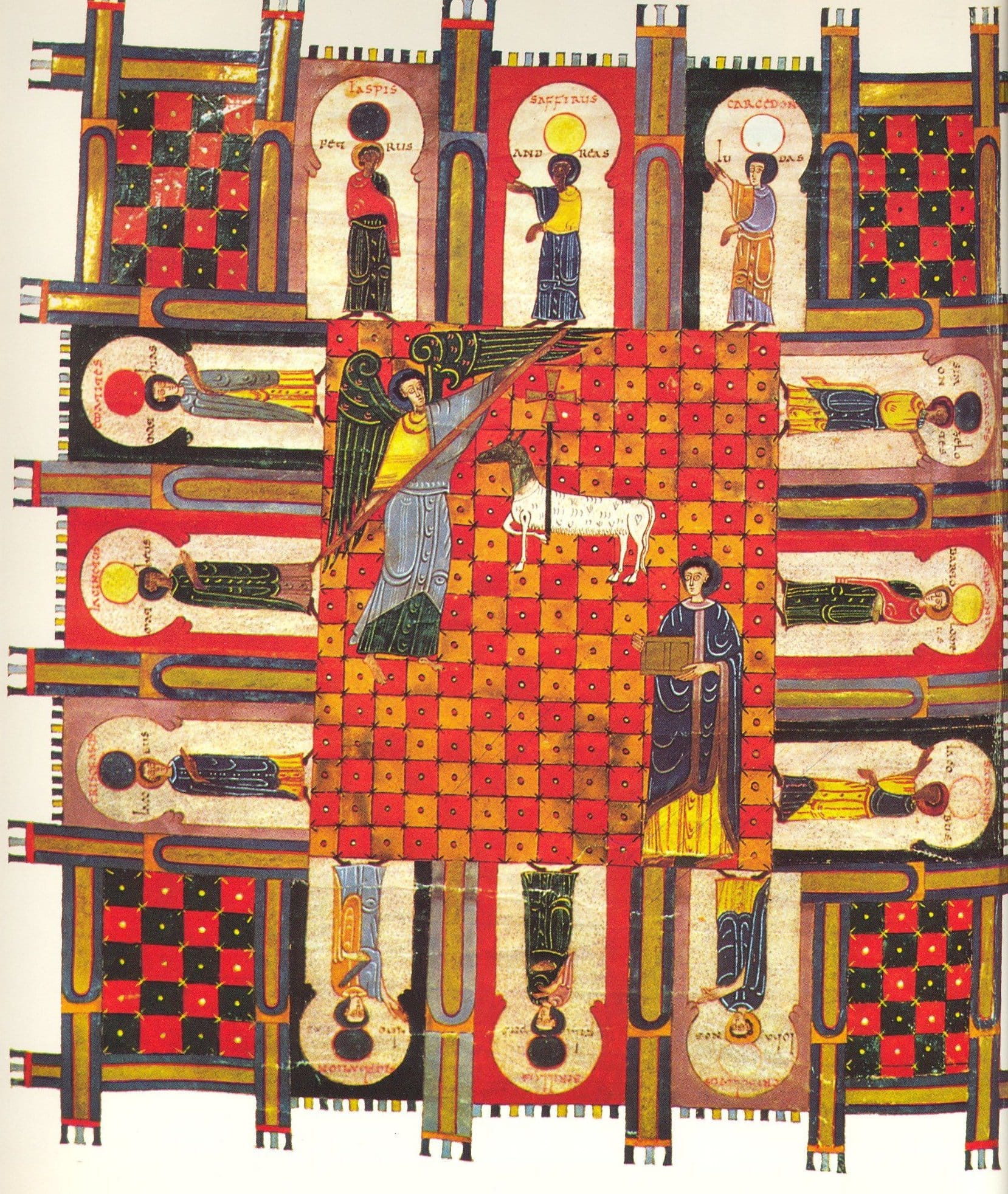
Bunyan's narrative evolved from the fundamental skepticism that Christianity has historically held towards the improvement of the world. Just as our lives are transitory, so is this age. Time is bracketed on one end by a fall into unrecoverable sin and on the other by a final judgement that will sweep it all away. On the other side of this apocalypse, according to the Book of Revelation, Jesus Christ will re-found the world as a Kingdom of God. At its center will be a glorious new city: a New Jerusalem. In the meantime, the only real respite is in church communities, which Bunyan allegorizes as a palace that is "beautiful to behold." Over time, readers came to call this grand shelter the "Palace Beautiful" or the "House Beautiful."
Christianity's cosmological pessimism and emphasis on individual salvation has always been in tension with its ethical teachings, particularly the commandment to the altruistic love of others. From time to time, various sects and theologies have taken a more therapeutic approach towards creation. This phenomenon became particularly acute as the Enlightenment began to question the religion's skyward gaze.
In the 18th century, Emanuel Swedenborg founded the New Church after a mystical experience. He taught that the physical world was not completely fallen, and so could be spiritually transformed, or regenerated, by good works and beauty. To his church, the New Jerusalem consisted of spiritually awakened believers. Over in New England, a deconstruction of concepts like the trinity and eternal damnation led to the American version of Unitarianism. As this theological liberalism developed, it sometimes led to radically different ideas like Christian Science in 1879. Its founder, Mary Baker Eddy, taught that the material world is secondary to the mind, and therefore can be changed by right thinking. Interest in these denominations surged as modernity emerged.
We will come back to these denominations in time. For now I want to focus on mainstream Christians who came to believe they had a moral obligation to improve the world. This perspective on the faith has become known to historians as the "Social Gospel." One founder of the tendency was Walter Rauschenbusch. He summarized his perspective with a paraphrase of the only prayer attributed directly to Jesus:
"Does not the Kingdom of God consist simply of this-that God's will shall be done on earth, even as it is now in heaven?"
A variant of this doctrine appears in an April, 1894 column by newspaper editor Kate Brownlee Sherwood in DC's National Tribune. Spinning her own allegory, she wrote of pilgrims who sought the celestial city but found it elusive. Only when advised by a Jesus figure do they realize "that the City Beautiful was not a city made by hands, and that he who does the will of God may even here dwell at peace within its unseen habitations." That is, the "City Beautiful" is not the destination but the journey undertaken with Christian faith, hope, and charity.
The casualness with which this term is deployed in Sherwood's column and others suggests that the term was already in use among this circle of belief. Searches bear this out. The oldest example I can find in any online database is an 1887 gospel commentary by another founder of the Social Gospel, Baptist preacher George Dana Boardman, Jr. For him, the "city beautiful" is a metonym for the old original Jerusalem to which Jesus arrives for his passion and death.

Sphere IV: The Humanitarians
1863 or so years later, the British journalist William T. Stead arrived in Chicago to cover the Columbian Exposition. If the Fair promised Heaven on earth, Stead could only see Hell in the city's poor neighborhoods. The next year, he published his real discoveries as If Christ Came to Chicago. It was a scathing exposé of the degradation wrought by poverty just beyond the gates of the White City.
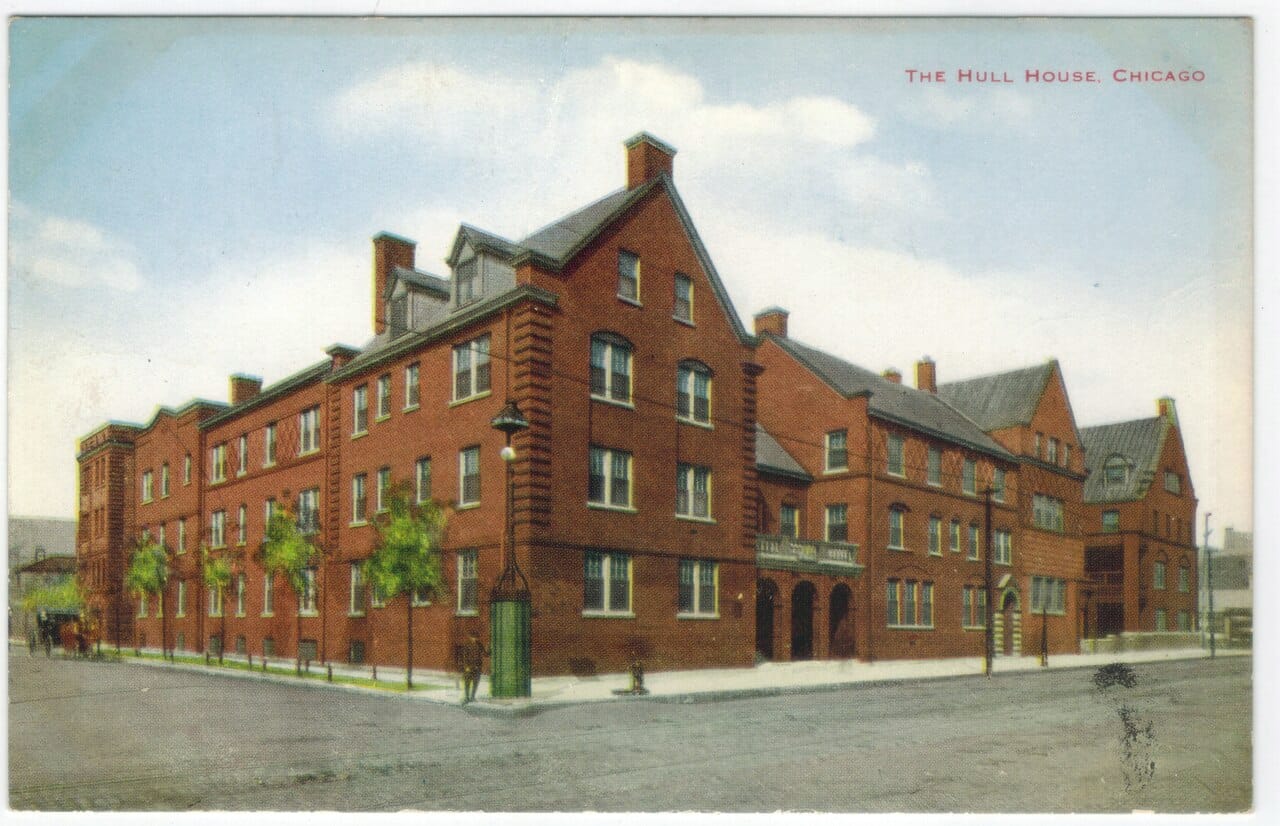
If Stead found only decadence in the Fair, he found hope in an institution across town: Hull House. Founded in 1889 by Jane Addams and Ellen Gates Starr, it pioneered the concept of a "settlement house" in the frontiers of urban America. The institution offered support for working mothers, early childhood education, and cutting-edge adult enrichment. Its founders' goal was to make lasting change in the lives of the poor through moral and practical education. At the same time, it spiritually improve its middle-class volunteers, who would then improve their own communities. Indeed, while Hull House's mission was explicitly secular, Social Gospel teachings underpinned the work of Addams and Starr. The pluralism was a feature of their faith, not a bug.
Hull House did not invent the concept of the settlement. Rather, the idea came from the United Kingdom as part of a larger exchange about how Protestants should address the problems of industrial cities in a global world. One forgotten thinker who had this transatlantic influence was the Scottish naturalist Henry Drummond.
A year before he came to Chicago to participate in the Fair's "World's Parliament of Religions," he published an essay called "The City without a Church." Observing that the New Jerusalem in Revelation is explicitly described as a bustling city with no temple, he argued that this should be the blueprint for modern Christians. Rather than seeing church communities as Palaces Beautiful for rest on the way out, they must become centers of righteous engagement with the world.
To make Cities—that is what we are here for. To make good Cities—that is for the present hour the main work of Christianity... He who makes the City makes the world. After all, though men make Cities, it is Cities which make men.
As for how to get started on this ambitious agenda, he advised:
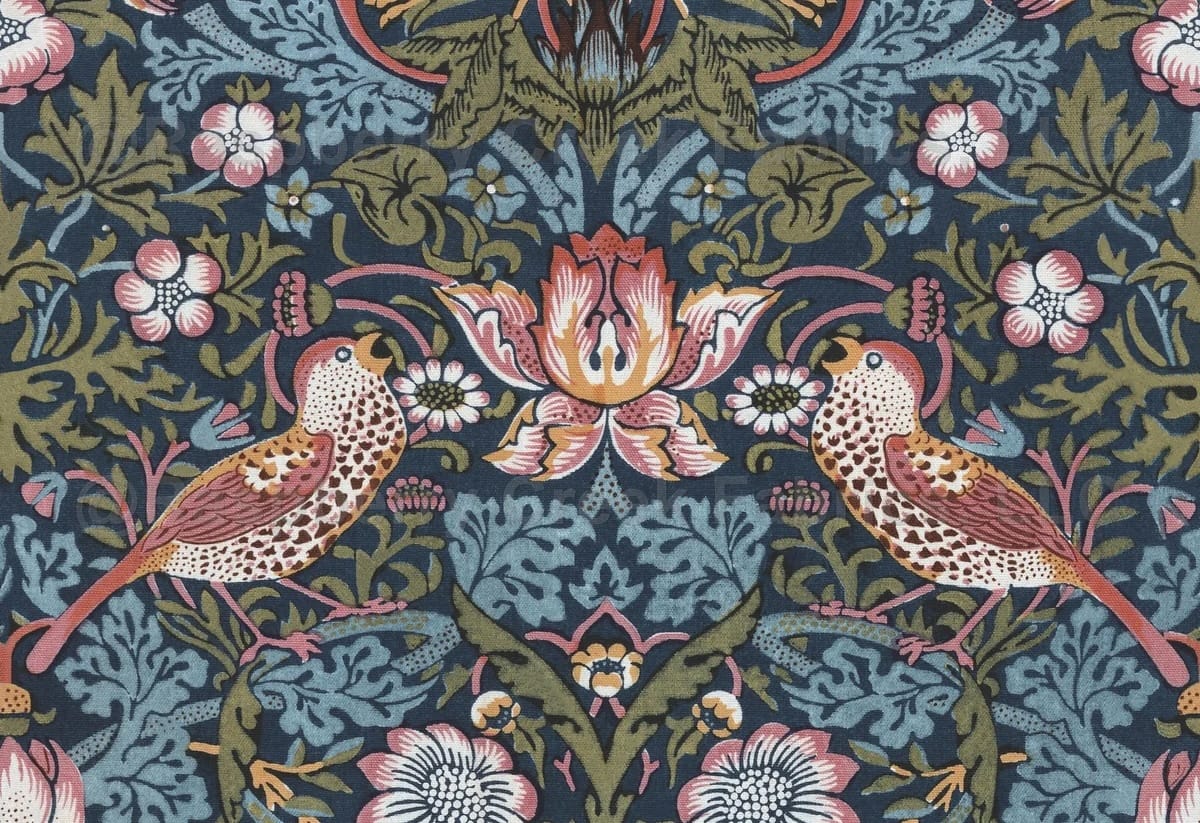
Begin where you are. Make that one corner, room, house, office as like Heaven as you can. Begin? Begin with the paper on the walls.
Sphere V: The Craftsmen
If you are familiar with the history of design, you may recognize that concerns about the spiritual effects of wallpaper is a recurrent theme in 19th century Anglophone discourse. In the early 1890s, the circles with the most to say about this were part of the Arts and Crafts Movement.
Responding to plentitude displayed the first world's fair, London's Great Exhibition of 1851, a variety of intellectuals fused skepticism about mechanically reproduced goods and the conditions under which they were created with Romantic ideas about medieval craft. The influence of the movement is difficult to overstate. In Chicago alone, the Craftsman bungalow, the Prairie style house, and the Miesian skyscraper all owe some principles to this movement—to say nothing of the William Morris wallpapers in the bathroom of a gentrified Lincoln Park two-flat. The spark of this legacy was a desire to fill the spiritual emptiness in all modern people, rich and poor. Most leaders in the Arts and Crafts movement embraced some kind of socialism. Even those who did not still engaged with the liberal social institutions of the Social Gospel. Indeed, the first meeting of the American Arts and Crafts Society was at Hull House and the settlement built its trade education curriculum on its ideas.
Figures associated with the Arts and Crafts movement used the term "House Beautiful" regularly. We might characterize the kind of decoration they favored as call "intentional" or "soulful." The term is almost certainly a reference to Pilgrim's Progress popularized by the Scottish writer Robert Louis Stevenson. Spiritual but not religious and a political radical, Stevenson saw houses as space of character development, the same way Drummond saw churches. Oscar Wilde subsequently spread the term when he toured the United States in 1882 to lecture on aesthetics.
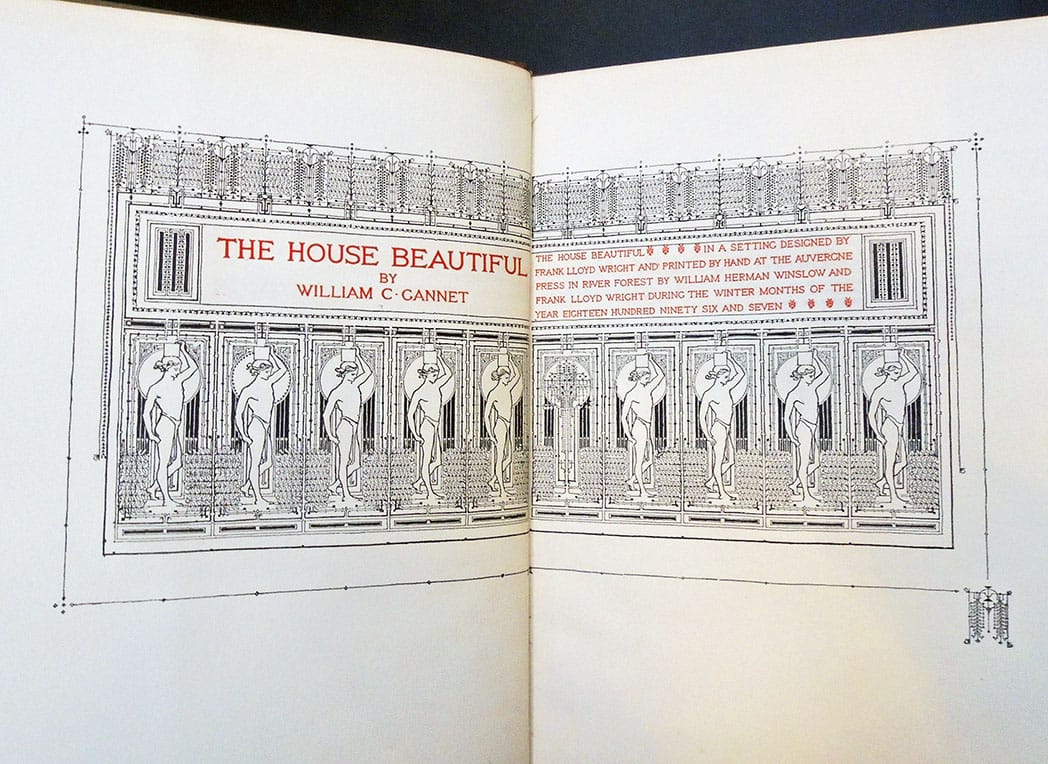
The term received two major endorsements from Chicagoans in the mid-1890s. The first was a Unitarian minister named William Channing Gannett. Dedicating an 1895 sermon to the theme that the true character of a house was shaped by love and not consumption, he titled this talk The House Beautiful. The oratory circulated widely. It was compelling enough to get an ornate printing designed by the nephew of a colleague, Frank Lloyd Wright.
The second was much more influential: the magazine House Beautiful. Founded in 1896, this was of the first magazines to focus on the design of houses. As its founders saw it, its purpose was to make sense of the material wealth that industrialization had produced. As the Arts and Crafts thinkers beleived, mechanized production meant that the wealthier half of society had more house to decorate and way more stuff to decorate with. Made with exploited labor and noxious smoke, the vacuity of these cheap goods threatened also to pollute the home, spiritually.
Sphere VI: The Bohemians
In 1898, a Chicago man named Herbert S. Stone purchased House Beautiful. This may have been a natural move for him as he was already been selling books that spoke of both House and City Beautiful. While a student at Harvard, he and a classmate founded the Stone & Kimball publishing house. By the time they moved to Chicago, they had assembled a roster of freethinking authors, including Scottish writers associated with the polymath Patrick Geddes.
A follower of post-Christian Enlightenment thought and a keen social observer, Geddes would go on to lay the intellectual groundwork for British urban planning and sociology. In the 1890s, he also took on a side project of reviving Celtic culture. His main venue was a magazine called The Evergreen. There in an 1895 article written by William MacDonald, we see the term "City Beautiful" describing villages only:
So we may draw a little nearer to the City Beautiful — the rural town — in which joy inhabits, and righteousness has a chance of increase.
We see a more direct connection between the "House Beautiful" and the "City Beautiful" in an announcement of a book on pedagogy by Geddes, published at the back of a book of Celtic folklore compiled by esotericist William Sharp under the pen name "Fiona McLeod."
The 'house beautiful' is, of course, a single step towards the chief end of architecture—the city beautiful.
Stone & Kimball published both of these in the United States. But these were still not their earliest edition that used the phrase "City Beautiful. That would have been in Joaquin Miller's fable about a utopian Christian anarchist city, The Building of the City Beautiful.
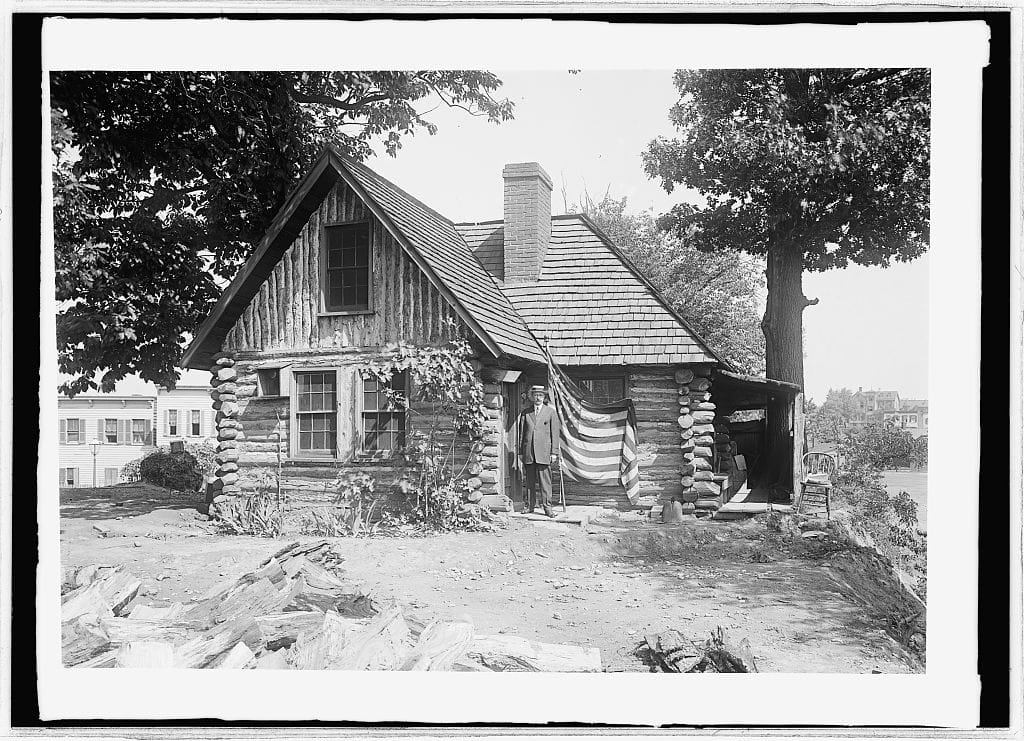
First published in December of 1893, this fable begins with a meeting of the hero and heroine in Jerusalem and then to a tragicomic roman a clef section about Miller's experiences in Oakland, California. Casting his efforts as an attempt to build a City Beautiful, they fail. Only the heroine's succeed. So in the didactic final section, the hero visits her successful paradise in Mexico. The city has a minimal government, a vaguely pan-Abrahamic ethos but no creeds, and no means to accumulate of wealth. The last provision seems to have been lifted directly from the works of Bay Area political economist Henry George, who knew Miller through the Bohemian Club, alongside Francis Newlands.
Indeed, Miller was a notorious dirtbag who built his literary reputation on reckless adventurism, leaving women, men, and frontier doggerel in his wake. I suspect respectable women like Kate Sherwood or Mira Dock would have preferred to avoid his presence. Likewise, his reduction of Christianity to a rejection of wealth and power was too laissez-fair for the Social Gospel crowd. However, like the work of Marie Corelli, his books sold consistently well. Stone & Kimball had printed three small runs of City Beautiful from Chicago by the time Frances Burnett published her City Beautiful in 1895.

Sphere VII: The Homemakers
An inconvenient reality is that not everyone can dream up utopias, someone has to cook dinner. It is, of course, completely different today due to Woke, but in the 1890s, that task overwhelmingly fell to women. Women clothed, fed, and reared society. Laborers, columnists, ministers, and positivists: they all started as kids in somebody's nursery, and they tended to end up in some woman's kitchen for the meals that would power their productive labor. The whole economy depended on a body of knowledge that was in no way scientific. Stranger still, women were not born knowing how to run a household.
This reality concerned the writer Helen Stuart Campbell. Having already written domestic manuals and deep studies on poor communities, she saw the consequences of not taking home-making seriously. She found a supporter for this cause in the economist Richard T. Ely. When Campbell followed him to the University of Wisconsin in 1892, Ely was already a prominent figure in the Social Gospel movement and a founder of the American Economic Association. The curriculum she developed was a pioneering attempt to organize the field, discipline its knowledge, and give bewildered housewives some hope. She published these courses in 1897 as the book Household Economics. It sold very well. By 1904, it was its fourth large print run.
In her introductory chapter, she asked readers to think of the house as a means to fulfill a divine mission. She cited a text that should be familiar:
As to the deeper meaning of this house which we are to build together... no one has said it all more perfectly than William Gannett in his The House Beautiful, which ought to be in every household in the land.
In her second chapter, Campbell addressed the built environment more specifically. Covering everything from history to climate to decor, she reiterated the importance of the house in forming human beings, physically and spiritually. Her recommendations match Gannett's closely, saying that truly beautiful house was not one with the most lavish decoration, but design that was healthy, well-ordered, and authentic to its occupants. Other recommendations reflect more direct influence of the Arts and Crafts movement.
At the end of the chapter is a bibliography. In addition to its scholarly books on ancient cities and previous design manuals, Campbell includes three books that place the house within its urban context: a treatise on rural planning called Villages and Village Life, a utopian tract called Hygeia: A City of Health, and Henry Drummond's City Without A Church. Indeed, she makes the connection between the House Beautiful, the City Beautiful, and one particular exemplar in Chicago:
When we speak of The City Beautiful, it is not a series of farm-houses, or an expanse of prairie of which we think—nor a collection of cottages each with its traditional vine, nor is it a collection of suburban villas. All these are protoplasmic, so to speak. The city is ganglion, and means the work of the ganglion. Where great public uses are to be served, certain essentials of fine architecture ate at once possible,—size, durability, adaptation of from to function and character.
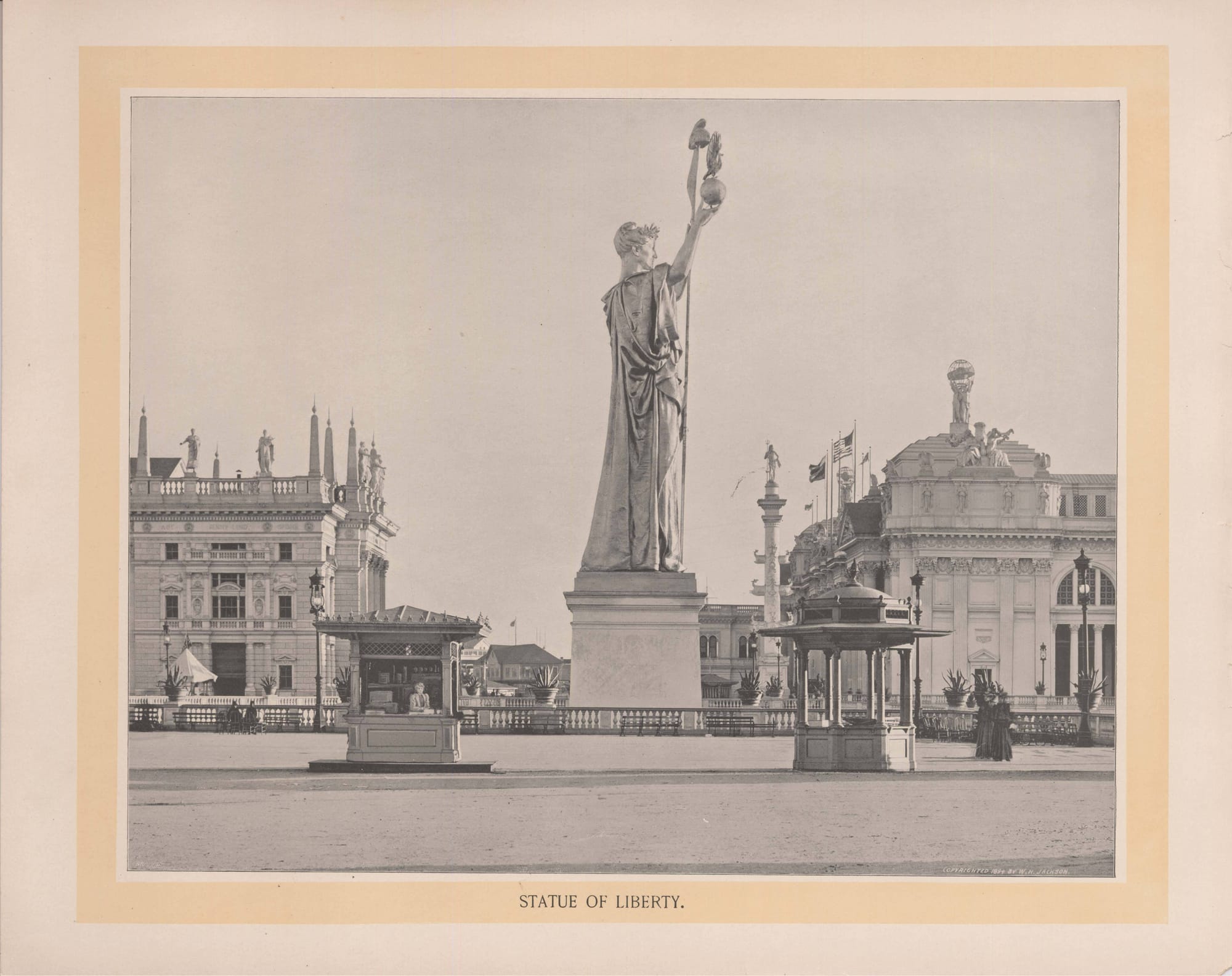
There are cities so fair that he who looks upon them feels the heart swell and the eyes fill with delight... in the Italian cities of our time beautify has had a larger share than in any other day or land since Greece gave us its highest type. The City Beautiful is for us still to come,—that "dream city," of the Great Fair foreshadowing what it is to be.
Perhaps, the spirit of the City Beautiful was the White City, after all.
Sphere VIII: The Readers
One of the strangest details about Frances Burnett's Little Pilgrims is that the phrase "City Beautiful" is does not appear at all in John Bunyan's tract. As we have seen, it is a phrase that flourished in her social milieu: one that was concerned about social issues and theologically liberal. Joaquin Miller, Patrick Geddes, Marie Corelli, William Morris, and Helen Campbell all saw an urgent need for both spiritual renewal alongside material egalitarianism. Yet none of these thinkers found an answer in received authorities. They wanted to re-imagine the old wisdom for their own time—just as the architects of the White City and its imitators reimagined classical urbanism.
Burnett herself was on a spiritual journey in the 1890s. I wasn't able to identify where she stood in 1893, but within a few years she was dabbling in Christian Science and its more radical New Thought branch. When the New York Times queried her religious views in 1913, she responded:
"I am not a Christian Scientist, I am not an advocate of New Thought, I am not a disciple of the Yogi teaching, I am not a Buddhist, I am not a Mohammedan, I am not a follower of Confucious. Yet I am all of these things"
Unless someone digs up a letter on the topic, I am skeptical that we will ever know exactly how Burnett or any of these authors settled on the term "City Beautiful." To some degree, it does not matter. The phrase spoke to her, and it spoke to her audience. This included not just the children, but their moms. Excluded from positions of authority but saturated in liberal religion, concern for the poor, and domestic arts, educated women do seem to be the audience that unites a disparate set of writers.
In addition to Burnett, H.D. Lowry, and Charles Dole, Helen Campbell was also a prolific author of books for kids. The same is true of Lucy Perkins, the author of one of those formative City Beautiful articles at the top. In fact, she used the term much earlier than I previously suggested. Three years before she published in the masculine, professional venue of the Inland Architect, she presented her ideas to the Chicago Woman's Club on October 21st, 1896. Responding to her talk were husband Dwight, the director of trades education at Hull House, George Twose, and an upstart Dwight shared a loft with, Frank Lloyd Wright.
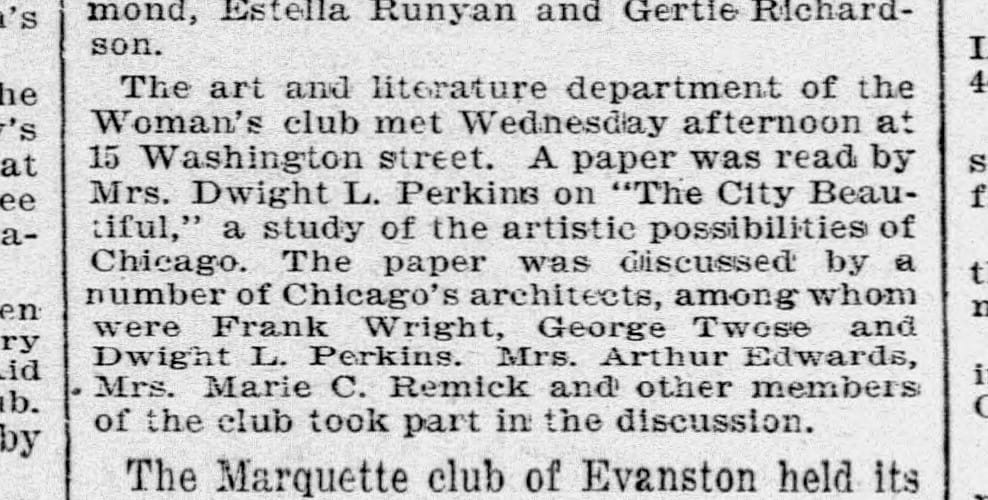
While I was unable to find the talk, if the text is similar to what she later published, it fits the venue. The Woman's Club was a hotbed of social, religious, and literary reform that counted Jane Addams among its many notable members. Historians such as Daphne Spain and Christine Boyer have contrasted the "municipal housekeeping" work of these women with the decadent visions that came to define the City Beautiful Movement in the 1900s. I won't dispute that. I would go further and suggest that the City Beautiful was the wayward offspring of a quest by well-to-do women seeking to bring about a new spiritual prosperity. It was only Beatrice, not Virgil, that could show Dante the world to come.
But what about the great architect who united the White City and the City Beautiful, Daniel Burnham? It turns out that he too believed in the need to remake the world according to its spiritual order. Burnham was a Swedenborgian. From his upbringing at the Church of the New Jerusalem outside of Boston, until his death, his faith compelled him to bring the material world into harmony with its celestial twin. At Burnham's death in 1912, his friend and DC-based Swedenborgian minister Frank Sewall reminisced about a trip to Chicago where the architect showed off his works. He was most proud, Sewall recalled, of the parks and boulevards he had created for the wholesome enjoyment of the public.
The beautiful Angel of the New Jerusalem had for years been conducting his spirit along "the street of a city that was pure gold as it were transparent glass" the heavenly doctrine of Charity, the spiritual love of the neighbor.
He was never as egalitarian as the women who first appropriated the term "City Beautiful." Nor would the later movement ever address the real deprivation of the industrial capitalist city. But at its best, it produced spaces and citizens who embodied the same spirit that guided both them and Burnham, and were all too often forgotten in the professionalized planning that they nurtured.
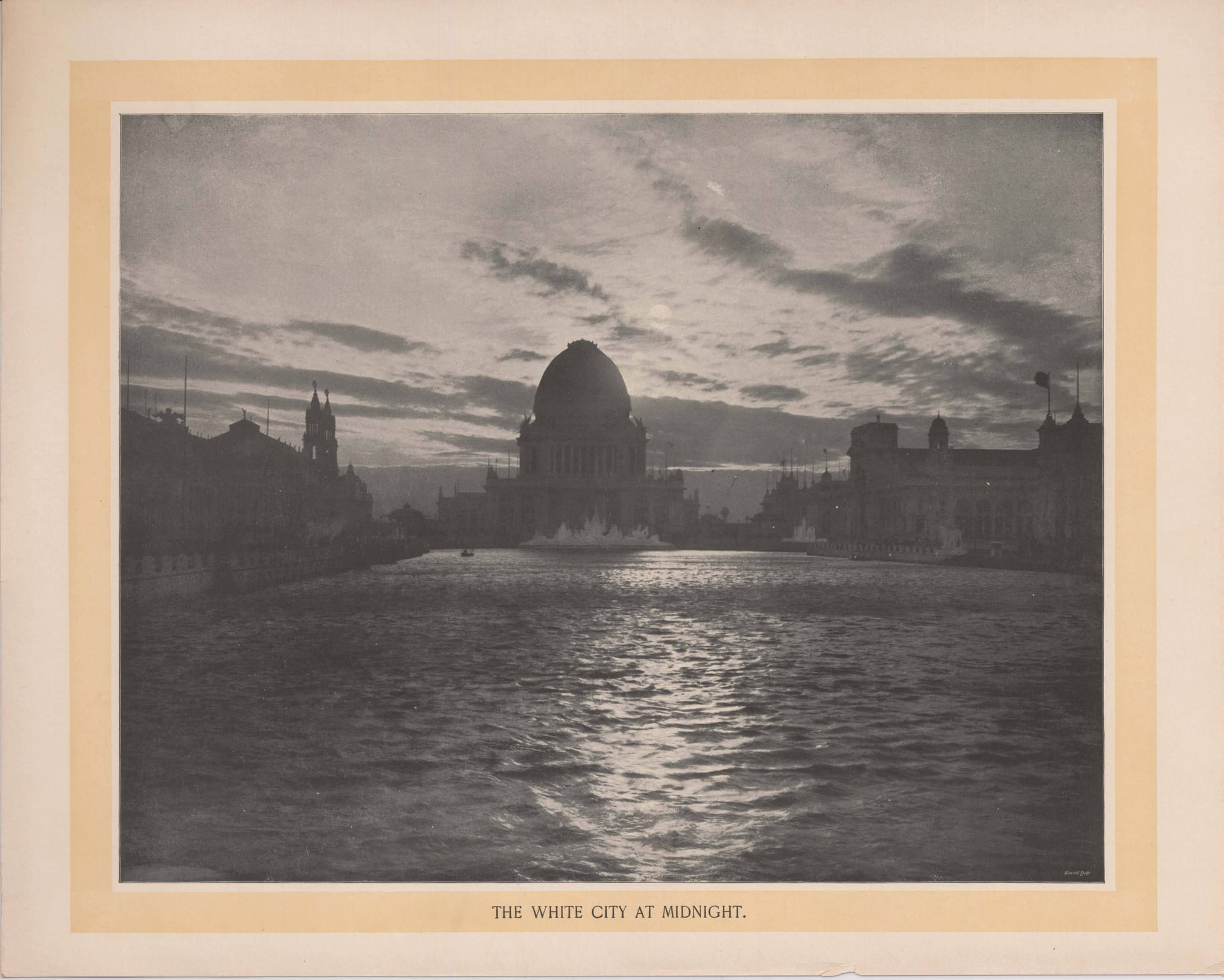
As for the spiritual power of the great White City, Daniel Burnham had no doubts. It was a vision of the New Jerusalem. Shortly after the Columbian Exposition closed, he reflected on what he had hoped to accomplish in a sermon. At its crescendo, he compared the Court of Honor to the vision in Chapter 4 of the Book of Revelation. "'A door was opened in Heaven,'" he quoted from its first verse. His own thoughts followed: "All who entered the Court of Honor, especially after dark, saw this door."
Sphere IX: The Architect
Sources
Boardman, George Dana, Jr. The Divine Man: From the Nativity to the Temptation. New York: D. Appleton & Company, 1887
Boyer, M. Christine. Dreaming the Rational City: The Myth of American City Planning. Cambridge: MIT Press, 1986.
Burg, David F. Chicago’s White City of 1893. Lexington: University Press of Kentucky, 1976.
Campbell, Helen S. Household Economics: A Course of Lectures in the School of Economics of the University of Wisconsin. New York: G. P. Putnam & Sons, 1896.
Cassedy, James H. “Hygeia: A Mid-Victorian Dream of a City of Health.” Journal of the History of Medicine and Allied Sciences 17, no. 2 (1962): 217–28.
Corelli, Marie. The Sorrows of Satan. Philadelphia: J. B. Lippencott Co., 1896.
Cutler, Phoebe. “Joaquin Miller and the Social Circle at The Heights.” California History 90, no. 1 (2012): 40–69.
Dimand, Robert W. “Nineteenth-Century American Feminist Economics: From Caroline Dall to Charlotte Perkins Gilman.” The American Economic Review 90, no. 2 (2000): 480–84.
Elspas, Molly, and Anna Strange. “Friends of Reform: The Correspondence of J. Horace McFarland and Mira Lloyd Dock.” Pennsylvania History 87, no. 1 (2020): 122–28.
The Evergreen: A Northern Seasonal. Spring, 1895.
Flower, B. O. "The Poet of the Sierra as a Social Dreamer." The New Time 2, no. 1 (January 1897): 101-104.
Foglesong, Richard E. Planning the Capitalist City: The Colonial Era to the 1920s. Princeton: Princeton University Press, 1986.
Harrisburg Telegraph. 1879-1948.
Gannon, Christiane. "Marie Corelli's The Sorrows of Satan: Literary Professionalism and the Female Author as Priest." English Literature in Transition, 1880-1920 56, no. 3 (2013): 374-395.
Gilbert, James. Perfect Cities: Chicago's Utopias of 1893. Chicago: University of Chicago Press, 1991.
Hall, Peter. Cities of Tomorrow: An Intellectual History of Urban Planning and Design Since 1880, 3rd ed. Oxford: Blackwell Publishing, 2002.
Hines, Thomas S. Burnham of Chicago, Architect and Planner. Chicago: University of Chicago Press, 1979.
Kriehn, George H. "The City Beautiful." Municipal Affairs 3, no. 4 (December 1899): 594-601.
LaGrand, James B. “Understanding Urban Progressivism and the City Beautiful Movement.” Pennsylvania History 87, no. 1 (2020): 11–21.
Mackintosh, Phillip G., and Clyde R. Forsberg. “‘Co-Agent of the Millennium’: City Planning and Christian Eschatology in the North American City, 1890—1920.” Annals of the Association of American Geographers 103, no. 3 (2013): 727–47. http://www.jstor.org/stable/23485414.
MacLeod, Fiona. The Washer of the Ford, and Other Legendary Moralities. Chicago: Stone & Kimball, 1896.
Miller, Joaquin C. The Building of the City Beautiful. Cambridge: Stone & Kimball, 1893.
Monroe, Harriet. “Dorothy Dudley’s Frontiers.” Poetry 43, no. 4 (1934): 208–15.
Moran, Maureen F. "Walter Pater's House Beautiful and the Psychology of Self-Culture." English Literature in Transition, 1880-1920 50, no. 3 (2007): 291-312.
Mott, Frank L. A History of American Magazines, Vol. 5: Sketches of 21 Magazines. Cambridge: Harvard University Press, 1968.
National Tribune (Washington) 1877-1917.
Perkins, Lucy F. "The City Beautiful." Inland Architect 34, no. 2 (September 1899): 10-14.
Peterson, Jon A. The Birth of City Planning in the United States, 1840-1917. Baltimore: Johns Hopkins University Press, 2003.
Pettegrew, David, and James B. LaGrand. “Harrisburg, the City Beautiful: Recasting the History of Urban Reform in a Small American Capital.” Pennsylvania History 87, no. 1 (2020): 1–10.
Reps, John W. The Making of Urban America: A History of City Planning in the United States. Princeton: Princeton University Press, 1965.
Rimby, Susan. “Mira Lloyd Dock and the City Beautiful Campaign.” Pennsylvania History 87, no. 1 (2020): 108–12.
Robinson, Charles M. "Improvement in City Life: III: Æsthetic Progress." The Atlantic Monthly 83, no. 6. (June 1899). theatlantic.com.
Sarvis, Albert. “Mapping Urban Change in Harrisburg, 1900–1930.” Pennsylvania History: A Journal of Mid-Atlantic Studies 87, no. 1 (2020): 45–65. https://doi.org/10.5325/pennhistory.87.1.0045.
Scott, Mel. American City Planning Since 1890: A History Commemorating the 50th Anniversary of the American Institute of Planners. Berkeley: University of California Press, 1971.
Schaffer, Kristen. 2010. “‘The Beautiful and Useful Laws of God’: Burnham’s Swedenborgianism and the Plan of Chicago : Research from the Field.” Planning Perspectives 25, no. 2: 243–52.
Spain, Daphne. How Women Saved the City, new edition. Minneapolis: University of Minnesota Press, 2001.
Szczygiel, B. “'City Beautiful' Revisited: An Analysis of Nineteenth-Century Civic Improvement Efforts." Journal of Urban History 29, no. 2 (2003): 107-132.
Thoreson, Trygve. Daniel Burnham and Louis Sullivan: Personal Histories of Two Icons of American Architecture. Chicago: University of Illinois Press, 2026.
Wilson, William H. “‘More Almost than the Men’: Mira Lloyd Dock and the Beautification of Harrisburg.” The Pennsylvania Magazine of History and Biography 99, no. 4 (1975): 490–99.
Wilson, William H. “Harrisburg’s Successful City Beautiful Movement, 1900–1915.” Pennsylvania History 47, no. 3 (1980): 213–33.
Wilson, William H. The City Beautiful Movement. Baltimore: Johns Hopkins University Press, 1994.
Hints...? Why you gotta gatekeep, Nate?