Who made NPS the boss of DC?
Earlier this week, the Washington Post reported that the Trump Administration was considering building a baseball field in Grand Teton National Park. To a lot of people this seemed absurd, if not sacrilege: a baseball stadium in a National Park? It seemed to fly in the face of the mission of the Park Service that was set out in its Organic Act in 1916:
To conserve the scenery and the natural and historic objects and the wild life therein and to provide for the enjoyment of the same in such manner and by such means as will leave them unimpaired for the enjoyment of future generations.
But to those with ball-knowledge of the District of Columbia, it's not so crazy. After all, for 65 years there was an MLB stadium in Anacostia Park, Section F. I am of course talking about Robert F. Kennedy Memorial Stadium, the recently demolished venue for the Senators, DC United, Commanders (by another name), and Nationals (Produit du Québec).
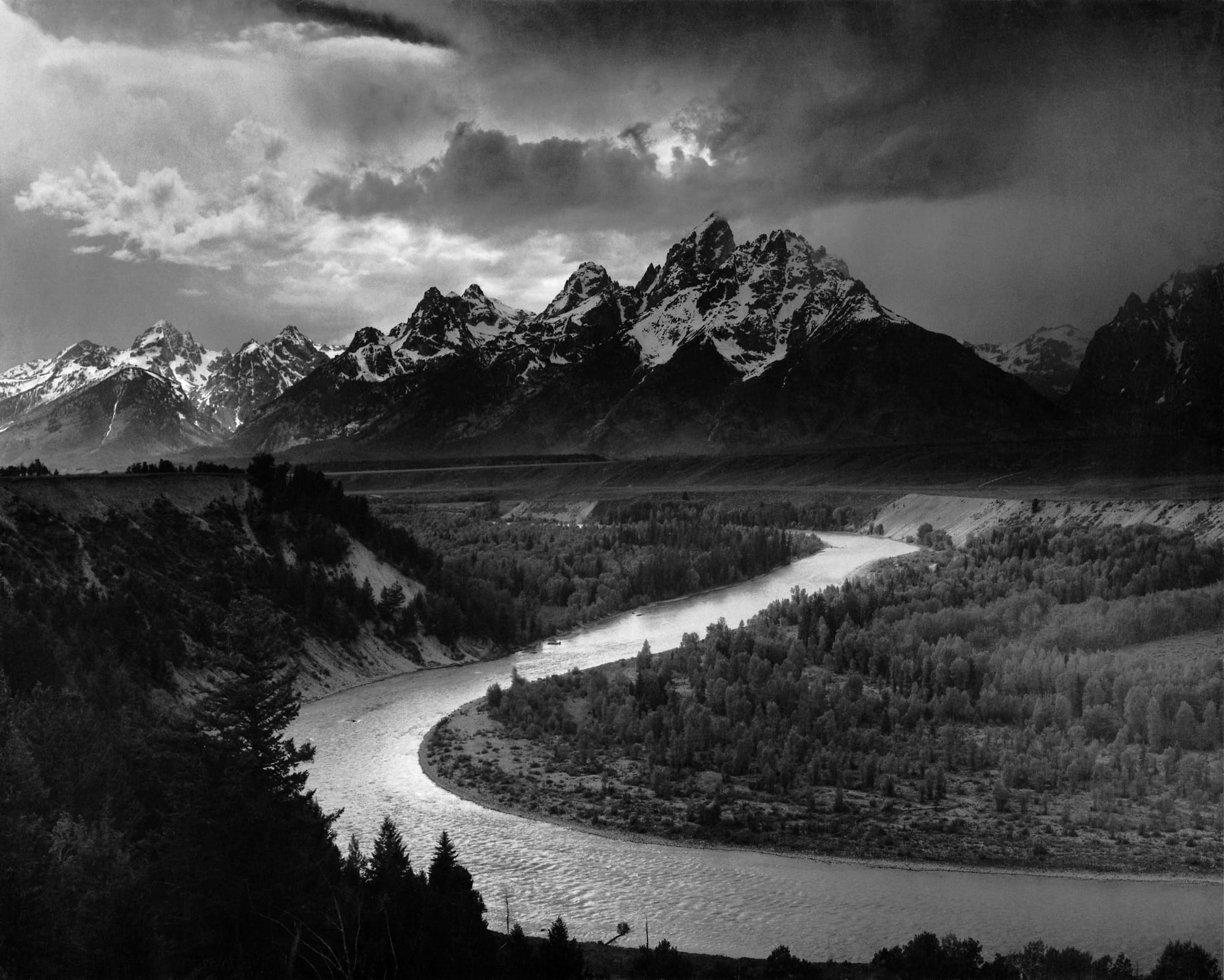
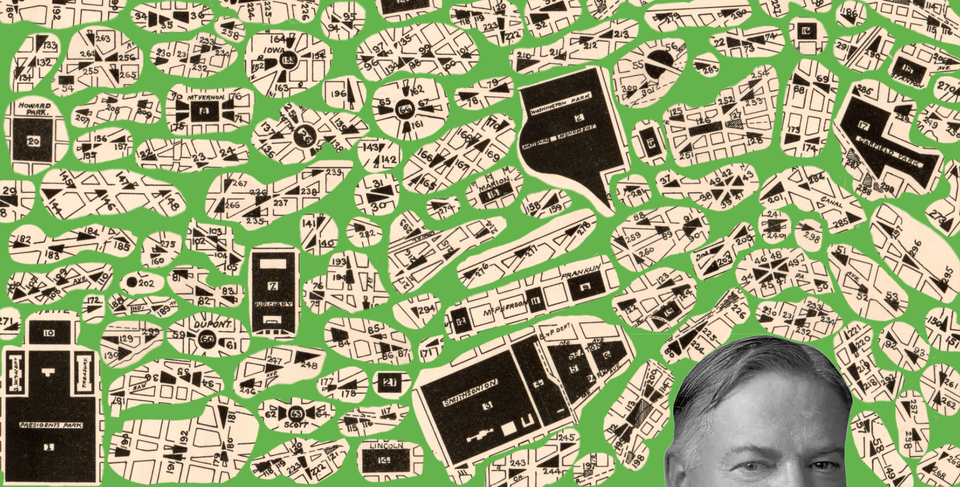
I'll admit: the context of the Snake River is different in a number of ways from that of the Anacostia—and that is exactly why a lot of people in the DC area remain confused as to why the Park Service controls almost all of the public open space in DC, from the riverfronts to neighborhood parks. Not only that, but the agency holds permanent seats on the Zoning Commission, the board of Zoning Adjustment, and (de facto) the National Capital Planning Commission, while throwing its weight around with a special law enforcement arm, the United States Park Police. Particularly under the second Trump presidency, many residents feel this presence is yet another way the Federal Government has mistreated the communities of District of Columbia.
This creates an unusual political situation for the Service. Last time I checked, it was the most popular and trusted government agency, probably because 90% of its units match its mission and general aura as a protector of natural wonders. When people think of national parks, they are usually thinking of Jenny Lake or even the Tidal Basin, and not this traffic island two miles from the Mall:
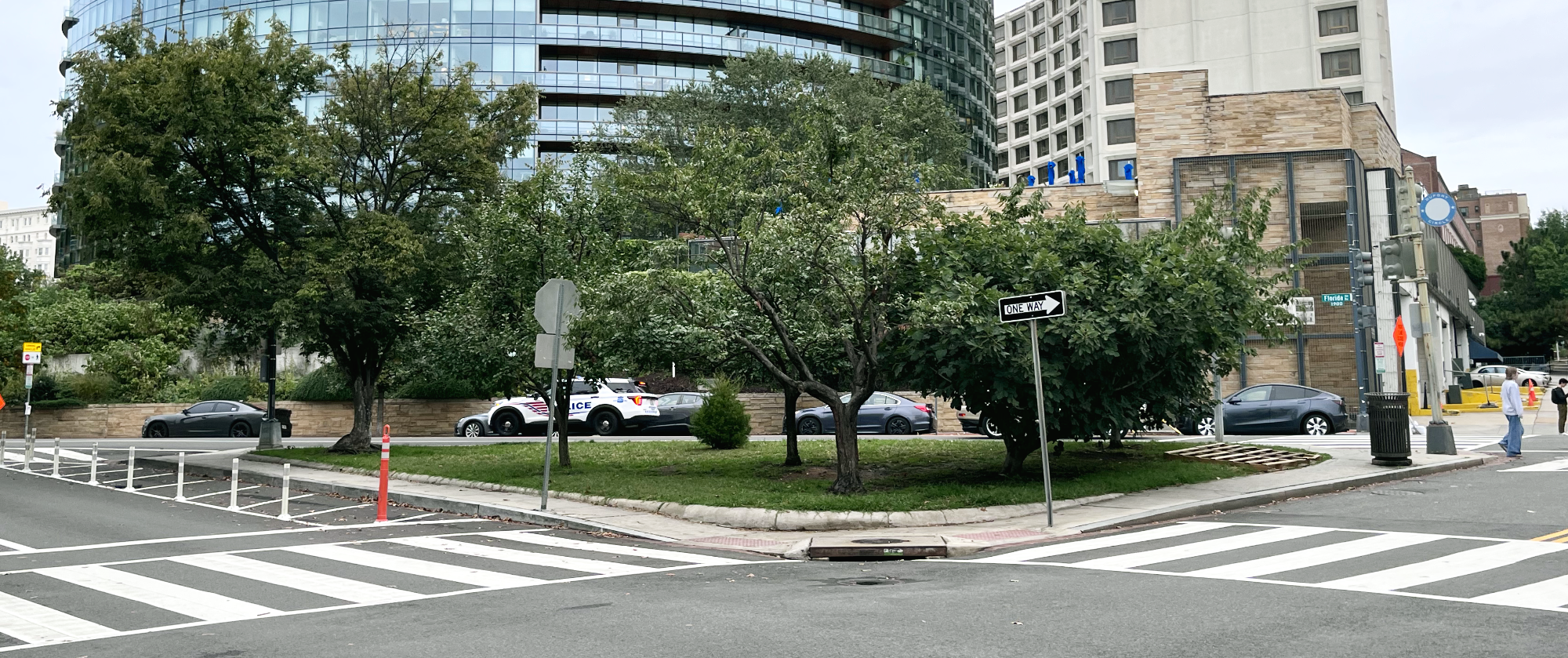
Patches like this—or RFK Stadium—are clearly an anomaly in the Park System that demand some explanation even if DraftKings Field at Grand Teton doesn't come to pass. Even accepting the premise that public lands in a federal capital should be managed by a federal agency, it is not obvious why the Park Service—as opposed to any other agency, let alone DC's government, is the one mowing the grass.
In this post, I want dive deep into why NPS ended up with so much power in DC. It is not just that these properties and powers belonged to predecessor agencies. Nor is it just that FDR rolled them into NPS. Instead, it's actually because Herbert Hoover almost rolled NPS into grand national public works agency. The reason that did not come to pass, and the reason NPS hung onto DC's parks, was the organization at the center of my book, the American Civic Association

A brief history of DC's traffic islands 1791-1925
DC owes its federal median strips first and foremost to Peter L'Enfant. (Yes that does mean that many are landmarked.) As the Ellicott brothers implemented his scheme, they realized that the intersections of the grid and our beloved diagonal avenues created a number of awkward triangular lots. These were withheld from the market under the same classification as proper public spaces like Lafayette Square or the Mall: "reservations."
Mostly existing on paper, these patches of land tended to be indistinguishable from the surrounding streets before the Civil War. Private development of Washington was scattered and Congress that saw little reason to spend money in neighborhoods that could not vote. After existing in limbo for a while, both formal park and remainders ended up under the jurisdiction of the same agency that handled land for sale in the country's growing frontier, the General Land Office. From early on, DC's public spaces were managed by agencies with wildly incongruous missions.
A related throughline in this history is the power of the United States Army Corps of Engineers. During the suspension of democratic self-government between 1874 and 1975, most important administrative posts in DC were held by Army Corps officers. The principal reason they got the job is that the Corps was really the only agency that had capacity to manage the physical world before World War I. From 1824, the corps performed not only military engineering but a lot of civil engineering, from dredging harbors to building the aqueduct that supplies DC with water to this day.

So, as the city boomed and expectations for urban infrastructural rose in parallel, it was natural for Congress to turn to the Army Corps. In 1867, the body transferred DC's parks to a new office within the engineering corps, the Office of Public Buildings and Grounds. The new office immediate set to work surveying and then developing many of the parks that exist to this day. This coincided with the easy money years of the Board of Public Works and later Governor, Alexander "Boss" Shepherd.
Shepherd's spending habits soon became a pretext to end self-government, with Congress putting control in the hands of a three-man commission. The president typically selected two of these representatives from the city's elite. But the third was always an officer of the Army Corps of Engineers. In practice, this Engineer Commissioner served as a city manager, overseeing all of the offices concerned with the built environment. This meant that, apart from federal office buildings, a pair of Army Engineers oversaw DC's public lands, including the street triangles.

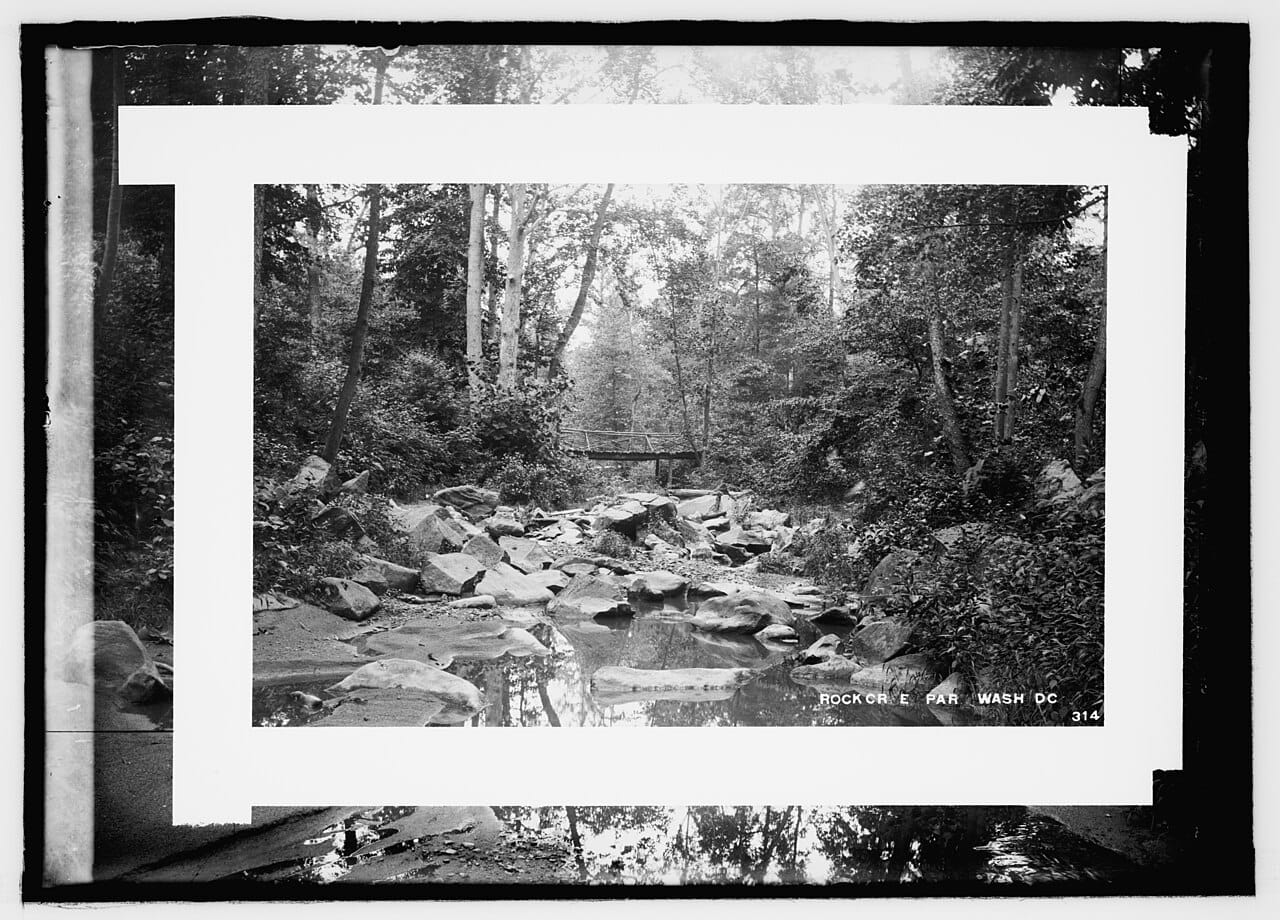
For the most part, the officers managed the properties with an engineer's efficiency and the military's charm. Beginning in 1898, they resurveyed, marked, and further improved these parks. Congress continued to lean on the pair of detailed Army Corps officers as the city expanded. Before what is now the United States Park Police began to patrol Rock Creek Park, the responsibility fell to the Army. So as congress one created ad hoc commission after another—to run Rock Creek, to to expand DC's grid, to demolish "insanitary buildings," to build Arlington Memorial Bridge... the list goes on—the engineers were not only statutorily empowered but received the deference of their often indifferent civilian colleagues.
The power of the engineers only grew with new powers of government, particularly the creation of a Zoning Commission 1920 and what eventually becomes the National Capital Planning Commission in 1924. DC was, in the absence of any other agency, a military town. But increasingly, there were other administrative models for the management of public land that clearly served their recreational mission better than a guy who had just come off a deployment building forts in the Philippines. Some were in other cities, but the most important one was a few blocks away: the National Park Service.

Recreation becomes professional
In 1910, the dozen or so National Parks were also patrolled by the Army. Each site was administered independently. Policies varied wildly, from park to park and manager to manager. Historic battlefields were managed by the military, but through a completely different office. Public facilities were limited. Apart from Rock Creek Park or Mackinac Island, their remoteness meant that only the wealthy could really afford the expeditions required to visit them.
This inaccessibility bothered a botanical printer in Harrisburg named J. Horace McFarland. As president of an organization called the American Civic Association, he was a persistent advocate for Progressive ideas about the effects of the built environment on physical, social, and even spiritual health. Drawing on 19th-century ideas about nature, parks were the base of their agenda. They expanded this concept to include beautifying incidental spaces like our traffic islands, repositioning urban parks towards recreation, and opening the wilderness to mass enjoyment (in theory at least).
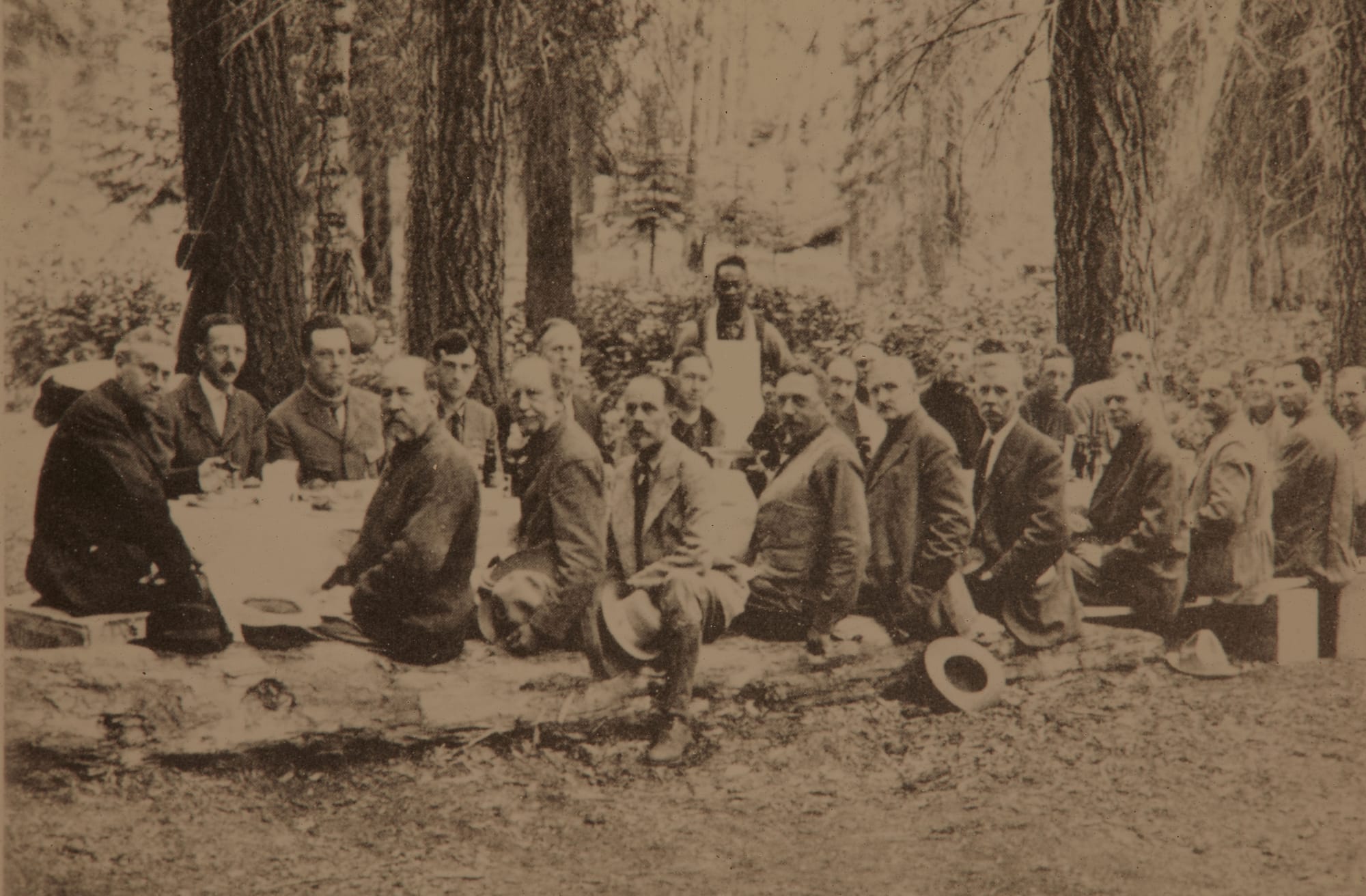
One issue they focused on was the perceived mismanagement of urban parks by city agencies. Fortunately, in this cause they had a lot of allies, like the National Municipal League. Their goal, which the ACA echoed, was to eliminate local corruption by destroying political "machines" and mandating an educated, professional civil service in city governments. In fact, they went so far as to promote the idea that elected mayors should be replaced by specialist city managers. Where they could not get this, reformers often swung independent, professional park boards, which the ACA took as a model.
Interestingly, this approach was inspired by the civil service that had existed at the Federal level since 1883. In fact, a parallel campaign by ACA affiliates had led to the creation of a conservation agency with a uniformed civil corps, the US Forest Service. Borrowing from both federal and municipal precedents, in 1910 McFarland concluded that the way to make the parks better was simple: there needed to be some kind of National Park Service.
McFarland quickly assembled a coalition of affluent outdoorsmen and intellectuals, who in turn recruited major businesses, particularly western railroads. One of the most valuable additions was Frederick Law Olmsted, Jr., the son of the more famous one and consequently trained from birth to remake the American landscape. The six-year campaign they led together bonded the ACA and Rick Olmsted to NPS at the root. Together with the service's second director, Horace Albright, they would shape the policies, culture, and aesthetics of the Park Service. In fact, it was Olmsted and McFarland who wrote the mission statement at the beginning of this post.
Between two Herberts
From a different angle, the creation of NPS in 1916 was part of a rapid growth in the federal government that reached a crescendo in World War I. This radical change in the role played by the government led to two issues that eventually contributed to traffic islands becoming historic resources. The first was that the government was getting hard to manage under a constitutional system not designed for a powerful executive. The second was a deep anxiety that the government was performing functions that rightly belonged to the private sector. With no real appetite to shrink established government programs, the middle path became efficiency.
This meant running the government more like a business. That is, it meant empowering the executive, particularly in terms of budgeting and organization. Before the passage of the Budget and Accounting Act of 1921, agencies submitted budget estimates to the House of Representatives, who then negotiated with the Senate and the President. Control of expenditures was likewise handled within the agencies. Under the new law, what is now the Office of Management and Budget collated the budget, disciplined it to the president's agenda, and then held agencies to its goals under its tightfisted first director, Herbert Lord.
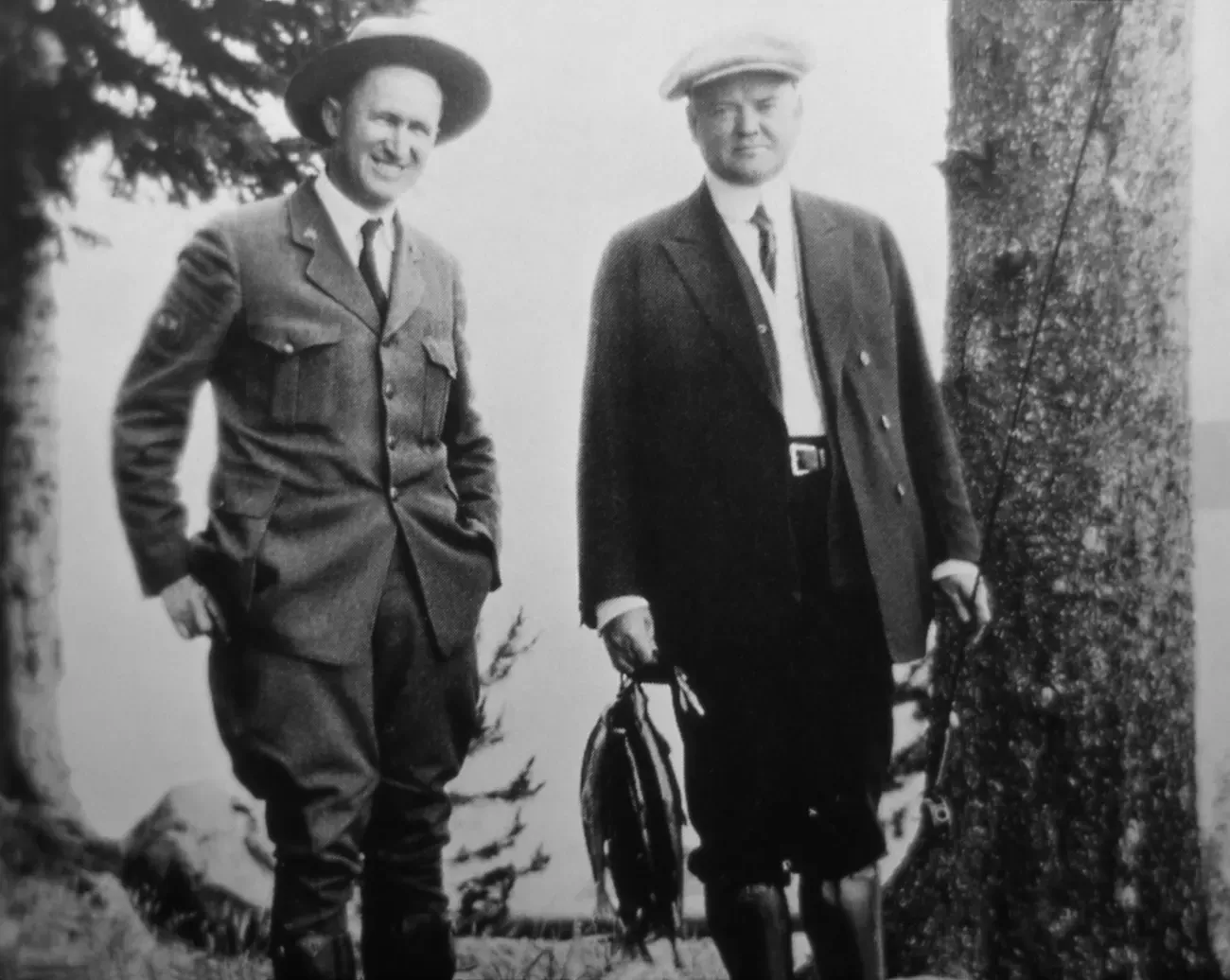
The other way a strong executive could achieve businesslike efficiency was through streamlining the bureaucracies. According to reformers, the years of piecemeal administrative accretions meant that whole agencies had redundant authorities, while other agencies could not fulfill their missions. "Reorganization" became the watchword of reformers and bureaucrats alike during the Harding administration. By 1923, officials were asking for even more authority: Congress should delegate its authority to restructure the government to the President, who should be treated as an expert in management. One of the principal champions of this idea was Harding's Secretary of Commerce: a celebrity businessman, the greatest humanitarian of the Great War, an engineering savant, and a good Quaker with a modern, educated wife: Herbert Hoover.
The delegation of authority did not happen under either Harding or Coolidge, but reorganization took hold. One of the first agencies to be reshaped was the Office of Public Buildings and Grounds. In 1925, Congress consolidated the bureau as an independent agency and modernized its purpose. The change was reflected in its name: The Office of Public Buildings and Public Parks of the National Capital. The OPBPP (the acronyms only get worse until Eisenhower) had clear responsibilities for maintaining both federal office buildings and DC's parks.
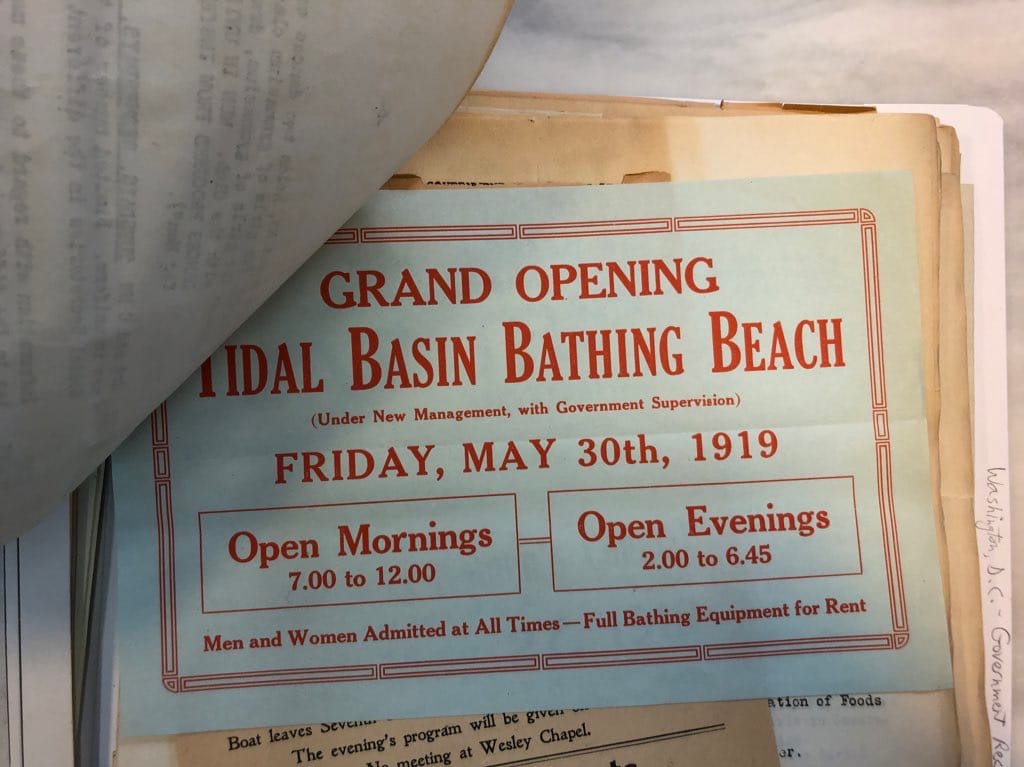
The purpose of these public spaces had change as well, in a contradictory way. On one hand, the 1920s saw their transformation into spaces of modern recreation for locals. The parks of the monumental core gained fields, courts, boat rentals, bike rentals, campgrounds, golf, minigolf, and a bathing beach at the Tidal Basin. On the other hand, a campaign was underway to transform those same parks into the National Mall: a space of commemoration that belonged to all Americans. Efforts to synthesize these missions led to the creation of an ineffectual National Capital Park Commission in 1924, which was then expanded into a powerful National Capital Park and Planning Commission in 1926. The organization behind this transformation of DC's parks was an organization that had grown close to Hoover, the American Civic Association.
One of the concepts that linked the ACA and Hoover was reorganization. Specifically, both were interested in creating a consolidated agency that would handle all of the Federal Government's land, construction, and facility management. Beginning at least in 1919, various thinkers proposed some kind of Public Works Agency within the Department of the Interior. Debate centered on whether this agency should absorb three authorities with major footprints: the river-management works of the United States Army Corps of Engineers, the Forest Service, and the National Park Service. Ultimately, no serious reorganization efforts occurred until Herbert Hoover coasted to the presidency.
While the "Great Engineer" began to study options to streamline the government almost immediately, his administration accomplished little until the economic contraction, which he disastrously euphemized as a "depression," showed no signs of ending. By the end of 1931, Hoover was calling for a range of government interventions. The ones relevant to our traffic islands were a program of stimulus by public works and an efficient agency to oversee them. Finally, in June 1932, Congress gave Hoover the authority to reorganize the government through executive order.

Hoover paves the way for FDR
Herbert Hoover never had the chance to exercise this power. Taking time to study the issue, he only issued the relevant plan, Executive Order 5964, after his defeat to Franklin Delano Roosevelt. In January 1933, Congress vetoed all of Hoover's reorganization proposals, refusing to bind the incoming president. Falling into the bitterness that would consume his long retirement, Hoover insisted not only that his plans were inevitable but that Congress should give future presidents the strong deference proposed in 1923. The new Congress agreed, amending the 1932 law within its first 30 days. Further emphasizing the need to address the Great Depression, the law authorized president's "Reorganization Plans" come into effect unless Congress voted to reject them within a short window. On June 10th, 1933, Franklin D. Roosevelt signed Executive Order 6166. Not only were all the old ad hoc commissions abolished, so was OPBPP, and our traffic island returned to the Department of the Interior.
However, the triangle did not become part of the National Park Service. Rather, DC's public spaces were then under the jurisdiction of a new bureau: not Hoover's Public Works Agency, but the "Office of National Parks, Buildings, and Reservations." From records at the FDR presidential library, it seems that Roosevelt reorganized based on expediency. Whereas his predecessor wanted to merge irrigation projects, roadway construction, and the civil works of the Army Corps, the National Capital Planning Commission, and the Commission of Fine Arts in to his PWA, Roosevelt left all of these out. The new agency, abbreviated ONPBR (I suppose), handled national parks, national monuments, national cemeteries, federal buildings in DC, a vote on DC's Commission, and yes, our traffic island.
It is not entirely clear whether Roosevelt intended this arrangement to last, but it satisfied the American Civic Association. NCPPC and CFA remained independent. National Parks were kept safely away agencies with an economic focus, particularly the Forest Service. The mission of the NPS, written by Olmsted and McFarland was safe. As the association's secretary, Harlean James, put it in her annual report:
Except for the functions regarding [federal buildings] this act was in line with the recommendations of the American Civic Association. Thus two services of the Federal Government with which the Association has co-operated closely are brought under one administrative head.
I have not found records that conclusively prove that FDR took the ACA's suggestions wholesale. But besides the favorable outcome, there is ample evidence that James and other affiliates were lobbying both Congress and federal agencies. More than that, the then-president of the ACA occupied a position of enormous influence: he was FDR's uncle. Yes, Frederic Delano not only led the ACA, he also held the chair of NCPPC, and would soon go on to be one of the architects of the New Deal.
Of course, the ONPBR no longer exists. Everyone hated the name. The "National Park Service" returned in 1934, and then in 1939 NPS was relieved of its management of federal buildings in DC. Once again, it was FDR who fulfilled Hoover's dream, using the robust powers of the Reorganization Act of 1939 to join the administration of public buildings with the multiple public works agencies into a Federal Works Agency. But you can never count Herbert Hoover out. At the former president's recommendation, in 1949, the FWA was broken up and its duties distributed. Federal buildings then returned to a special agency, known as the General Services Administration.
As James implied, Executive Order 6166 consolidated power for the ACA. Maintaining their credibility through both the Hoover and FDR administrations, they defined the Washington, DC that we know. The agencies they invested in more than any others, NPS and NCPPC have been inseparable partners ever since. Their jurisdiction survived fights over segregation, highway construction, and DC Home Rule. RFK stadium was built and demolished. People walk their dogs all over that traffic island without ever thinking that it is under the same jurisdiction as Grand Teton.
It's worth asking why, and whether that should continue.
Bibliography
Arnold, Peri E. “The ‘Great Engineer’ as Administrator: Herbert Hoover and Modern Bureaucracy.” The Review of Politics 42, no. 3 (1980): 329–48.
Babin, Patricia. Links to the Past: A Historic Resource Study of National Park Service Golf Courses in the District of Columbia. National Park Service, 2017.
Balogh, Brian, Ed. The Associational State: American Governance in the Twentieth Century. University of Pennsylvania Press, 2015.
Burnap, George. Parks: Their Design, Equipment, and Use. Philadelphia: J. B. Lippincott Company, 1916. Internet Archive.
Bushong, William, and Piera M. Weiss. “Rock Creek Park: Emerald of the Capital City.” Washington History 2, no. 2 (1990): 4–29.
Chambliss, Julian C. "Perfecting Space: J. Horace McFarland and the American Civic Association." Pennsylvania History: A Journal of Mid-Atlantic Studies 77, no. 4 (2010): 486-497.
Clements, Kendrick A. “Herbert Hoover and Conservation, 1921-33.” American Historical Review 89, no. 1 (1984): 67–88.
Clements, Kendrick A. The Life of Herbert Hoover: Imperfect Visionary, 1918-1928. London: Palgrave Macmillan, 2010.
Dempsey, John M. and Eric Gruver. “‘The American System’: Herbert Hoover, the Associative State, and Broadcast Commercialism.” Presidential Studies Quarterly 39, no. 2 (2009): 226–44.
Diamont, Rolf, Carr, Ethan, and Meier, Lauren. The Olmsteds and the National Park Service. Historic Resource Study. National Park Service, 2020.
Hawley, Ellis W. “Herbert Hoover, the Commerce Secretariat, and the Vision of an ‘Associative State,’ 1921-1928.” The Journal of American History 61, no. 1 (1974): 116–40.
Hawley, Ellis, ed. Herbert Hoover As Secretary of Commerce: Studies in New Era Thought and Practice. Iowa City: University of Iowa Press, 1981.
Heine, Cornelius. A History of National Capital Parks. National Park Service, 1953.
Hoover, Herbert. The Memoirs of Herbert Hoover: The Cabinet and the Presidency, 1920-1933. New York: Macmillan, 1951.
Gillette, Howard Jr. Between Justice & Beauty: Race, Planning, and the Failure of Urban Policy in Washington, D.C. Philadelphia: University of Pennsylvania Press, 1995.
James, Harlean, ed. American Civic Annual. Washington: American Civic Association, 1929-1957
Johnson, Benjamin Heber. Escaping the Dark, Gray City: Fear and Hope in Progressive-Era Conservation. New Haven: Yale University Press, 2017.
Lincoln Park Cultural Landscapes Inventory. Washington: National Capital Parks—East, 2009.
Maryland Avenue, NE Cultural Landscapes Inventory. Washington: National Capital Parks-East, 2020
Morrison, Ernest. J. Horace McFarland: A Thorn for Beauty. State College: Penn State University Press, 1995.
Nash, Gerald D. “Herbert Hoover and the Origins of the Reconstruction Finance Corporation.” The Mississippi Valley Historical Review 46, no. 3 (1959): 455–68.
"Presidential Reorganization Authority: History, Recent Initiatives, and Options for Congress." White Paper. Washington: Congressional Research Service, 2012.
Reagan, Patrick D. Designing a New America: The Origins of New Deal Planning, 1890-1943. Amherst: University of Massachusetts Press, 1999.
RG 042: Records of the Office of Public Buildings and Public Parks of the National Capital. National Archives Building, Washington, D.C.
RG 051: Records of the Office of Management and Budget. Archives II, College Park, Maryland.
RG 079: Records of the National Park Service. Archives II, College Park, Maryland.
"The Role of the President in Budget Development: In Brief." White Paper. Washington: Congressional Research Service, 2022.
Scott, Pamela. Capital Engineers: The U.S. Army Corps of Engineers in the Development of Washington, D.C. 1790-2004. Alexandria: USACE Office of History, 2011.
Sautter, Udo. “Government and Unemployment: The Use of Public Works before the New Deal.” The Journal of American History 73, no. 1 (1986): 59–86.
Schmeckebier, Laurence F and William F. Willoughby. The Government and Administration of the District of Columbia: Suggestions for Change. Washington: Brookings Institution, 1929.
Schneider-Hector, Dietmar. “Forging a National Park Service: ‘The Necessity for Cooperation.’” Journal of the Southwest 56, no. 4 (2014): 643–82.
Sellars, Richard W. Preserving Nature in the National Parks: A History. Yale University Press, 1997.
Swain, Donald C. “Harold Ickes, Horace Albright, and the Hundred Days: A Study in Conservation Administration.” Pacific Historical Review 34, no. 4 (1965): 455–65.
Tarbert, Jesse. When Good Government Meant Big Government: The Quest to Expand Federal Power, 1913–1933. Columbia University Press, 2022.
Taylor, Dorceta E. The Rise of the American Conservation Movement: Power, Privilege, and Environmental Protection. Durham: Duke University Press, 2016.
Various editors. Civic Comment. Washington, American Civic Association, 1919-1934.
Various editors. Planning and Civic Comment. Washington: American Planning and Civic Association. 1935-1965.
Various editors. American Civic Association Bulletin. Washington: American Civic Association, 1904-1929.
Young, Terence. "Social Reform Through Parks: the American Civic Association's Program for a Better America." Journal of Historical Geography 22, no. 4 (1996): 460-472.
Zenzen, Joan M. An Urban Oasis: Rock Creek Park's History and Management. National Park Service, 2020.