Who birthed Reno?
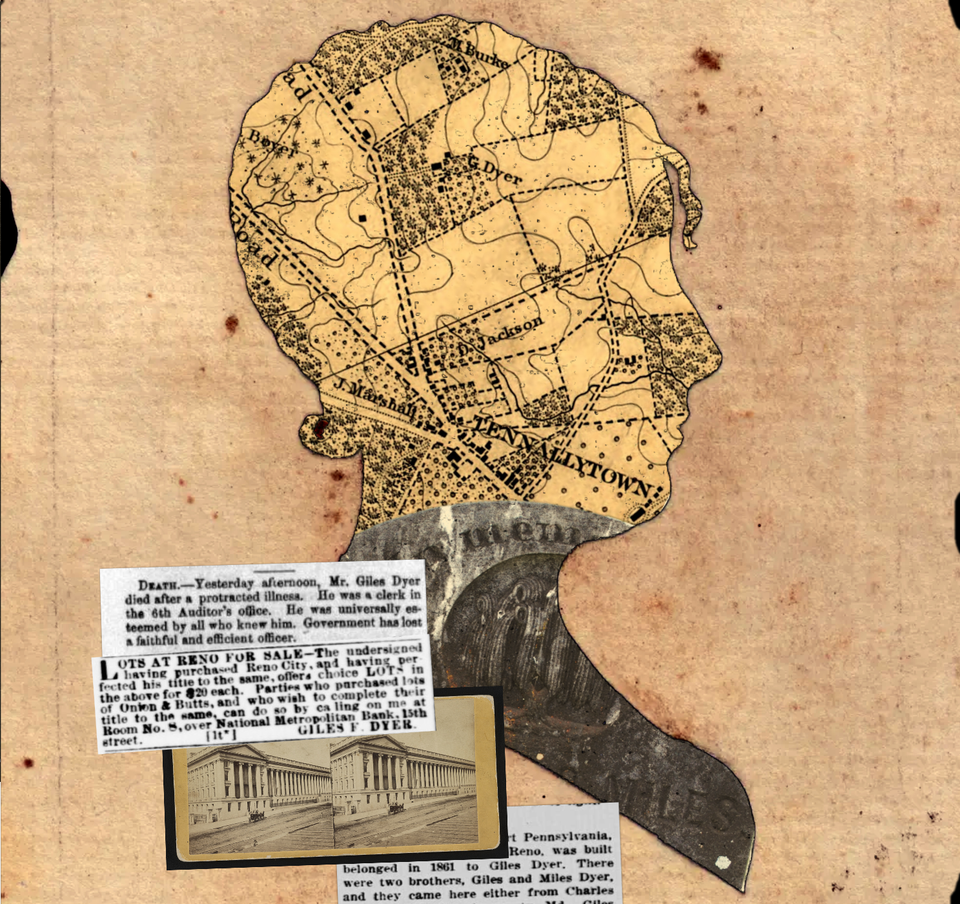
My first clue that Reno needed a second look was pretty minor. On its own, this error didn't affect how I understood the community or what its clearance meant in any broader history. As the first instance in a very consistent pattern, however, it convinced me to never take basic facts for granted. Surely, I assumed in 2016, we knew who was responsible for subdividing a farm into Reno's lots. Right?
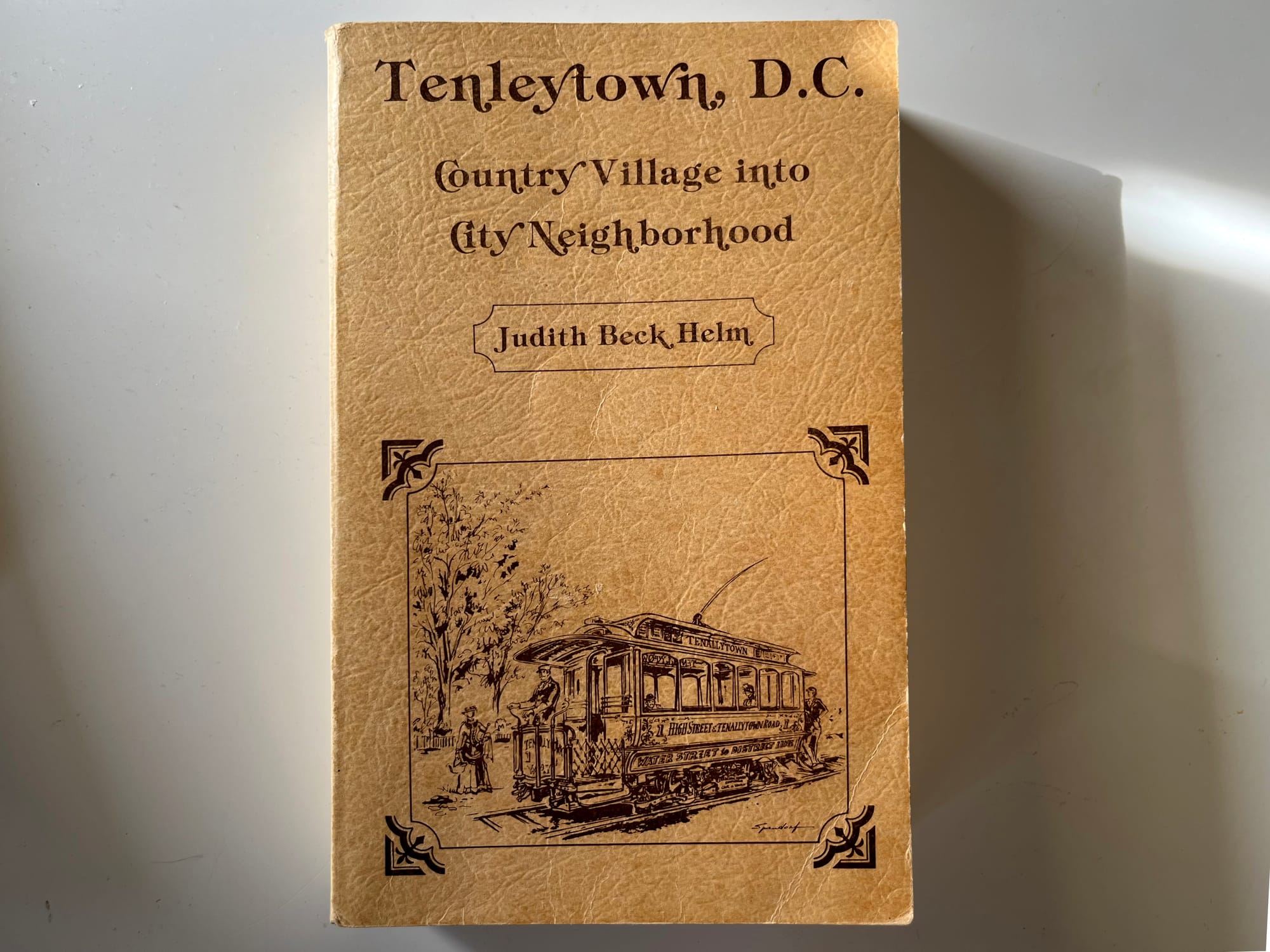
If you knew anything about the Reno community before 2017, you probably read it in a book called Tenleytown, D.C.: Country Village into City Neighborhood or on signs that are based on that book. Self-published in 1981 updated in the year 2000, it is an impressive work of local history by Judith Beck Helm. Working with her neighbor, Priscilla McNeil, she collated an enormous amount of genealogical data, traced property records to colonial patents, labored in every local archive, collected 200 oral histories of long-time residents, and pored through historic newspapers. Helm did some serious work. So, when I blogged about the Reno, I loved digging into her footnotes, finding digitized originals and sharing them for more depth.
One evening in 2016, I took a look at note #121.
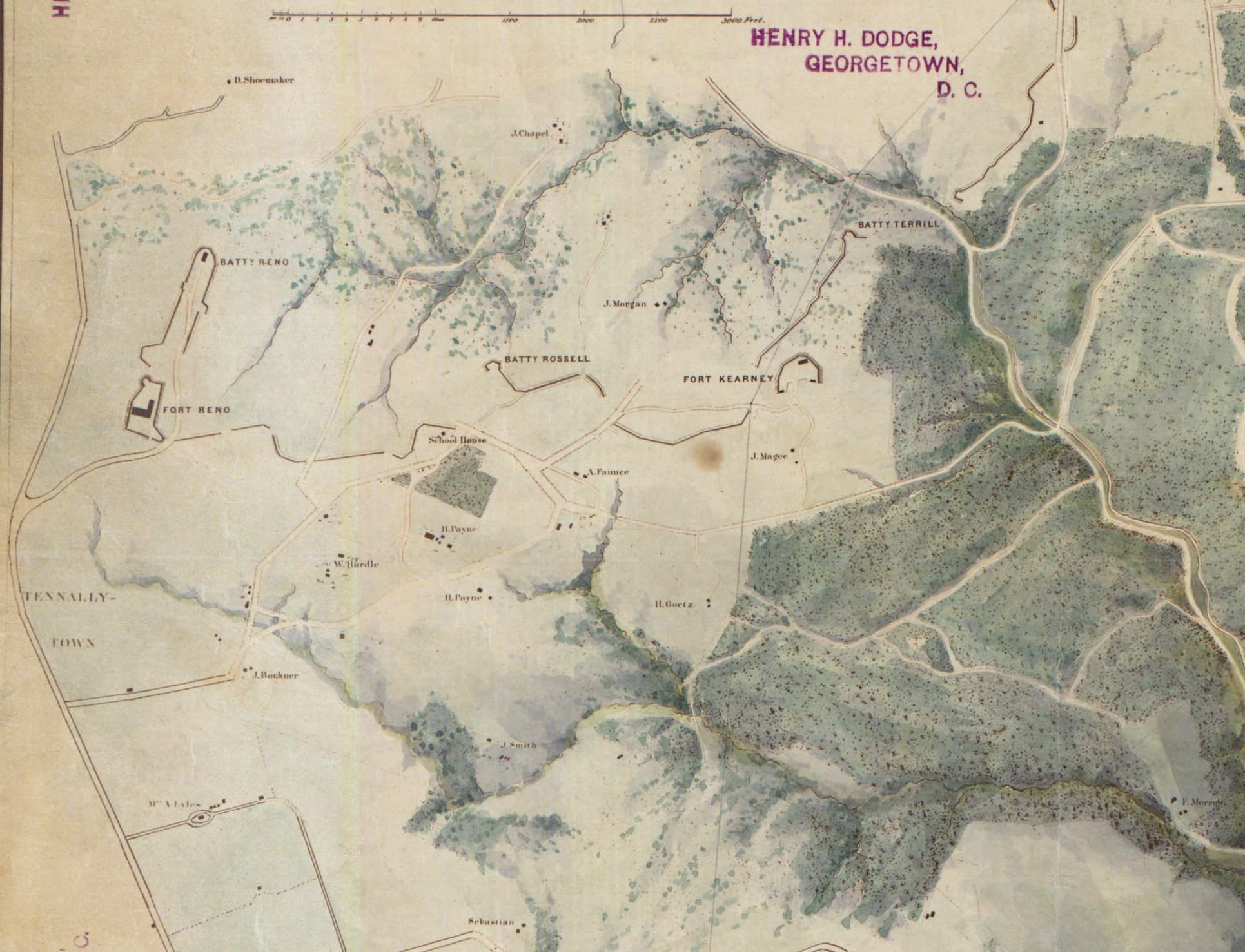
There, Helm recounts that Reno began as about 68 acres of desirable farmland on a high point north of Tenleytown (spelled Tenallytown at the time). The location later becomes its undoing, when in 1861 the US Army Corps of Engineers also came to desire that high point for the defense of the Union's capital. In 1869, its owners subdivide the property into about 640 lots, some of which were bought by African Americans. Describing who owned the land before, Helm wrote:
According to the Rambler's account in the Star, the land that was possessed by the federal army for its fort in Tenallytown was owned by brothers Giles and Miles Dyer.
Helm's source for this episode was a local interest column by J. Harry Shannon. Writing as "The Rambler" in DC's onetime stalwart paper, the Evening Star, Shannon's schtick was to ramble around the outskirts of Washington and then ramble on about the interesting historical facts and figures he encountered. It was a great find: probably the result Helm spending hours behind a microfilm reader.
I was lucky enough to have the internet, so I opened a tab to Chronicling America, a database of 17 million pages of newsprint sponsored by the Library of Congress and the National Endowment for the Humanities. I found the article within minutes. A minute after that, I realized the source said something subtly different.
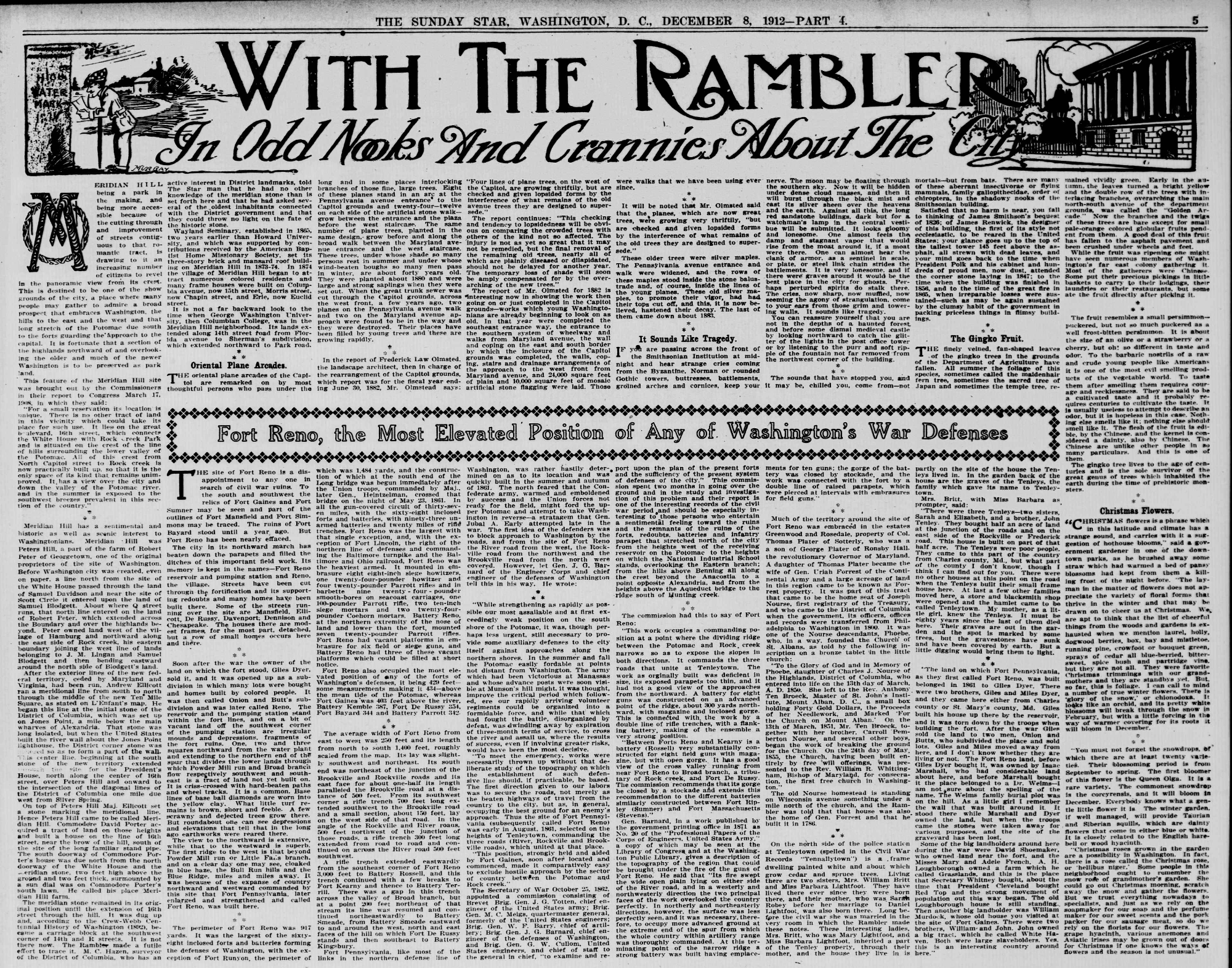
The 1912 column included a profile of the neighborhood of Tenleytown and the adjacent neighborhood, Reno. Interviewing two elderly women from a prominent local family, Shannon recorded the following memories of Mrs. William Britt:
The land on which Fort Pennsylvania, as they first called Fort Reno, was built belonged in 1861 to Giles Dyer. There were two brothers, Giles and Miles Dyer, and they came here either from Charles county or St. Mary's County, Md... After the war Giles sold the land to two men, Onion and Butts, who subdivided the place and sold lots. Giles and Miles moved away from here, and I don't know whether they are living or not.
It seemed to me that Mrs. Britt was saying Giles owned the land, but not Miles. Helm presumably conflated them at some point. I went to Ancestry.com, to see if they were really brothers, and I immediately found another subtlety.They were brothers, yes, but there was another Giles: their father.
Things only got more confusing from there. The older Giles had died in 1856 when Miles was 15 and the younger Giles was still in breeches. Miles fought for the Confederacy before moving to Charles County. The younger Giles settled in St. Mary's County, as Britt mentioned. Meanwhile, listings for Reno's land in later newspapers referenced subdivisions from both 1867 and 1869. Footnote 121 was a copy of hearsay, and either Mrs. Britt misremembered or Shannon conflated the two Gileses. Not only was I less sure about who subdivided the land, it was no longer clear who owned the farm when the Union Army came in 1861.
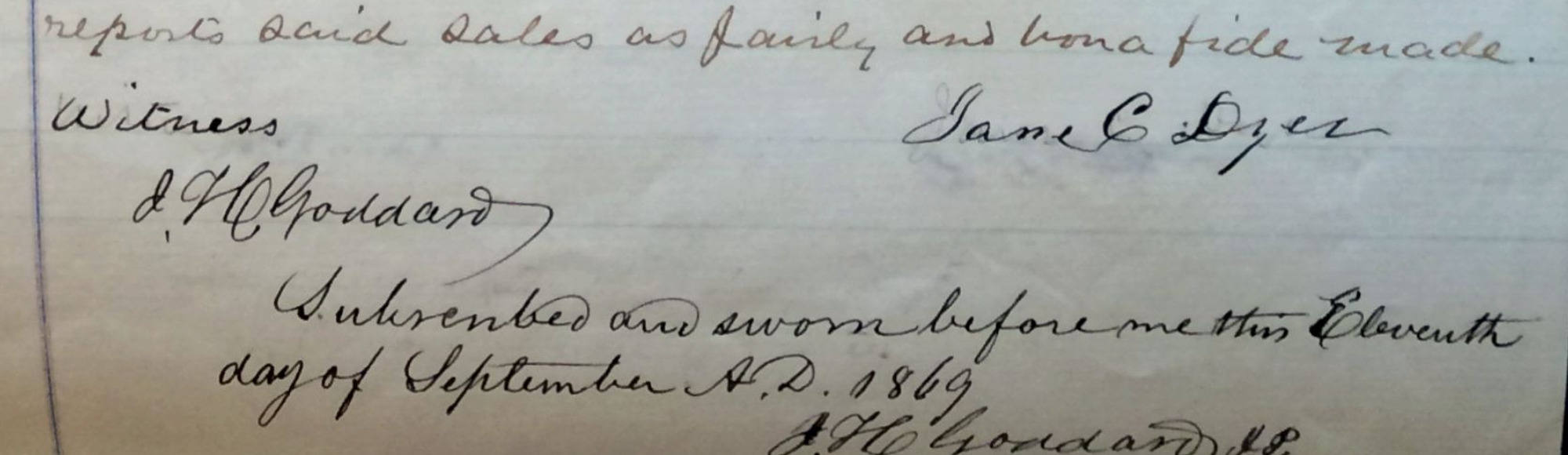
You may have already figured out what was going on. I still hadn't when I followed a legal notice in the Star to the National Archives. I quickly—"quickly" in archival terms, so like 2 hours—located it: DC Equity 795. The records were musty and folded in thirds, like a letter. I carefully opened them one by one in the needlessly dark reading room, flattened them with weights, and then squinted until the crisp clerical script gave up a hidden figure: Jane C. Dyer, the widow of the elder Giles.
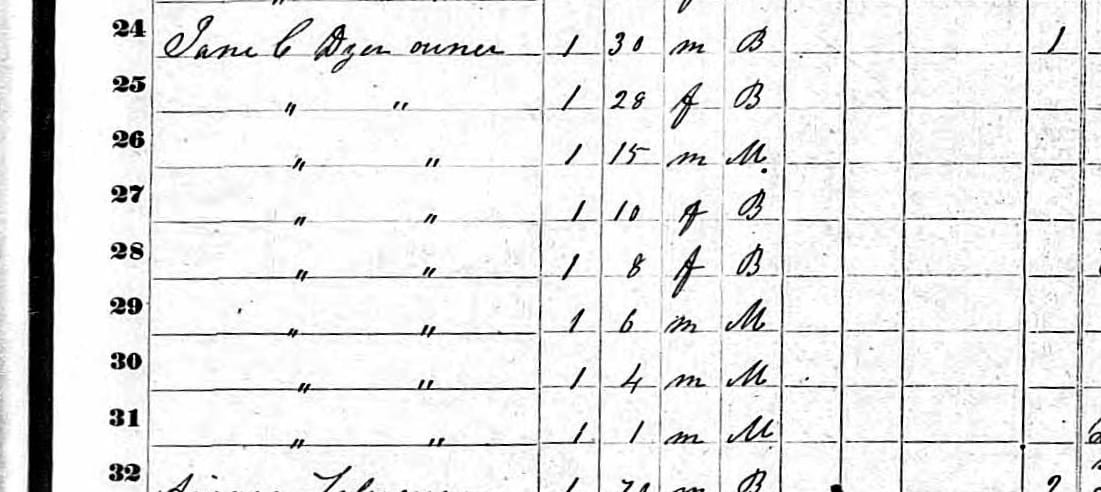
I photographed the files and took them home. Fitting the documents together with what I had found online, a story of loss and survival at came together. After 16 years of marriage, Jane and Giles, Sr. had purchased the property on the highest point in the District of Columbia. They named the plantation Oak Lawn and built a house that looked out towards the Potomac. It was at Oak Lawn that Giles died in 1856. Jane buried him in its earth. It was on Oak Lawn that she carried on with the help of her children, Thomas, Sarah, Miles, Giles, Mary, and little Jane. And it was at Oak Lawn that Jane, despite bearing and nursing at least eight human beings, looked at the children of others and saw investments. In another collection, I learned The District of Columbia agreed, taxing Jane for these people alongside her farm equipment: Alfred ($500), Sarah ($500), Dallas ($250), Mary ($200), Rose ($100)—plus at least three others recorded in 1860 Census without names.
Not long after, the South rose to defend this custom of claiming others. The government, in turn, claimed Jane's land. Exiled to her family in Charles County, she grieved the loss of the home, demanding rent and pleading with commanding engineer Montgomery Meigs for compensation. Even the end of the war proved cold comfort. The tents and buildings were sold off, but massive earthworks now occupied the ground where house and orchard once stood. The army had cut down trees and fences, while the pressure of their boots had compacted the soil.
Unfortunately, Jane was trapped in the ruined estate. Her name was not on the deed to Oak Lawn. In his will, Giles, Sr. left the estate to their children but appointed her executrix, with rights to the property until death or remarriage. Unfortunately, Giles had failed to recruit enough witnesses: the will was invalid. To leave the broken land behind, the family had to settle the estate in court first, appointing a trustee to conduct the sale impartially. The Dyers selected a prominent lawyer and family friend named William F. Mattingly, Jr. In August of 1867, he subdivided the land into one-acre parcels, leaving 25 acres for the widow.
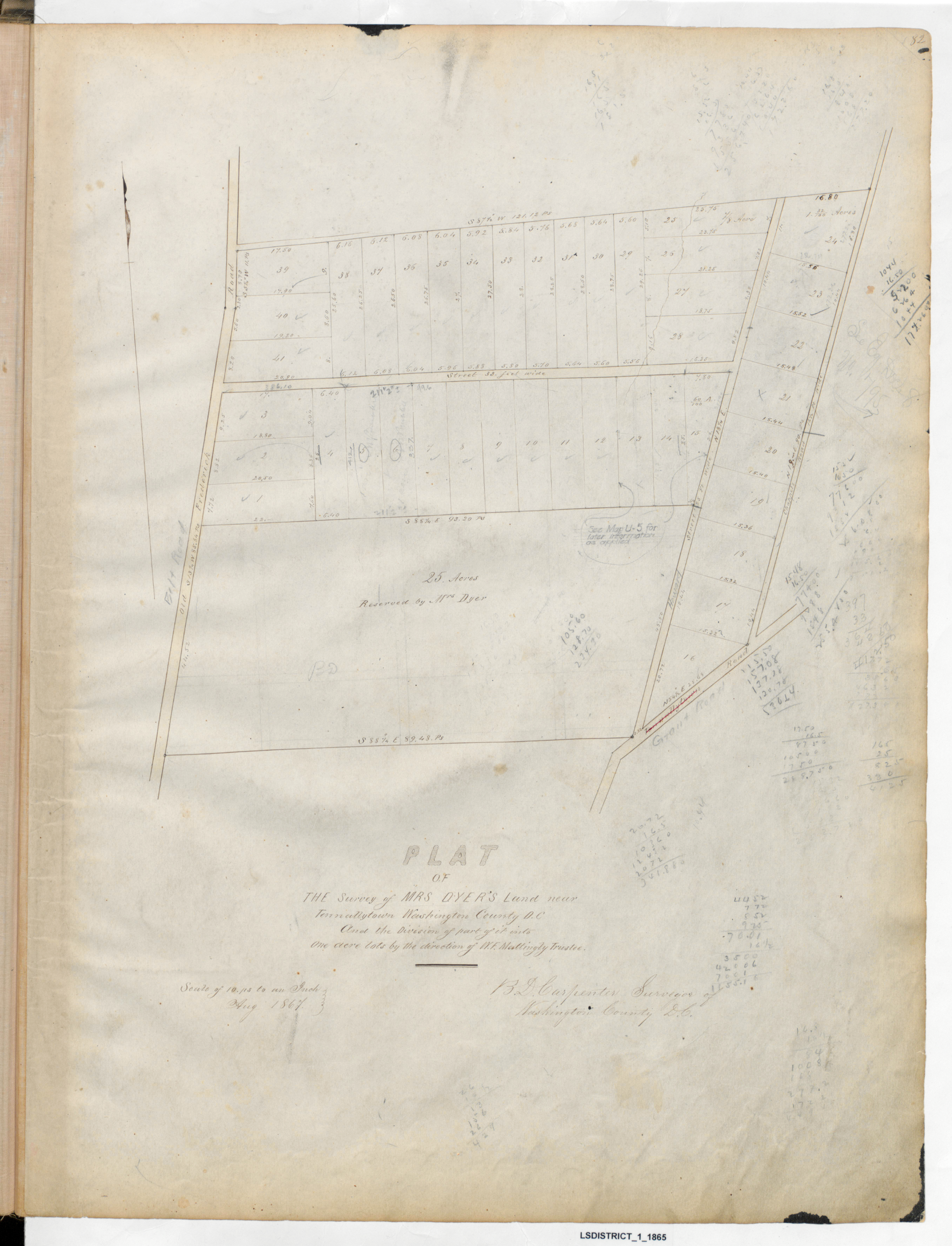
As a confidante of Alexander "Boss" Shepherd, Mattingly should have been a good choice for the late 1860s property boom in DC. However, he seems to have failed. After less than a year, family returned to court, pleading for someone else to complete the disposal, as they wrote on April 17th, 1868:
...that the said heirs at law are anxious to have their mother appointed trustee in the place of your Petitioner for the reason that she possesses better facilities for selling said lots... and will thereby save to herself and the said heirs at law the trustee's commissions.
Your trustee therefore prays your honor to pass a decree relieving him from his said office of trustee and appointing the said Jane C. Dyer in his stead.
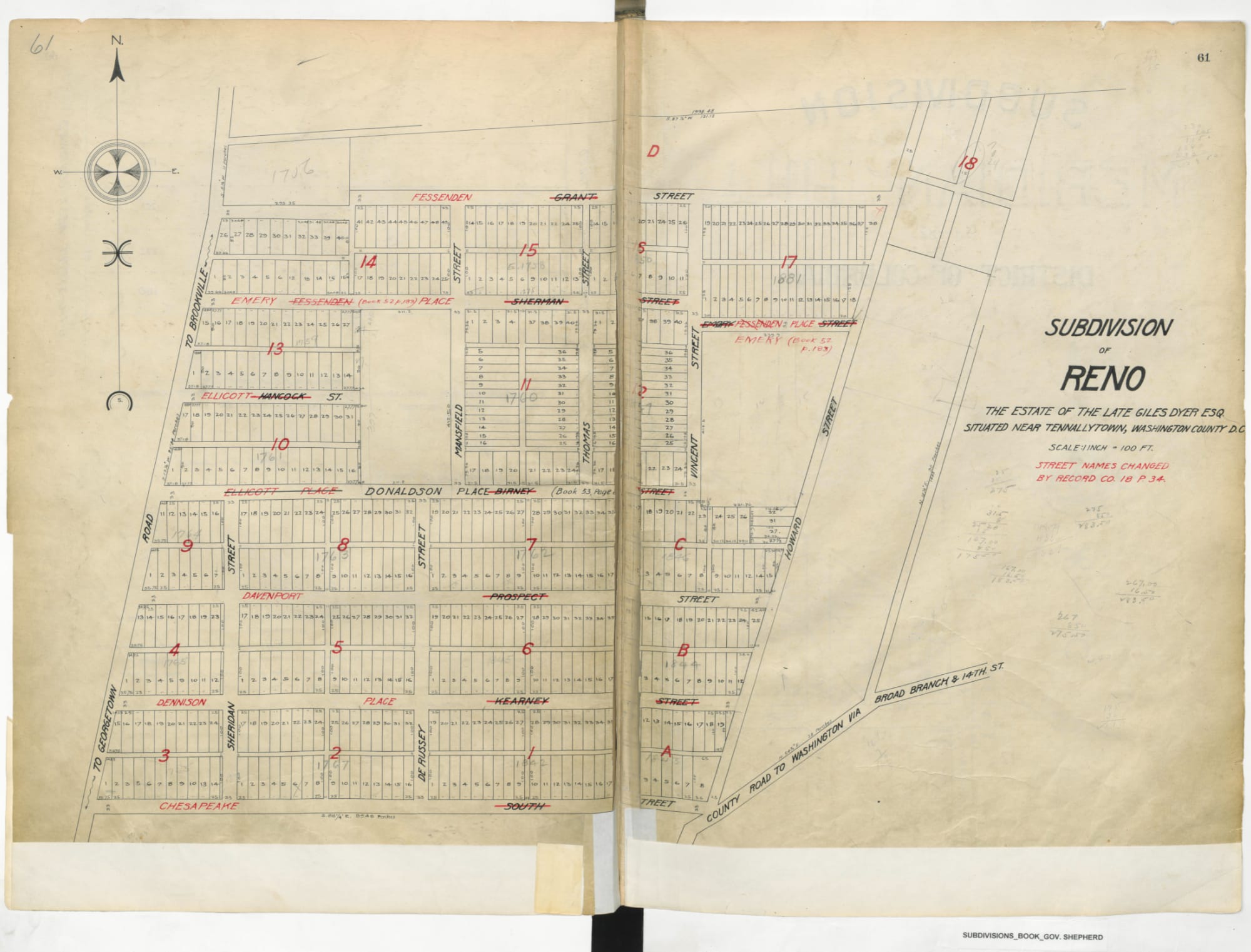
So it was Jane, not Giles or Miles, who made the sale to the speculators who then created Reno's 640 lots. It's unlikely we will ever know how decisions were made within the family—records like that are rare enough for notables—but from a legal perspective, it was Jane Dyer who birthed Reno.
I can't tell you why Mrs. William Britt left the widow Dyer out of her reminiscence. Maybe she didn't, and it was Harry Shannon who cut her from his column. But what started with Mrs. Britt—whose name was Mary, by the way—led step by step to the total erasure of a woman with agency in life and a legacy after. It was only the first of many I would find, from every walk of life.
Even people who know the alley reform work of Edith Elmer Wood or Charlotte Hopkins have forgotten the movement's origins in the temperance mission of a Black widow from Boston named Rosa Brown. Margaret Clagett embodied the potential of DC for Black women with her civil service job, while Mary Ellis was run out of Reno when one resident shot another for her love. A secretary named Marie Henning was a dependable agent for the conspiracy against Reno, and journalist Ethel Armes pestered NCPPC to complete the clearance. Mary Ellen Pleasant never escaped the wild accusations levied at her when she helped Sarah Althea Hill battle Francis Newlands for William Sharon's fortune. Even those women given credit in their day, like Mira Lloyd Dock, Theodora Kimball Hubbard, and, of course, Harlean James, have distinctly faded in the fields that they nursed.
Jane Dyer, for her part, would go to her grave in 1875. She sought Congressional compensation for the loss of home and community until the end. Giles F., the youngest son, carried on her legacy from St. Mary's County, holding onto lots in Reno until 1885 and maintaining her claims for compensation until his own death in 1923. Active in his local Catholic parish, Our Lady of Medley's Neck, he had a stained-glass window dedicated to his mother when the building was renovated in 1912. A decade later, he joined Jane in the churchyard.
In late summer, 2017, as I was finishing my City Paper article, I drove down to Leonardtown, Maryland to scrounge for any last clues about the family. I spent an afternoon reading dot-matrix genealogies at the St. Mary's County Historical Society and then headed over to the church. I was glad I did. I found Jane's grave, and then her husband's. She had taken him from under the fort, setting him in new earth so that they would eventually be reunited with their children, save for Thomas and Miles. Looking at the family row, I suddenly realized there was yet another woman right under my nose. Next to Sarah Dyer lay Sarah Q. Miles, Jane's older sister.
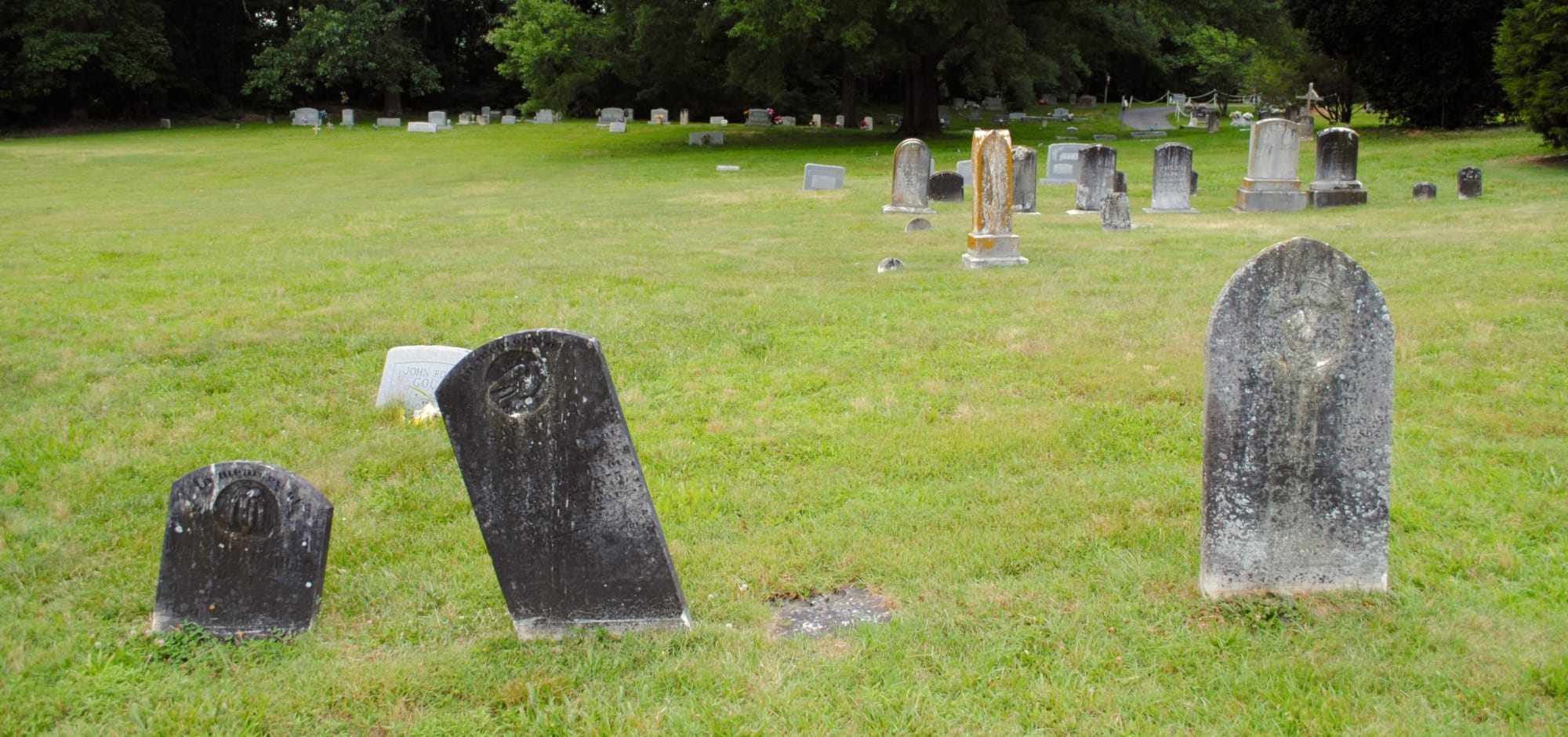
Pulling my notes up in the car, I realized I had seen that name before. Sarah Miles was right there on the 1860 Census, a document I'd been looking at for eight months. She was the Miles I was really missing, an unmarried woman who helped Jane raise her family as a governess. Without her labor, could Jane have kept the family farm long enough for it to be seized and subdivided? She was not as invisible as the people Jane held in slavery, but she nevertheless lived and died four steps outside of history.
I took a lesson from this rabbit hole. Footnotes, like narratives, can conceal through false certainty. Often, the absence goes all the way back to the biases within primary sources. All you can do is check. Methods and theory have helped me do it efficiently, but a simple rule of thumb has worked pretty regularly: look into the women on the margins of sources, like Jane Dyer. Within her means, she shaped the world that has come down to us. She deserves the same measure of credit and culpability as any man. More than that, studying lives like hers gives us insights into more than half of history.
By the way, I've begun publishing an analysis of Trump's projects in DC. I think my historical and professional background allows me to make unique insights about the who, what, and why of grandpa's building hobby.
Now, on to the big questions: