What is The Birth of a Capital?
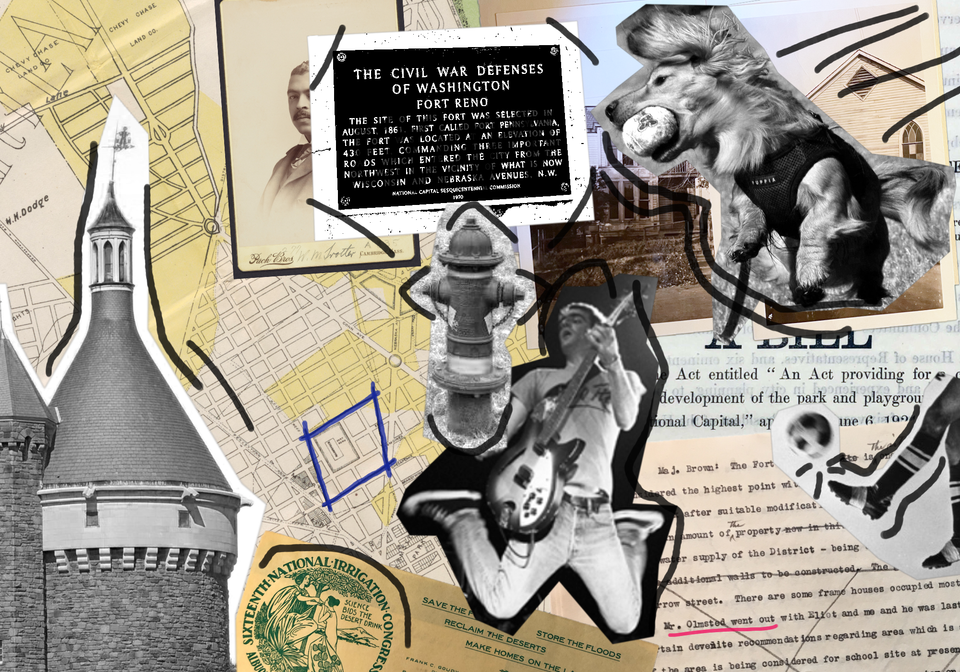
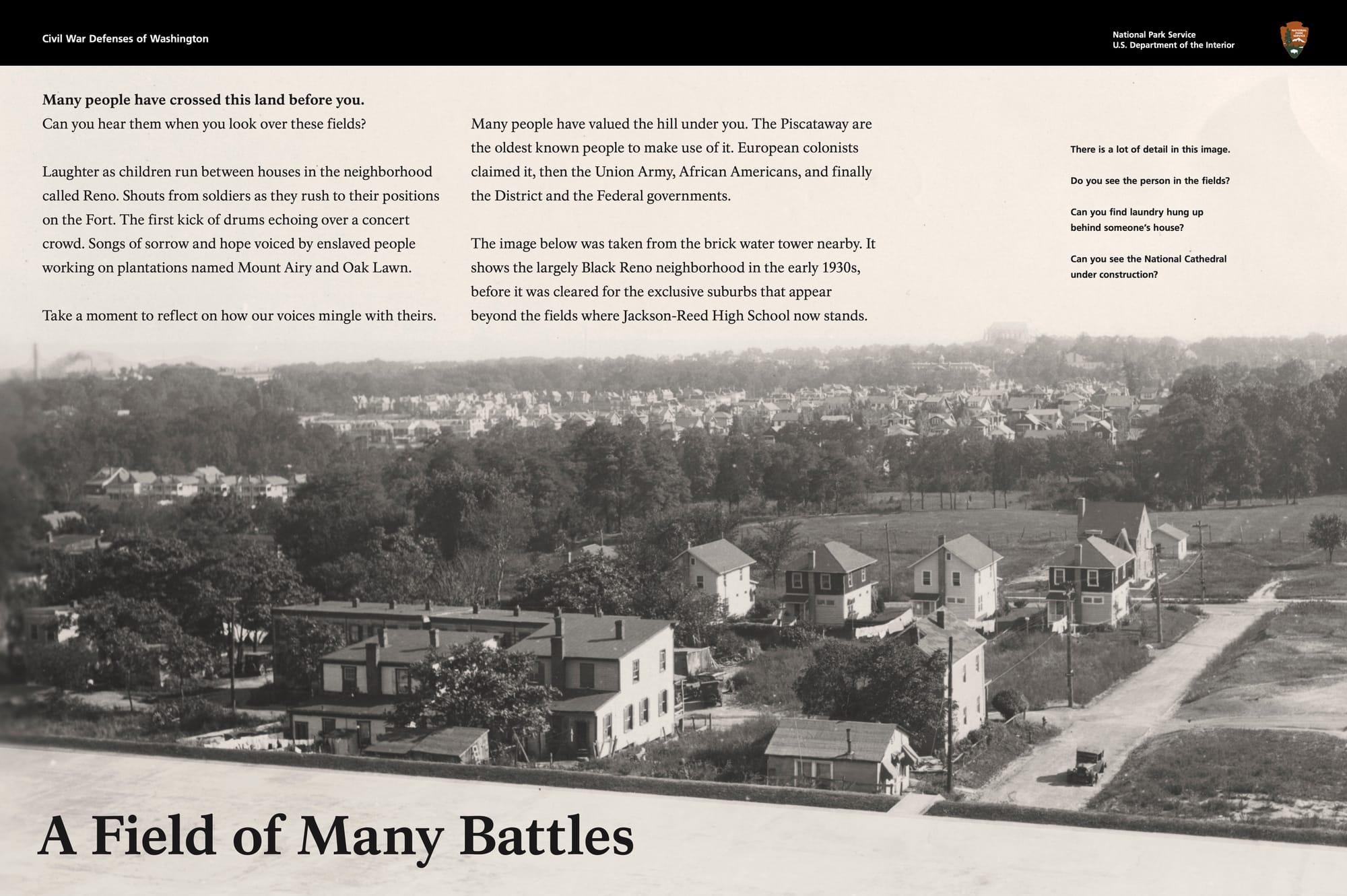
This post is decades in the making. Since high school, I have been interested in a particular part of my childhood that neighbors discussed uneasily, or apologetically, if at all. The big park up the hill from my house in the comfortable DC neighborhood of Tenleytown—where parents ran their dogs, kids went to middle school, and Fugazi played their last show—had been a Black neighborhood.
Growing up, most people around me simply did not know. But among those who did know, they didn't seem to know much. I could ask the local history group, or read a study for a historic district, and consult some chapters in a self-published book. All of these depended on amateur research from the 1970s and 80s. In fact, high school students had done more work on the community than trained historians. By the time I graduated college, I had received a clear impression that serious people viewed this erasure as just another bad thing that had happened to Black people in the United States. At best, the clearance seemed destined to be an awkward passage in books about the delightful leafiness of our Nation's Capital.
I wasn't so sure. On the hills where I had only ever seen scrubby grass had stood rows of houses. The houses had been homes. The homes had been the settings for the lives and institutions that were as worthy as any to have their stories told. More fundamentally, there was no clarity over what had led to the community's destruction. Was it an obsolete village slipping into blight, as officials always said? Or was it a poor community trammeled by real estate developers? Who had really been calling the shots at the National Capital Planning Commission? But more than anything, I wanted people to know the name of this community:
The residents called their neighborhood Reno.
Rick Olmsted's Washington
The more I researched the community, the sense that there was a bigger story only grew. The ordinary struggles of Reno's residents seemed to intersect with some of the most important struggles in American history—and not just at the level of abstraction, but through government, institutions, and even individuals. This gut feeling became a certainty one Saturday morning in 2016, as I read meeting transcripts where planners discussed erasing the neighborhood in dry, condescending terms. The documents said that on a cold day in January 1928, a man named Frederick Law Olmsted, Jr. drove out to Reno and decided which of Reno's homes should be seized by the Federal Government and cleared.
If you don't know who Frederick Law Olmsted, Jr. is, that's fine. If it sounds kind of familiar, you're probably thinking of his father, who designed Central Park. But if you recognized the "Junior," this event may instead seem like a problematic footnote in his career. This was a man who defined landscape architecture as a profession. He chartered American urban planning and developed key practices that underlie American suburbs. And he was a foundational influence on the National Park Service, even composing its mission statement. All of that is all true, but as I traced the path that led Rick Olmsted to that fateful survey, the streets of Washington became a record, in which I could see the forces and personalities that have shaped the whole of this parcel of land known as the United States.
What I learned was that Reno was not a slum. It was not a rural hangover, despite its origins in the chaos of the Civil War. It was a neighborhood of 131 economically diverse mostly Black households by 1920, in the most desirable part of Washington. It was desirable because thirty years earlier a visionary investor named Francis Newlands had hewed the slopes northeast of Reno into Chevy Chase, a model suburb for the nation's elite. When he entered Congress, Newlands turned his ambition back to the landscape that had made him rich: the arid ranges of the western United States. There, he used the power of the federal government to transform deserts into homesteads for yeoman farmers. He called his vision for America an "empire at home," concluding that its federal capital would have to be remade with equal grandeur. Whenever possible, he steered work to the designers who he felt were equals in imagination: the Olmsted family.
The White City and its white nation
Central to Newlands's vision was absence. He made no room for anyone he deemed less than European, either in the irrigated west or the suburbs that crept toward Reno over the first decades of the 20th century. It was his racism, also, that blinded him to the ambition of the Black elite that had settled in Washington after Reconstruction. So, he did not foresee that a group of Black businessmen would attempt to build an exclusive suburb of their own next to Chevy Chase. And he did not foresee that when that scheme failed, some of those investors would turn to a nearby piece of prime real estate, which the race had already claimed: Reno. Aligning with the uncompromising Black activist William Monroe Trotter, these men sold land to white collar African Americans and organized the longtime residents of Reno. When in 1926, the segregated suburbs at last reached the community, and the the companies founded by Newlands marshaled a coalition to evict Reno, it was Trotter's deputy, a lawyer named James Neill, that rallied the town and defeated the plan in the halls of Congress.
As this conflict played out on the slopes of Rock Creek, movements that sought to tame urbanization and resource extraction were rising across the United States. The Olmsted family stood at the forefront of these tendencies, beginning with the senior Frederick's trusteeship of Yosemite, and continuing with his sons' era-defining visions for city and wilderness alike. To realize these ambitions, Frederick, Jr. co-founded an advocacy club called the American Civic Association. Although successful in creating the National Park Service to conserve valued landscapes, the ACA's goal of planning cities for health and beauty floundered. At a loss in 1921, its leaders took a gamble on a female organizer named Harlean James. Drawing on her experience in women's clubs and a World War I housing agency, she soon devised a new strategy with Olmsted: they would use DC’s lack of democratic government to turn it into a model of technocratic planning, matching national advocates to local interests through the patrician progressive Frederic Delano. Over three successive campaigns, they secured the authority and funding to reshape Washington according to their vision—as well as the agendas of the members in their coalition, such as the companies founded by Newlands. Consequently, it was the planning board created and staffed by the ACA that cleared Reno, fully aware of the racist motivations. Rick Olmsted drew the map.
In 2017, I had the privilege of publishing the core of this story in the Washington City Paper, joining an illustrious tradition of gratuitously long feature articles in that alt weekly. With my good friend Kim Bender, I've also written about the first development attempted by James Neill, which we are developing for an academic publication, and in the meantime has been memorialized by the State of Maryland with a big, heavy historic marker.
A model for the nation
As proud as I am of this work, it only captures a fraction of what I had uncovered when I traced Olmsted's career. What destroyed Reno was not a single intervention. The ACA had changed the world around the community, expanding the powers of the state and redefining the public interest in a time of pronounced white supremacy. They helped make segregation a core policy of city planning, while older Black elites like Neill found themselves outmatched and without recourse. By 1928, the ACA's coalition spanned from muckraking public housers to titans of real estate and from foresters to housewives. Their connections to the government were deep, working closely with Secretary of Commerce Herbert Hoover to promote planning, modernization, and homeownership across the United States. As they learned from their experiments in Washington, their ideas coalesced into spatial and resource planning on the regional and even national scale. When Delano's nephew and protégé, Franklin Delano Roosevelt, assumed the presidency, the ACA at last fulfilled their vision in the New Deal. The conservation programs, the dams, the National Mall, homeownership policy, slum clearance, cultural programs, and Fort Reno Park: all were informed by the work of the American Civic Association and its leaders. All, whether they knew it or not, executed some part of the vision for America once laid out by Francis Newlands.
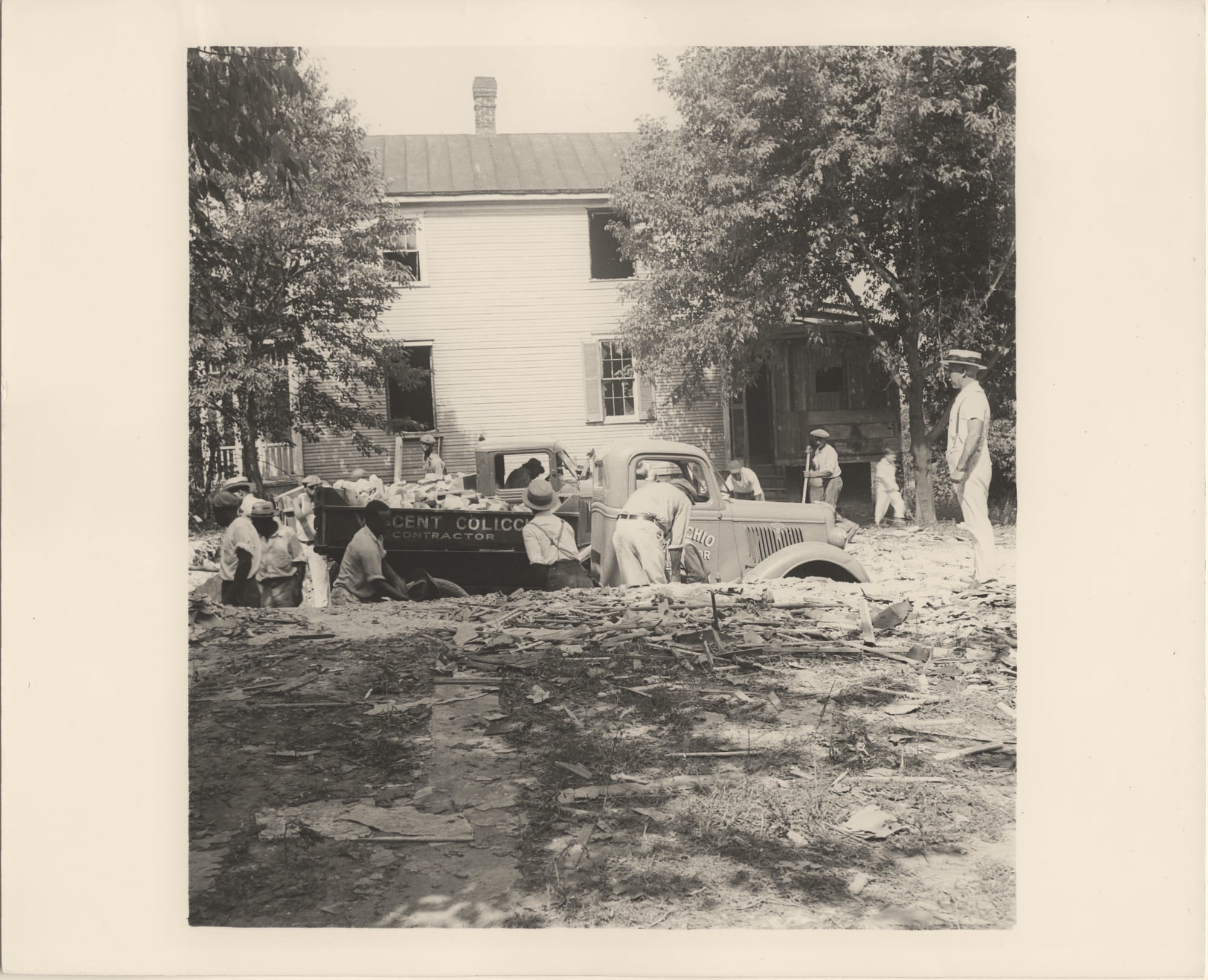
Reno was torn down under Works Progress Administration contracts and by the authority of the National Park Service. Fragments excluded by Olmsted survived until the 1950s. By then, a new generation of civil rights activists had arisen, challenging the institutions established by the ACA. When the last houses fell, it was to conceal what had been destroyed in the name of the public. Neill and Trotter died defeated. Olmsted and Delano became legends before passing. The ACA collapsed when Harlean James retired, but the institutions that organization left remain conduits of power: the National Capital Planning Commission, the Commission of Fine Arts, and the DC Housing Authority. The young staffers that implemented Olmsted's plans for Reno fared even better. One went on to reshape DC through urban renewal, another lead the National Park Service into modernity, and another taught at Harvard until the 1970s. One even set the boundaries of Washington’s memory as president of the Historical Society of Washington.
The scope of my book is vast. It has taken years to research, from texts to databases to archives. I visited cemeteries in Tennessee and ditches in Nevada. I even had to get DC's government to fund a new archive building to access records. The heart of this story is still Reno. If nothing else, I want to restore its name to memory and tell the story of its residents, who, by sheer luck, got caught up in a vision they could not even imagine. Reno is not a footnote in Rick Olmsted's career, it is a pivotal moment that revealed the character of the man who shaped the American landscape like no one else. Reno is not a footnote in the history of Washington, DC, it explains how the city came to acquire those qualities that make it so distinct: its leafiness, its monumentality, and the Black excellence that persists in tension with its segregation. In fact, the story of Reno is not a footnote in American history, it is an vivid restatement of a question that has haunted United States from the banks of the James River to the streets of Minneapolis:
To whom, exactly, does this land belong?
I hope you will stick around as I try to share pieces of this story, how I put it in context, and how I researched it. All you need to do is subscribe.
If that wasn't enough, I also promise to clip a historic headline or ad, strip it of all context and put it at the end of every post, like this: