They've already built the bunker
Is Trump building a bunker under the ballroom?
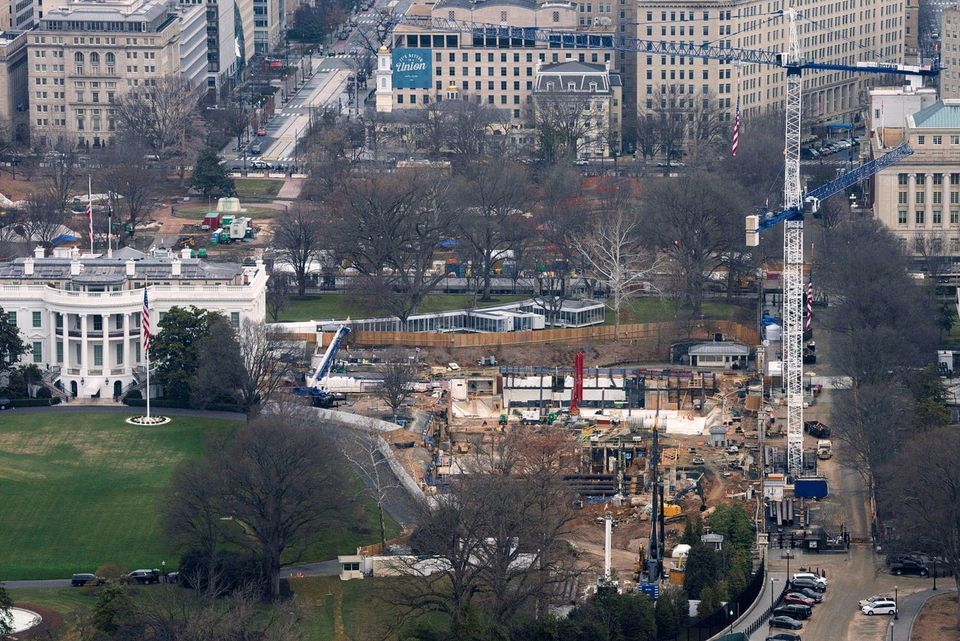
In my opinion, no, because it had already been built. Or, if the government is replacing the World War II-era air raid shelter adjacent to the East Wing, they are doing so as part of a long-planned upgrade that complements a vast continuity of government project built after the September 11th attacks. In fact, I think you can see part of it in the photograph at the top of this page.
For background: the previous iteration of the East Wing was built during World War II to conceal the construction of an air raid shelter. My understanding, based on historical descriptions and examining aerial photos, that the shelter was not directly underneath the old East Wing, but rather just to its south. Over the years and several renovations, this bunker was renamed the Presidential Emergency Operations Center. Supposedly, Trump himself spent part of the first night of the George Floyd protests there. The space is supposed to be quite cramped and DC's culture of security is never satisfied. Therefore, enlarging the PEOC has been proposed from time to time, including more outlandish plans like the 1960s nuclear-resistant Deep Underground Command Center, or DUCC.
The thing is, there is good evidence they did build something like the DUCC, and the press reported on it. In fact, one of Trump buddies, conservative journalist Ronald Kessler stated in a 2018 book and also in interviews, that a new bunker facility was completed at the end of the Obama presidency and that Trump has toured it. The press, for their part, treated this new structure with a wink and a nod: an open secret among the "savvy." After all, the White House Press Corps had watched it get built right under their nose, or rather their feet.
What I hope to show in this post is that they were mistaken: the mess that they saw in 2010 was a noisy misdirection for a much, much bigger project that the government simply could not hide.
9/11 framed the problem
DC came to a standstill on September 11th, 2001. The metro was shut down. I remember watching long streams people in business attire walk by my school as I waited to be picked up. Driving was even worse, with rush hour traffic colliding into school pickup, emergency closures, and people just trying to get out of town. According to reporting at the time, security agencies felt this gridlock proved it would be difficult to evacuate the President in either a conventional or terror attack. The President would have to shelter in place.
So began a new round of top-secret planning to ensure on-site continuity of operations at the White House. What the complex faced was a problem basically every community in the US deals with: it had obsolete infrastructure. This is what they told the press in 2010, and, you know what, I think it's true. It's just that sometimes the best way to conceal something is to tell the truth about something else. Even better, is to attract attention with a third thing. This is what I believe happened with something known as the "White House Big Dig."
The Big Dig was a construction project that involved major infrastructure upgrades all around the complex, mostly from 2010 to 2012. The most visible portion of this project was a very big hole dug on the north side of the West Wing. This garnered a lot of attention because it temporarily displaced "Pebble Beach," a paved part of the North Lawn where TV journalists reported to camera. However, I have never seen a photograph of that project that looks like a fifty-foot deep (minimum) hole. They certainly built something there, but I doubt it is the bunker described by Kessler. Also, the dates don't line up with Kessler's claim. The northwest pit's 2012 completion date comes in the middle of the Obama presidency. And even at the time, sources were telling the press that there were future phases to come, including one at the East Wing.
A clue to what Kessler was actually talking about was actually right down West Executive Avenue. While the press corps was joking about the hole in front of their eyes, they weren't talking about the sheds.
Making connections
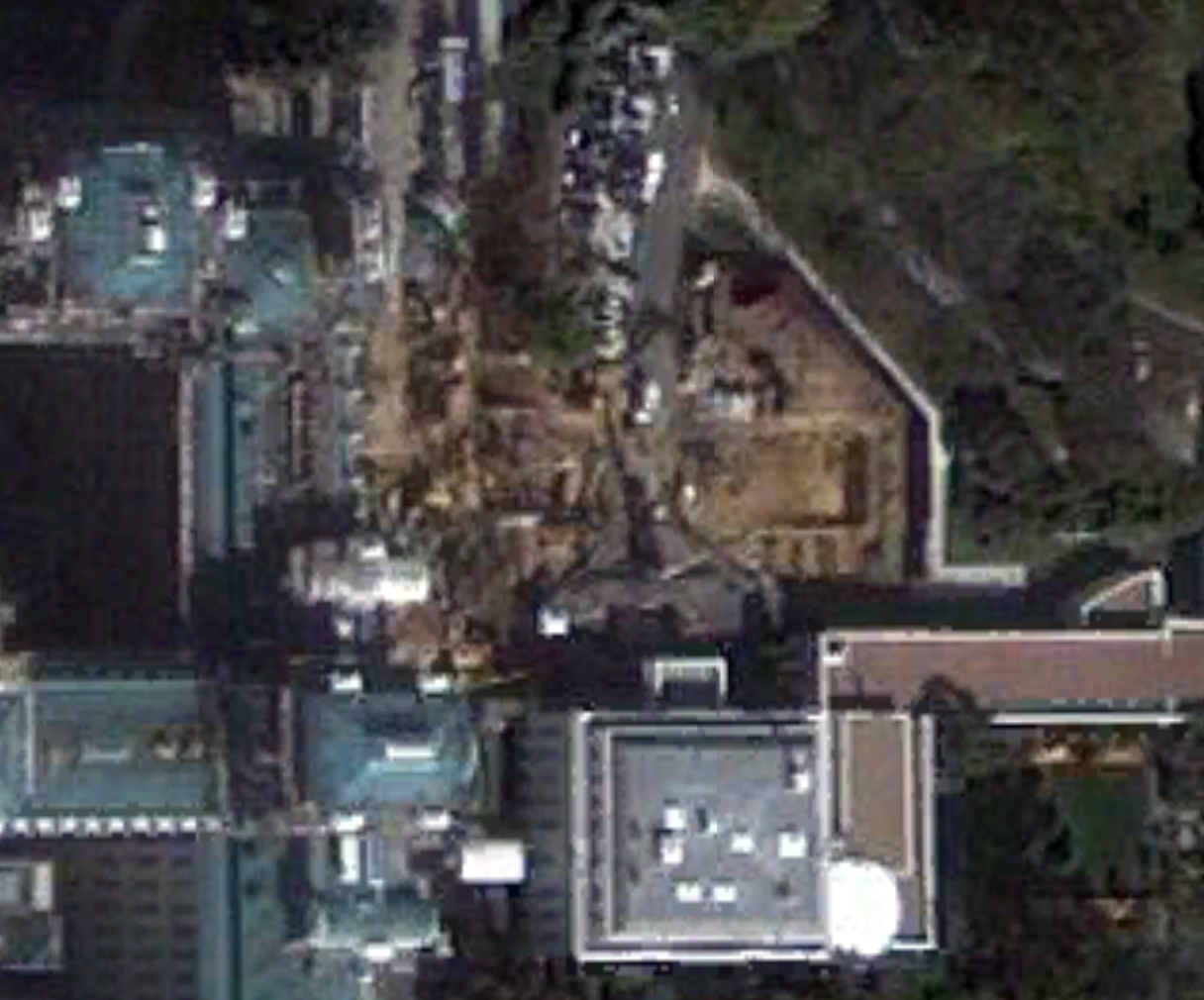
In the sequence of Google Earth historic aerials below, we see the site before construction in 2005, at the beginning of the Big Dig in 2010, and then after it had wrapped up in 2012. Notice the two structures that appear south of the East and West Wings.
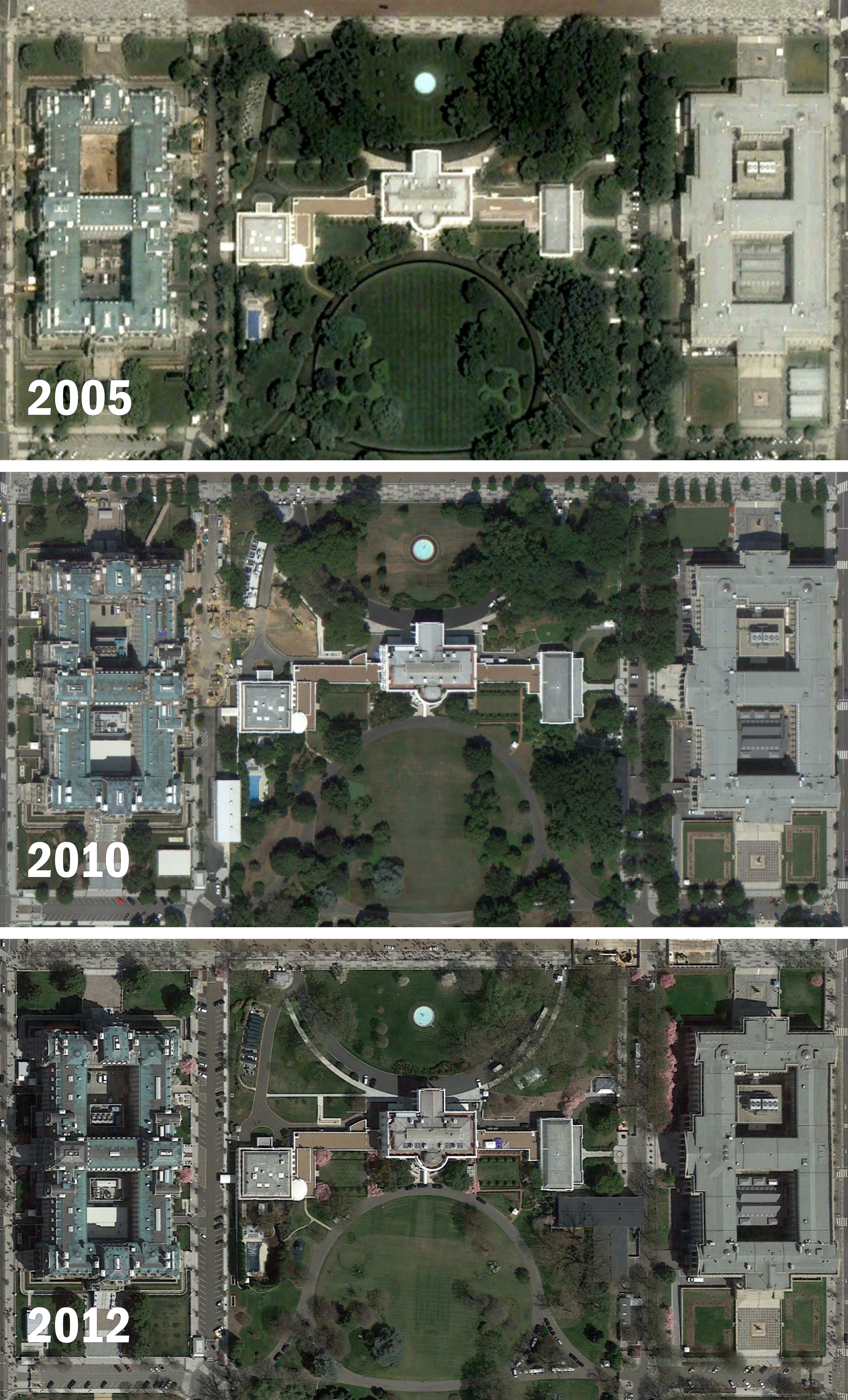
If you go and check this out yourself, you will see that the east shed appears sometime before 2007, doubles in size in 2013, and then is gone by the spring of 2016. The west shed appears sometime in 2007, and wraps up around the same time as the Big Dig in 2012. You can also see a lot of utility work going on around the complex, as claimed. Now, maybe google is just busted, but I can only find the sketchiest discussions of these shed structures or the general scope of utility work.
In the absence of anything else, let's look at aerials more closely.
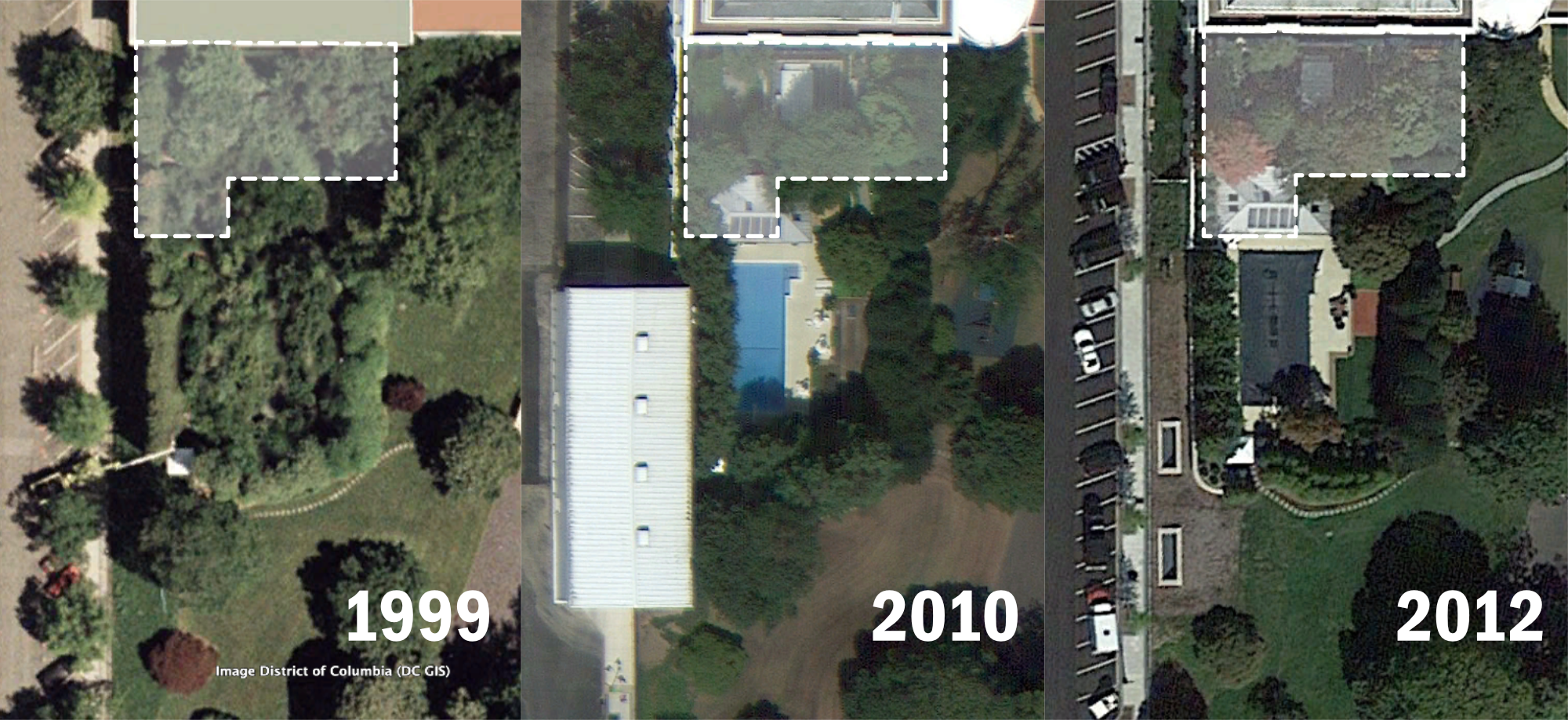
South of the West Wing is a semi-buried structure with a green roof, containing the Navy Mess and the White House Situation Room. It was originally built by FDR as part of his renovations to the West Wing, and initiated the Federal Government's long tradition of stuffing things underground instead of admitting that its needs have grown. The situation room is both a specific room and also a suite of highly controlled support spaces. This suite was renovated and expanded between 2006 and 2007, including major expansions. South of this structure is the White House's swimming pool. Built in 1975, it was renovated abruptly in 2002. The poolhouse actually appears to sit on top of the Situation Room suite and supposedly has an access stair to below so the president slip in for a dip discreetly.
If we look at the aerials, we can see the white shed structure appear around the time of the Situation Room renovation in 2007. It similarly appears to touch the retaining walls of the pool that was rebuilt in 2002. After it disappears, two grated areaways remain. Some kind of infrastructure was built in this location at this specific time, and it was more sensitive than the rest of the infrastructure work around the White House, which is clearly visible in pits and trenches.
Almost directly across the South Lawn stood the east shed, with its 2007 and 2103 phases. Its expansion is very interesting, since the structure extends to an area directly south of the former East Wing. This secluded lawn East Wing was the supposed location of the World War II bunker, the PEOC. In the sequence of aerials below, you can see what appear to be areaways covered by grills, which I have highlighted in magenta. These show up in the earliest imagery available on Google Earth and remain in imagery taken in late 2025, during early ballroom excavation, so I think they give us a good sense of where the PEOC sat.
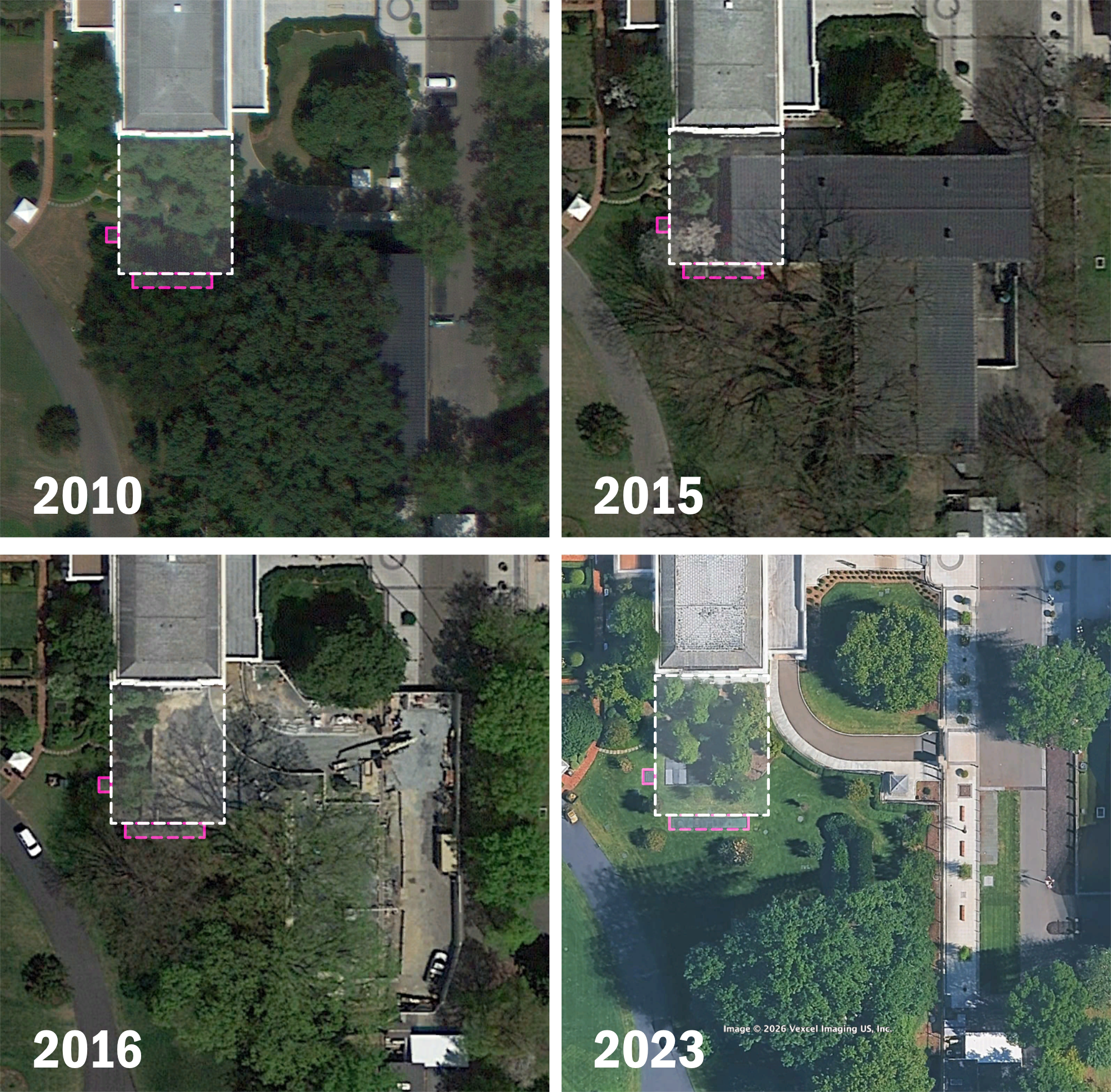
In addition to this, there appears to have been some construction on the west side of the PEOC from 2017 to 2020. It could be landscaping, or it could be repairing the PEOC's waterproofing. Unlike a giant shed, it is not unusual, so I am going to leave it out of this analysis.
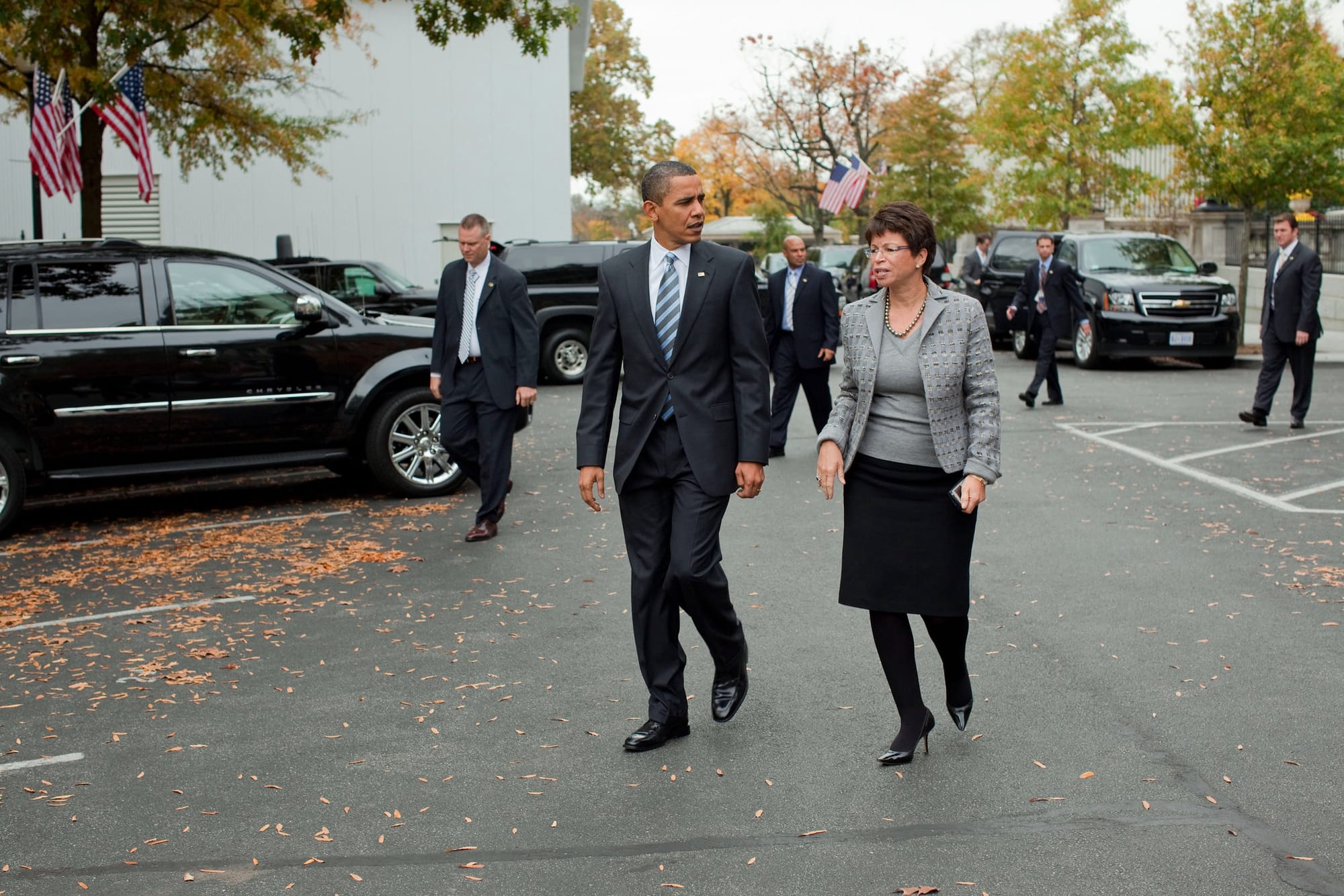
Also, It's very interesting that the east structure is dark-colored, unlike the one on the west. I think this is because East Executive Avenue, the locked-off street between the East Wing and the Treasury Building doesn't get much press attention. In fact, I have been unable to find photos down EEA from the Bush and Obama years. In contrast, Presidents regularly embark and disembark from their motorcades on West Executive Avenue (as in the photo with Obama above), so it gets a lot of press coverage. It's possible officials simply decided they couldn't hide the west structure, just like they couldn't hide the Big Dig hole. On the East Side, closer to the PEOC, they clearly wanted to be more discreet.
It is completely unclear what was going on in these sheds. The best clue we have is from an exchange between architect Shalom Baranes and White House staffer Will Scharf during a discussion of the ballroom at the January, 2026 National Capital Planning Commission meeting. Scharf (who serves as chair of the commission) asks Baranes about considerations about components on site, and Baranes expressed sensitivity towards the "infrastructure" on site. Unusually unsubtle for NCPC, that stilted allusion clearly indicates to me the presence of something that is not the PEOC, since it appears to have been demolished, and is clearly not the new bunker, since new construction would not be in its own way.
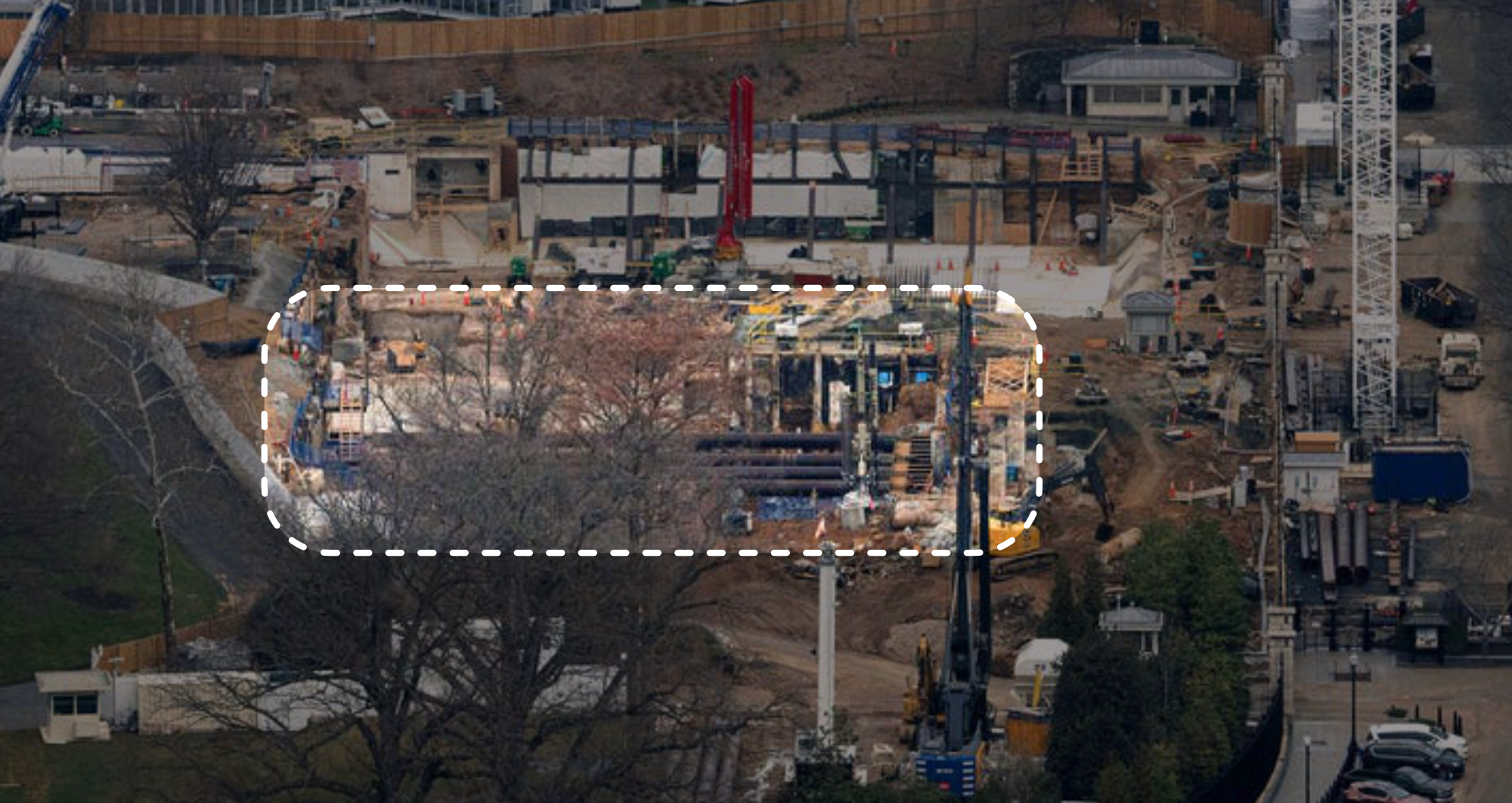
Taking a second look at the Ballroom construction site. The area of deeper excavation and heavy shoring appears to be fully south of the small guard tower. If you look up at the aerials, that structure is almost directly east of the grates I identify as part of the old PEOC. To me, this looks like they are building something new, and something that is not shown on any of the drawings of the ballroom. Perhaps it is an excavation down to the facility described by Kessler.
But if there is something at the bottom of that pit how did they build it? The two sheds never seemed to generate much construction traffic. And there were never big enough pits to match the massive excavation required for the sort of facility Kessler alleges. Just think about how much dirt was excavated to build the ballroom. If they built a bunker the Obama years, where did all that dirt go?
For that, we have to follow the ballroom's spoil down to East Potomac Park.
The following section describes closely guarded secure sites. Do not attempt to access any of these facilities. They are likely authorized to shoot intruders.
Imagine a really, really long submarine
The United States Navy has the closest relationship with the Presidency of all branches of the military. The president's doctor is frequently a naval physician. The West Wing kitchen is staffed by naval specialists. The president's vacation compound at Camp David is a Navy base. And the Vice President lives on the secure, perfectly circular campus of the US Naval Observatory.
With this in mind, it is worth paying attention to a facility that is known to be highly sensitive, top secret and run by the Navy: the East Utilities Plant.
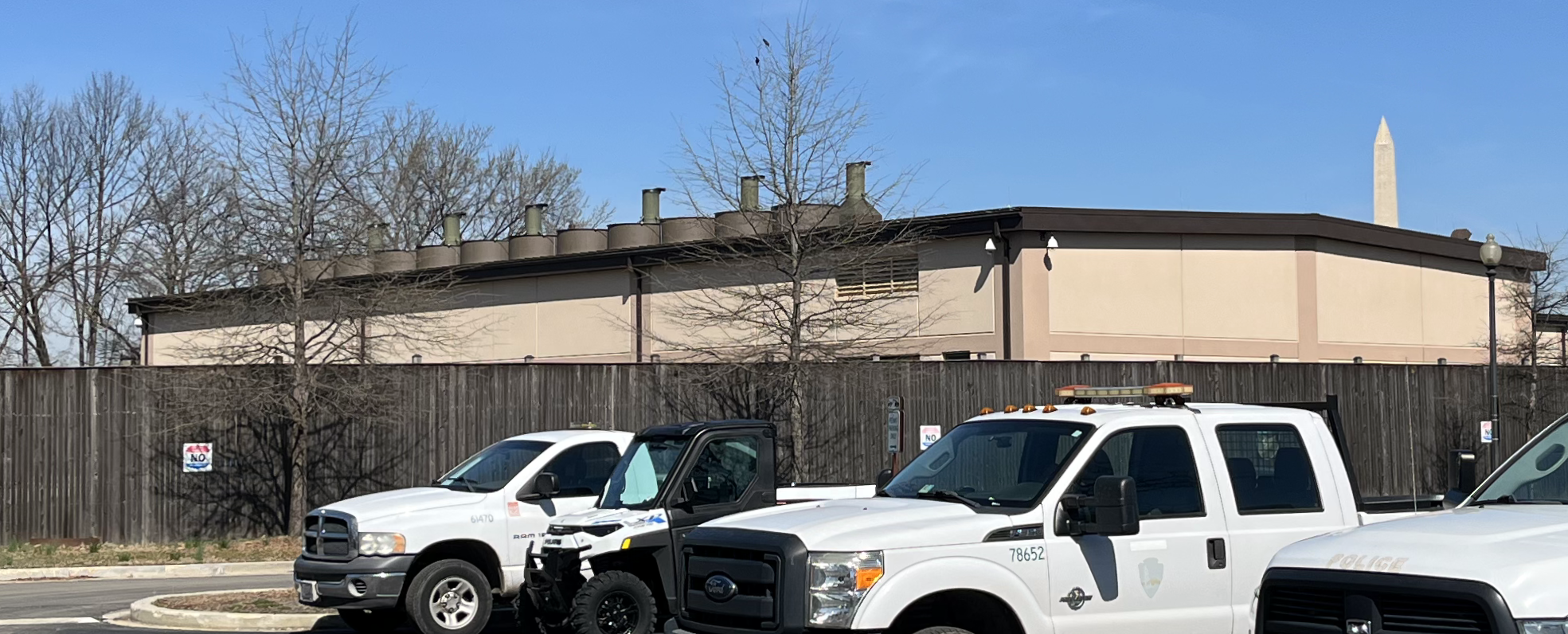
The East Utilities Plant is a nondescript structure tucked between the NPS regional headquarters and the Long Bridge railroad tracks in East Potomac Park. It's tan and it's covered in what looks like EIFS. It could be mistaken for a park service garage, except that it's plastered with cameras, and surrounded by an opaque fence sprinkled with military no trespassing signs. There also appear to be six exhaust stacks sticking up from one roof, adjacent to some other kind of port. If we look at historic aerials, however, we can see that this building just the tip of the iceberg.
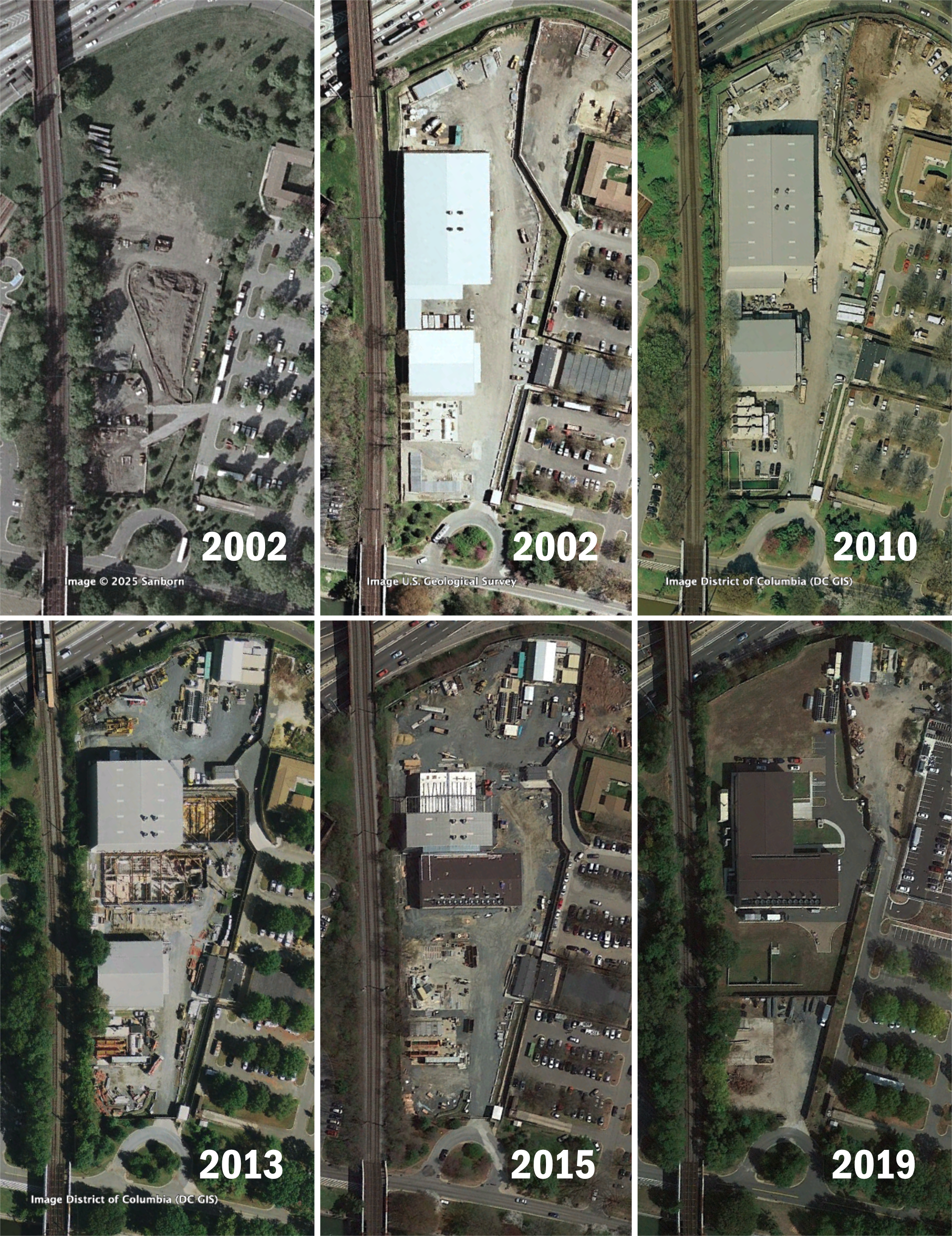
In the 2013 image, we can clearly see a deep structure in the footprint of what eventually becomes the building with exhaust stacks. We can also see a very deep shored pit to the northeast, perpendicular to a prefabricated metal building (or shed) with distinctive white stripes. This shed was erected by 2002 and was shortened to make room for the building with exhausts by 2013, when the two pits were started. Whatever was going on underneath that site was sensitive enough that the permanent structure was constructed within the shed, out of view, as is visible in the 2015 image. The Washington Post article above, and other reporting at the time, emphasized the that construction took the design review agencies by surprise, although they all came around. The articles also noted that the facility saw a steady stream of dump trucks and other heavy equipment, which seems to have lasted over a decade. Where was that dirt coming from?
For that clue, we need to look at another shed with those distinctive white stripes. This one also appeared in 2002 on the grounds of the Naval Observatory.
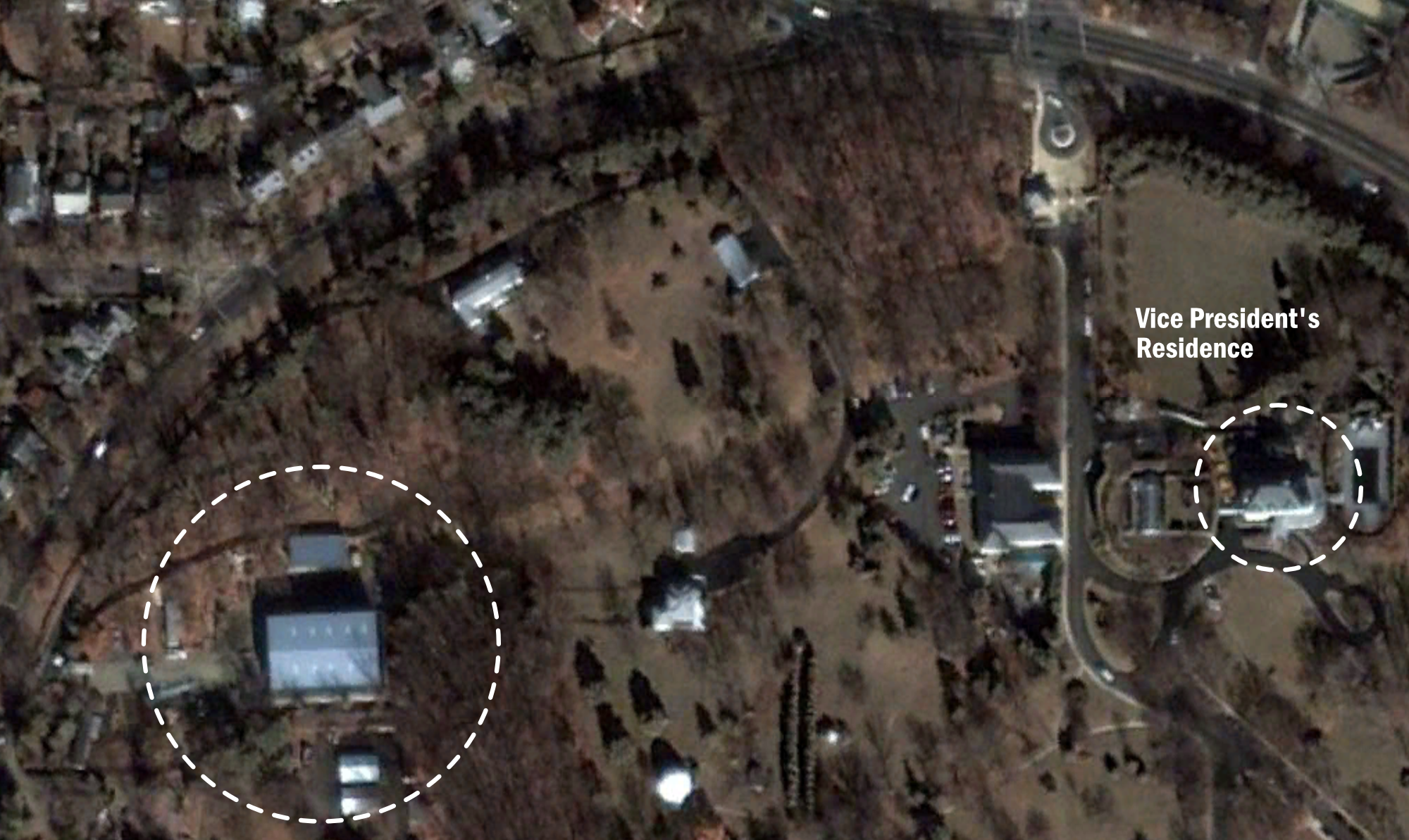
This structure had a short but eventful life. Residents in the tony neighborhood complained of dump truck traffic and hard rock blasting. The gossip was that they were building a bunker for the Vice President. And then, by 2004 the construction wrapped up, leaving one nondescript structure on the site. In late 2005, a second one was added to its north.
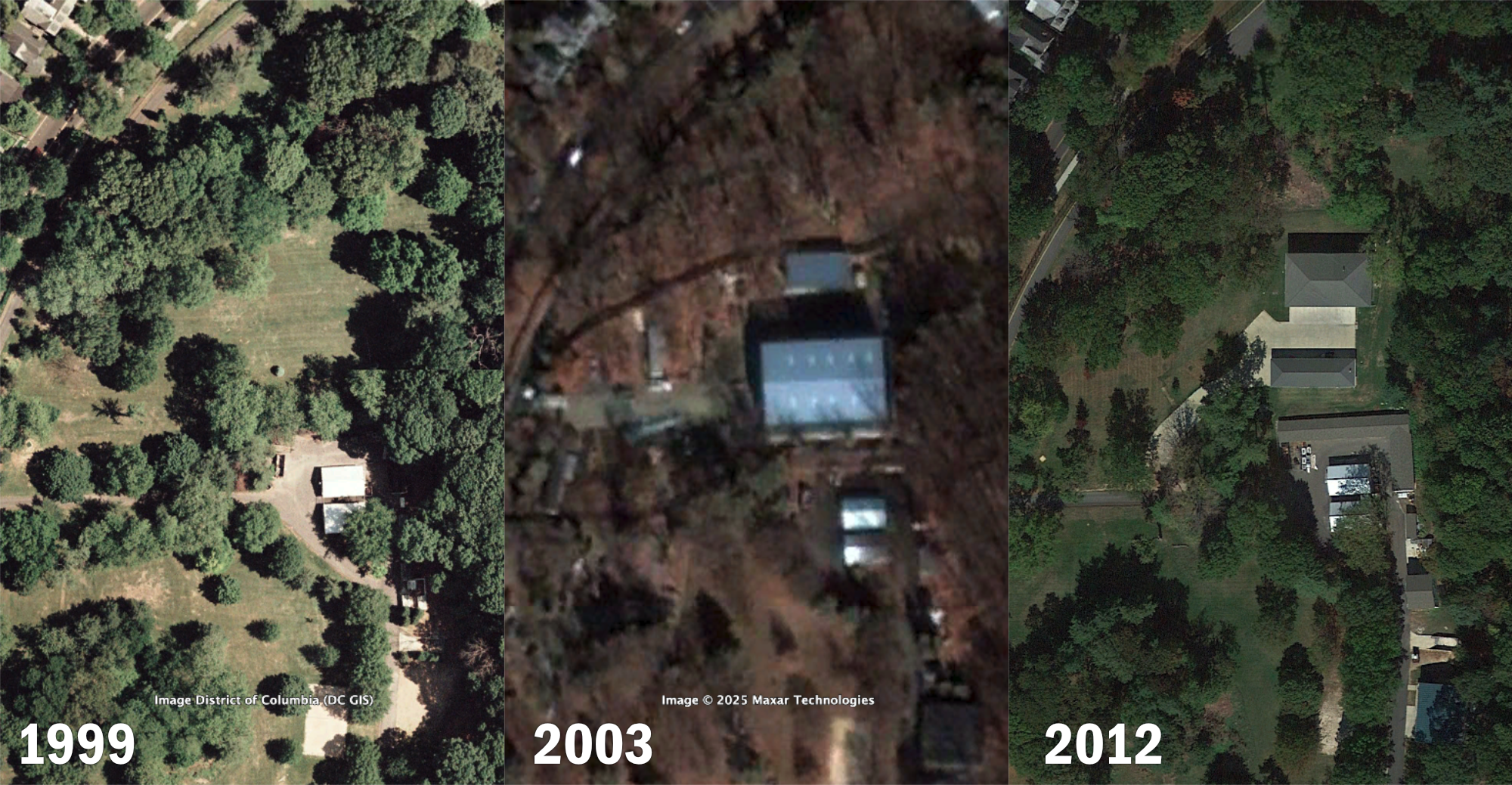
I personally remember both the trucks and the rumors very well. I played sports on nearby fields (and screwed around as a teen in the general area). Unfortunately, I can't get very good imagery from the shed's brief existence. Whatever it is, it seems to have chronological and typological connections to the other mystery sheds.
This becomes very clear if we compare the structures side-by-side. In the image below, I have taken images of the structures at their maximum extent, all at the same scale. I aligned them on the long axis and overlaid a 25' grid.
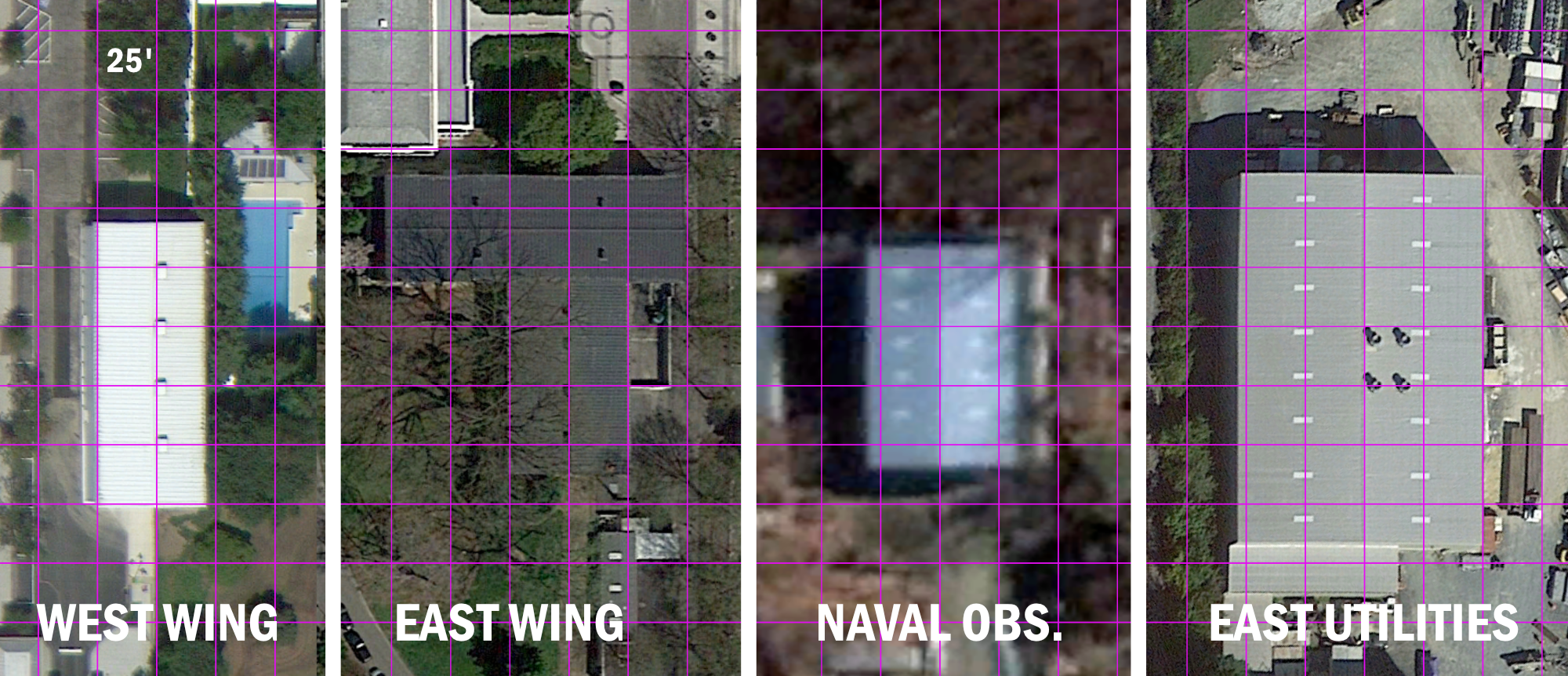
Most of the buildings are 50' wide, and anywhere from 80' to 120' long. The northern building at the East Wing, is 50' wide and 120' long. The East Utilities Plant Site was at 100' wide and 150' long at its maximum size. Clearly, this more secluded project is the largest, not even including its multiple temporary outbuildings and eventual underground structure. But how about the schedule?
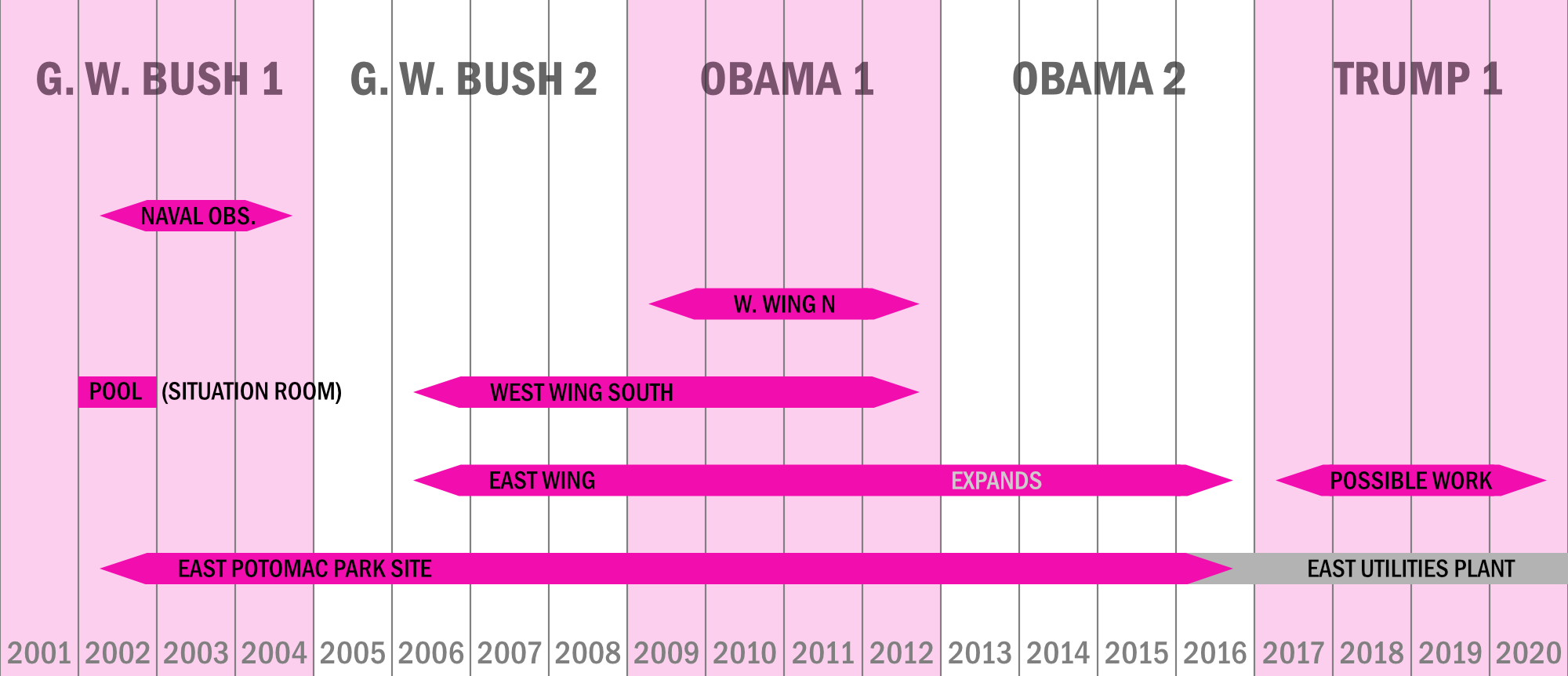
Again, the East Utilities Plant site is the most consistent feature of the project. Some amount of construction activity is visible from 2002 to 2016: nearly 15 years. The East Wing structure, especially if the Trump-era site work is included, lasted the almost as long. Relative to these long-lasting projects, the two most ballyhooed components of this project, the West Wing north structure and the Naval Observatory element, were under construction briefly. Yes, it is possible these projects include bunkers, but whatever they were doing at the East Utilities and East Wing was much more significant. In fact, there is only kind of project I know of that involves long construction durations and very small surface sites: a tunnel.
The land gives up its secrets
I think there is a smoking gun that proves a tunnel was constructed, at least between the East Utilities Plant and the White House. The item is a geotechnical report produced during emergency repairs to the embankments around the Jefferson Memorial. As I discuss a bit on another page, DC, the western parts of the National Mall (East and West Potomac Parks) are 100% dredged sand and silt. The ground is almost worthless for foundations and prone to movement when water movement is also present. It has been consistently causing settling problems for 130 years. All major structures in the area the mall, like the Jefferson Memorial, rest on heavy foundations driven to bedrock. The pavement and embankments, however, rest on this unstable silt, sand, and sediment.
In 2006, the National Park Service noticed the embankments and pavements around the Jefferson Memorial (and even the building itself) were shifting and sinking. Very few documents about this were made public, which attracted DC's many watchdogs, busybodies, and gadflies. One group eventually retrieved and published the standard submittal documents using a Freedom of Information Act request. This included a geotechnical analysis by Schnabel Engineering, a very credible firm.
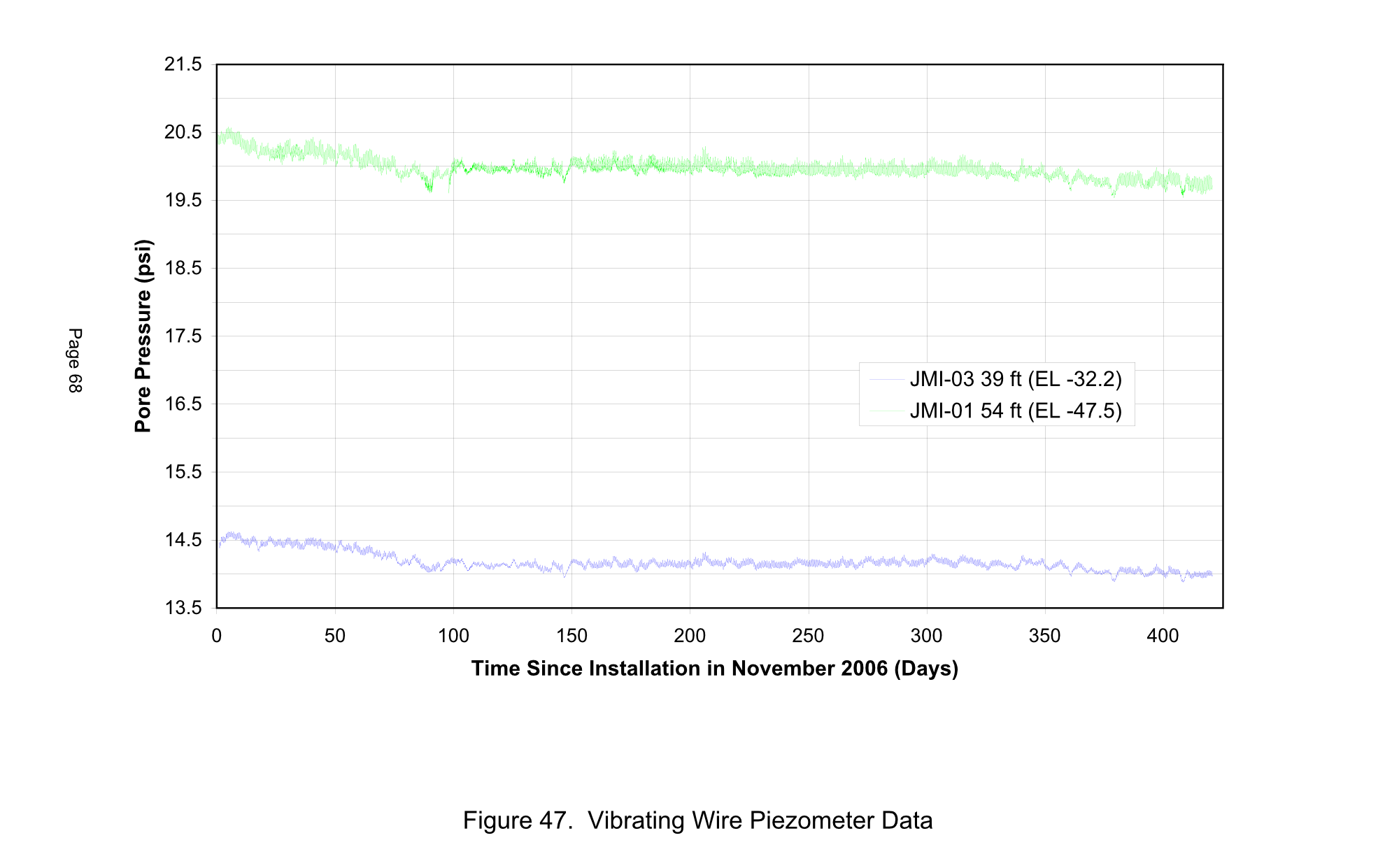
Now, I am not a geotechnical engineer, but I can understand the gist of a geotech report. What is shown on one chart is something that I would look for on a construction site. Figure 47 shows a consistent drop in "pore pressure," a measure of the hydrostatic (still) pressure of groundwater in a given soil. Drops in pore pressure are common when groundwater is being pumped out of an area, usually construction below the water table. Water takes up space and even modifies the molecular geometry of some soils, so a drop in pressure almost always leads to consolidation of the base soil and therefore subsidence.
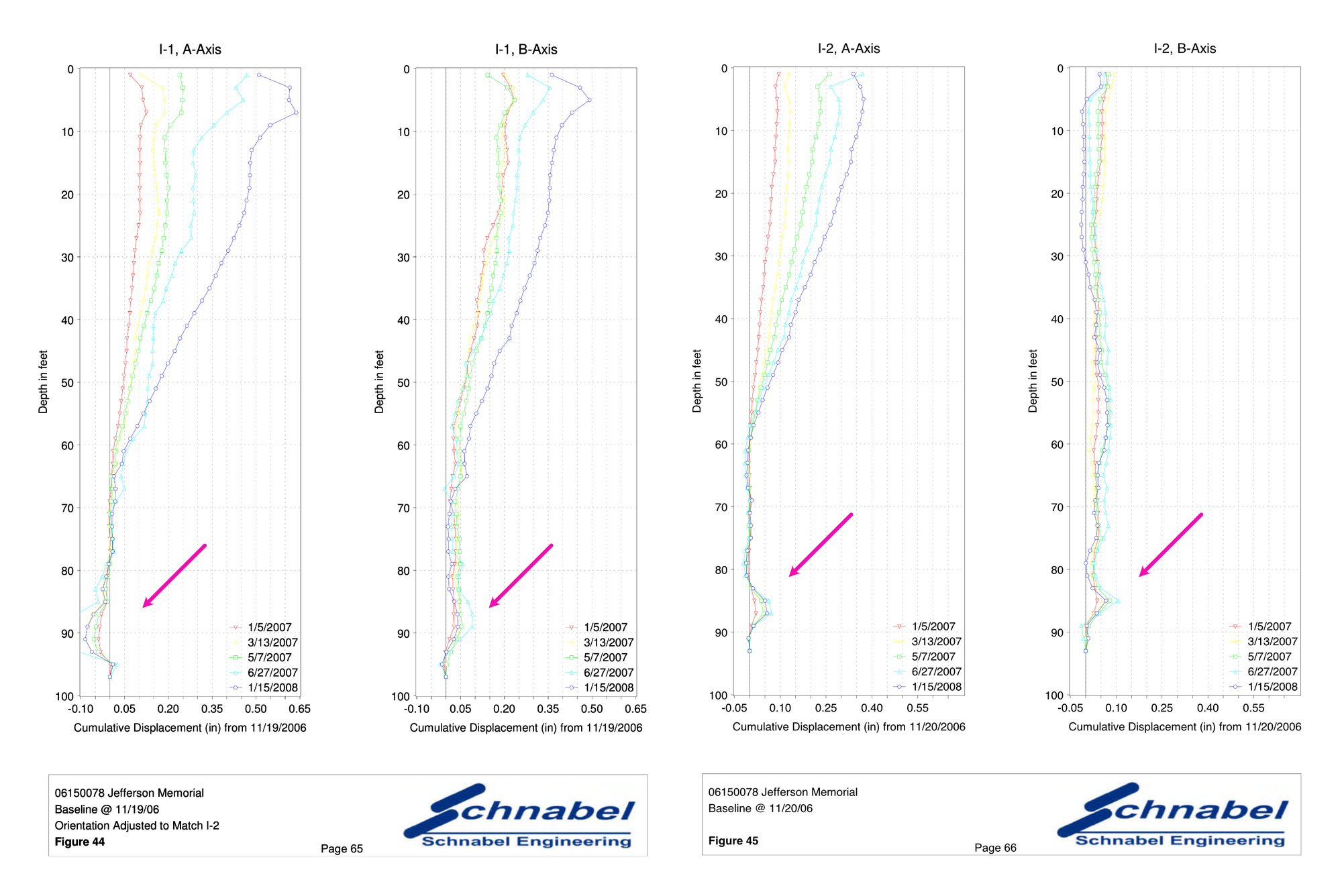
The other data source is from inclinometers, which measure the displacement of a pipe drilled into the ground. The charts provided in Figures 44 and 45 show not only a severe shifting to the northwest close to the surface, but also a separate and very distinct displacement between 80 and 100 feet below grade. Again, I am no expert, but this is very unusual to encounter in ordinary foundation work. Based on research, the dynamics and shape of this movement appears to be consistent with displacement caused by tunneling. Instrument I-1 is to the west of instrument I-2, suggesting that a structure to the west of the memorial might be even deeper. Notably, the report's narrative does not describe this lower stratum of displacement and simply notes that the drop in pore pressure is cannot be attributed to natural water fluctuations.
To be honest, I am surprised they released these figures at all; other parts of the report were redacted. Could it be disinformation meant to fool people like me who think they're savvy? Maybe! Welcome to the hall of mirrors. On your left you will see John le Carre and Graham Hancock in a hot tub, Bigfoot jerky is $12 an ounce.
It's an infrastructure project
I have been following this for fun since 2010, and ultimately, I have to hand it to the Navy. They did a good job of keeping this project under wraps. I have asked government officials about the project, and while the way they told me nothing told me a lot, they still, at the end of the day, told me nothing. I suspect most of them had inferred what I have, but don't know what's actually there. What I outline above, to be clear, is the best I could do with information on the web: aerials, documents, posts, and websites. It is what they could not hide or wanted us to see, including the allies and adversaries of the United States.
All that I can do is speculate with my professional experience, historical knowledge, and this research. I will not pretend to have figured everything out. In fact, until Trump's remarks on March 29th, 2026, I assumed the entire project was completed in 2016. But maybe that GSA rep was telling the truth in 2010 after all: there was an East Wing phase yet to come.
My best guess:
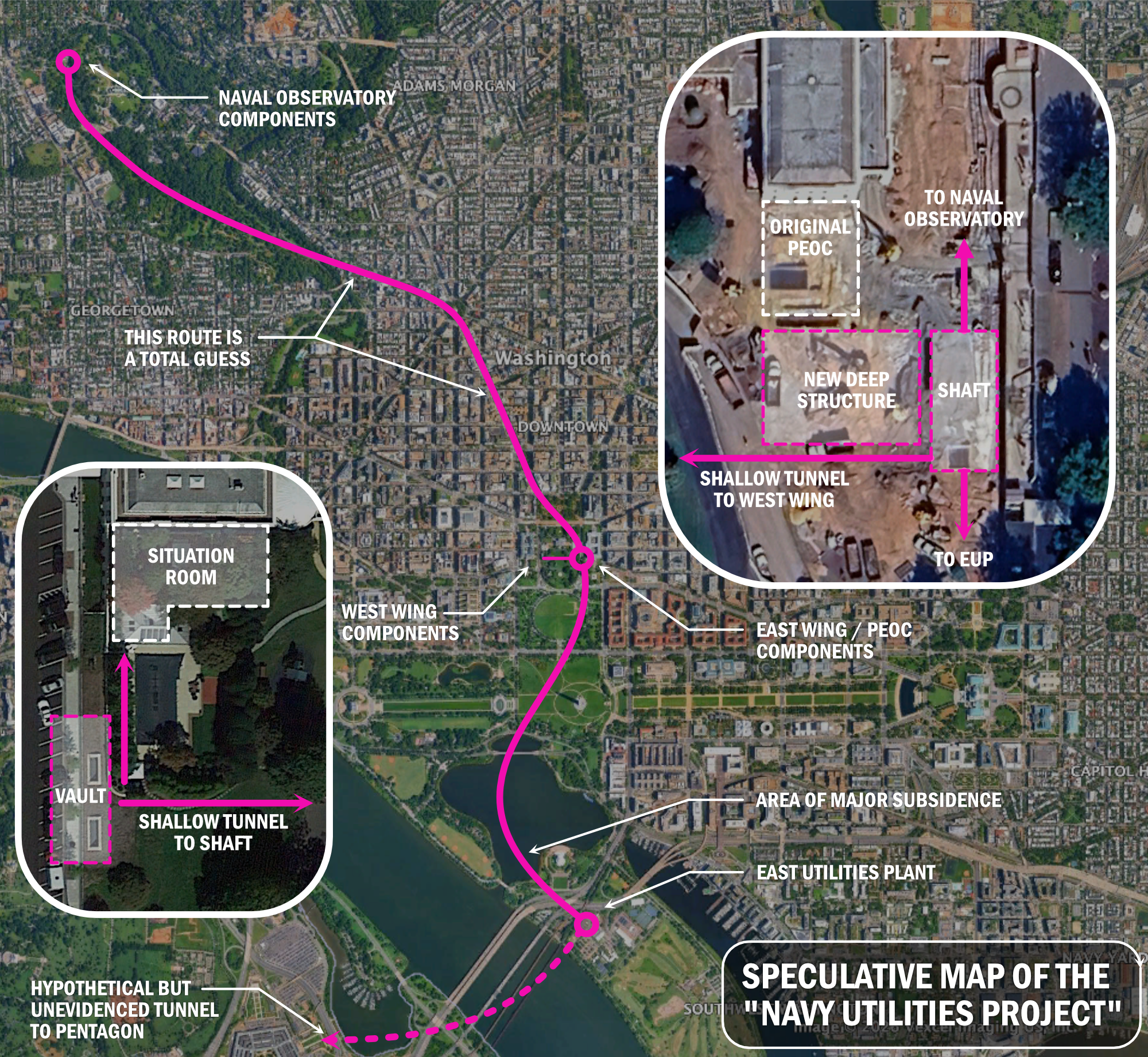
Between 2002 and 2016, the Navy built a tunnel between the East Utilities Plant, the PEOC at the White House, and the Naval Observatory. The principal construction site was the East Utilities Plant, which was used to launch one or more tunnel boring machines and remove mined spoil. The other two sheds concealed the connections from this tunnel to existing infrastructure. It is possible that it was mined entirely through bedrock, but it is also possible they used a hybrid TBM that ran through soft soils around the Tidal Basin.
Some kind of underground structure, presumably the bunker reported by Kessler, was mined from the tunnel below somewhere south of the PEOC. I think they mined upwards into the east shed to minimize disruption, conveying the excavated material to the East Utility Plant, where it was loaded onto trucks. The purpose of the shed's expansion in 2013 was to construct a connection between the existing PEOC and the new structure. The Trump-era work was related to upgrading parts of the PEOC that were not touched in this phase. Is this structure five stories below grade, or deeper? Hard to know, but I suspect it is in bedrock.
One or more tunnels were bored under the South Lawn, connecting the larger tunnel to the West Wing and the Situation Room, via passages added during the 2002 renovation of the pool and Situation Room. This connects these principal national security assets to the PEOC, both in terms of infrastructure and possibly for moving the President around. This also suggest that whatever structures were built under the west shed do not connect directly to the primary tunnel.
Alternatively, it's possible the bunker itself spans the South Lawn, and there are entrances on both sides. Perhaps in this case, the "infrastructure" alluded to by Baranes is not the bunker itself, but a connection that was put in place in anticipation of a future phase. Impossible to say.
Beyond building the new bunker, purpose of this tunnel is... infrastructure. Federal officials have described the project as an "infrastructure upgrade." They did extensive infrastructure upgrades around the White House at the same time. What appears to be the main facility is called a "utilities plant." I think the tunnel provides resiliency to the White House, in the form of secure power, telecom, water, and hot/cold water. I am skeptical it provides air unless the tunnel itself is used as a plenum. It is difficult to move air miles in small ducts.
The East Utilities Plant supports the rest of the system. The exhaust stacks poking out of its roof look like diesel generators to me, although the only thing that looks like an intake are the adjacent, shorter cylinders, which are unusual. I would speculate that electrical switching equipment and diesel and water tanks occupy the bulk of the excavation that is visible in aerial photos. Even though this facility would not survive a nuclear strike, there are many other forms of attack on the White House for which the EUP can provide decentralized resilience.
The connection to the Vice President's residence is again, infrastructure. I suspect they make it possible to shelter in place under the same circumstances as the White House. If there is direct connection to the house, it was carefully concealed. Given the brief period of time that construction occurred here, I suspect most of the construction was on a shaft into which a tunnel was driven and that no TBMs were launched from here. If a bunker was built, it was also mined from below, with spoils removed at the East Utility Plant. Similarly, if it is the end of the tunnel, the TBM was either buried in place or dismantled and brought back through the EUP. The permanent structures appear to be too small to accommodate heavy lift cranes that could remove a TBM. Perhaps the addition of the second structure in 2005 indicates a rough date for the completion of primary tunneling.
I suspect the tunnel runs to the west of the Jefferson Memorial, in the area of the late, famous cherry blossom tree "Stumpy." This area has seen accelerated subsidence and was prioritized for reconstruction.
I have seen speculation online that the tunnel also runs to the Pentagon. Maybe, but I don't see evidence of it. Certainly, the Pentagon was gut renovated between 1998 and 2011—in addition to the total rebuild of the section destroyed during 9/11. If a shaft similar to the one built at the Naval Observatory was constructed, it could have been concealed in the renovation, even occurring under the existing building itself. This is pure speculation.
Does the tunnel contain a full size train system that allows VIPs to move around DC during a nuclear war, like Moscow's Metro-2? No, of course not, this is a Bush-era project. It's Bus Rapid Transit.
How does the Ballroom fit into this?
Per the GSA rep's comments from 2010 and Trump's from 2026, I believe that whatever continuity of operations work is being done as part of the ballroom project, it has been planned since 2001.
If I were a journalist investigating this, I would instead ask the following: did Trump's decision to build the ballroom trigger this long-awaited phase of the project, or did the military's talk Trump into building a ballroom so they could complete their security facility? If it is the latter, they got the same outcome as all the other people who have tried to use Trump to advance their agenda. After decades of work and going to extraordinary lengths to draw as little attention to the sensitive project, the President can't stop talking about it. The Navy has a ship that leaks from the top—and the leaks will only get bigger when aerial imagery reveals what's at the bottom of that hole.
Oh, and by the way, who built all the tunnel and Big Dig work? Well, it was a joint venture between two contractors with extensive experience in heavy infrastructure, secure facilities, and major historic renovations: Kiewit Corporation and the construction manager for the ballroom, Clark Construction.
What about other theories, like a data center?
I want to emphasize the mundaneness of this project. After 9/11, the government determined that the White House needed a safe place for the President to hide in an emergency and it needed secure utilities. This is also a long-term project that Trump doesn't actually seem very interested in. What the White House does not need is an "AI data center." If that sounds plausible to you, this is a wakeup call. Clean up your information environment ASAP. This makes no sense, and I hate that I have to explain this—and I just wrote 4,000 words of crankery.
Now, there will no doubt be some kind of data frames and all manner of secure communications systems in the building. The White House is full of equipment whose purpose is strictly need-to-know. The DC area is full of secret facilities, SCIFs, gray sites, fronts, and on and on. Northern Virginia is a hub for data centers because three-letter agencies were massive early uses of the internet, and there are hardened fiber lines all over the place. So, until David Icke tells me where in the Gulf of Arabia I can find the Annunaki command center, I will assume DC is the spookiest place on the planet, full of "electrical closets" the janitor can't open.
But what I as an architect do not see is sufficient mechanical backend for some kind of 40,000sf autonomous AI server farm. The drawings do not show the kind of spaces required for rejecting the enormous amount of heat generated by data centers. Unless they are using an exotic HVAC system they don't even use at the the NGIA campus or NSA Utah facility, they would use cooling towers that need to exhaust to the open sky, and take in air from large areaways on all sides. Usually in data centers, these are fully outside the server enclosure or in exterior "wells" within the outer walls.
Similarly, there is no reason to place a critical data center underneath the biggest target on the planet. In fact, everything I've read about federal continuity of operations says they want to scatter critical infrastructure. The president's person is one of the few things that has to be at the White House. The idea that Trump is building a data center stems from the same presumption that he must have some plan, and that his lawless authoritarianism is systematic, when it is not.
I think it is more likely that Donald Rumsfeld built a portal to the Hollow Earth than that they're building an "AI data center." I think it is more likely that there is a crystal chamber where Susan Wiles goes to channel Atlanteans than that they are building an "AI data center." I thin it is more likely that the real Hillary Clinton is in a hibernation pod in the East Utilities Plant than that they are building an "AI data center." I am begging you, please try to figure out how the government actually thinks about continuity of operations and what data centers actually do.
In conclusion, I personally believe that intelligence agencies spread conspiracy theories to discredit nosy individuals and misdirect the public from merely secret activities. We know that UFO theories were promoted in order to conceal aircraft development: classic disinformation. In fact, I accept that what I take as evidence may be disinformation. So take all of this with a grain of salt.
Ultimately, the only entity that can get certainty about what is being built, and what was built is Congress.
Next post: So, can he build any of this?